Information
Landmark: Archaeological Reserve of DurostorumCity: Dobrich
Country: Bulgaria
Continent: Europe
Archaeological Reserve of Durostorum, Dobrich, Bulgaria, Europe
The Archaeological Reserve of Durostorum is situated in the modern city of Silistra, though administered within the broader cultural framework of Northeastern Bulgaria and the Dobruja region. It encompasses the remains of a major Roman legionary fortress and a late antique customs station located on the southern bank of the Danube River.
Visual Characteristics
The ruins consist of massive stone fortifications, including brick-and-mortar walls reaching several meters in height and circular defensive towers. Architectural elements feature Roman fired bricks (plinthoi), white limestone blocks, and marble fragments from public buildings. Key structures include a 4th-century Roman tomb with preserved frescoes, a patriarchal basilica, and the remains of a Roman bath complex with hypocaust heating systems.
Location & Access Logistics
Durostorum is located within the urban limits of Silistra, approximately 90km north of Dobrich. Access from Dobrich is via Road 21. The site is integrated into the city's Danube Riverside Park (Dunavski Park). Direct vehicle access is possible via local city streets, with public parking available near the Silistra Regional Museum of History. Bus connections run daily between the Dobrich and Silistra central stations.
Historical & Ecological Origin
The fortress was established in 106 AD as the permanent base of the Legio XI Claudia (11th Claudian Legion) by order of Emperor Trajan. It served as a critical defensive bastion of the Danubian Limes. Geologically, the site occupies a loess terrace above the Danube floodplain, providing a strategic elevation for monitoring river traffic and northern tribal movements.
Key Highlights & Activities
Visitors can walk through the excavated northern fortress wall and the ruins of the Bishop's Palace. The Roman Tomb, famous for its detailed late-antique murals, is accessible via pre-arranged tours through the local museum. The riverside path allows for viewing the scale of the ancient harbor fortifications relative to the modern river level.
Infrastructure & Amenities
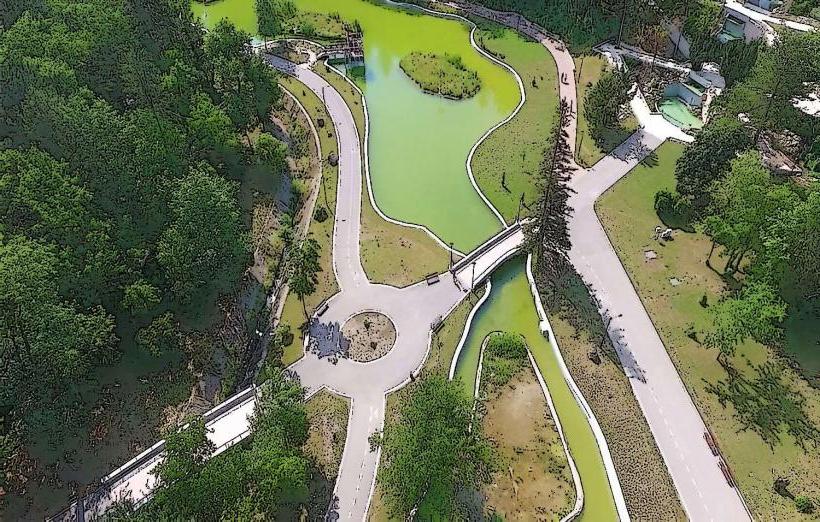
The archaeological remains are located within a public park, providing ample shade and paved walkways. Public restrooms and 5G cellular coverage are available throughout the site. Food vendors, cafes, and hotels are located within 200 meters of the reserve in the Silistra city center. Information plaques are installed at major structural points.
Best Time to Visit
The best time for visit is from April to October. Photography is optimal during the "golden hour" before sunset, as the sun sets directly over the Danube, illuminating the western faces of the fortress walls. The Roman Tomb requires stable humidity levels and may have restricted access during heavy rain.
Facts & Legends
Durostorum was the birthplace of Flavius Aetius, known as the "Last of the Romans," the general who defeated Attila the Hun at the Battle of the Catalaunian Plains. Additionally, it is recognized as one of the earliest Christian centers in the region, being the site of the martyrdom of Saint Dasius and Saint Julius the Veteran in the early 4th century.
Nearby Landmarks
Silistra Regional Museum of History - 0.3km South
Medzhidi Tabia Ottoman Fortress - 2.5km South
Srebarna Nature Reserve - 16km West
The Patriarchal Basilica - 0.2km East
Roman Tomb of Silistra - 1.5km South