Information
Landmark: Dobrich Historical MuseumCity: Dobrich
Country: Bulgaria
Continent: Europe
Dobrich Historical Museum, Dobrich, Bulgaria, Europe
The Regional Historical Museum in Dobrich is a multi-site cultural institution headquartered in the Sveti Georgi City Park. Established in 1953, it manages a collection of over 180,000 artifacts documenting the history of the South Dobrudzha region from the Neolithic era to the modern day.
Visual Characteristics
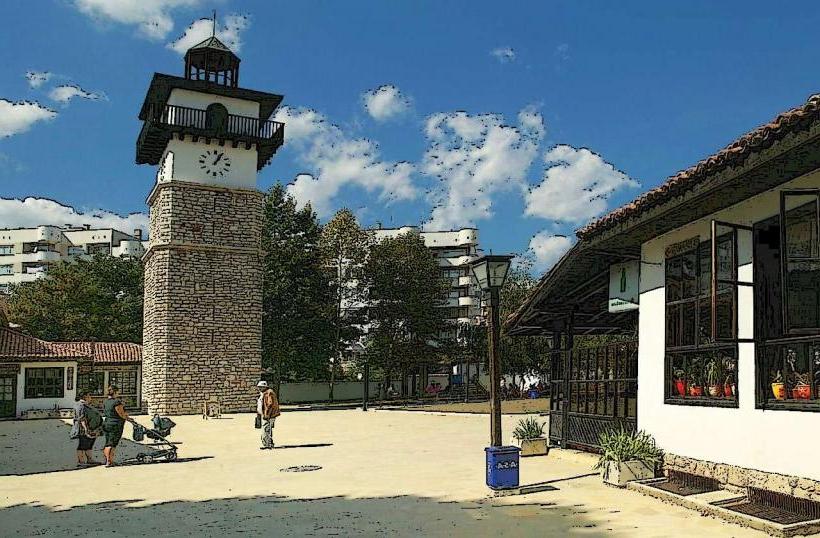
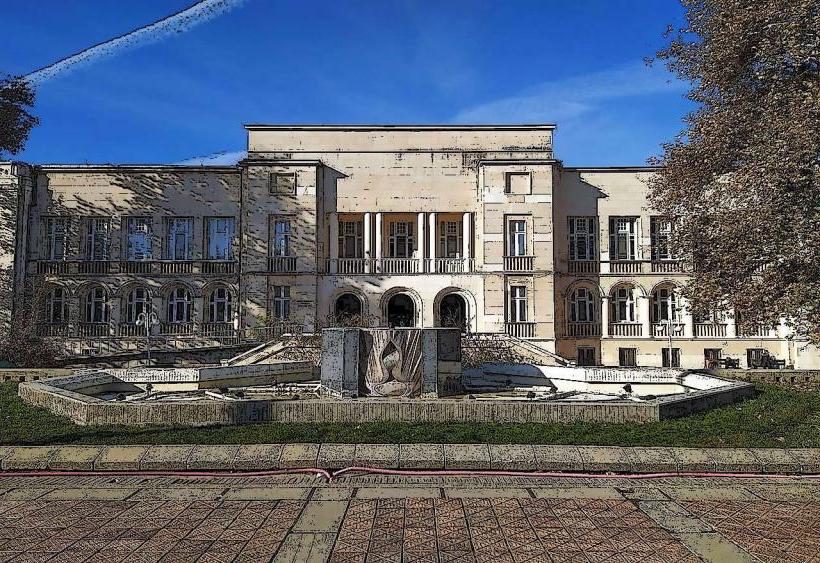
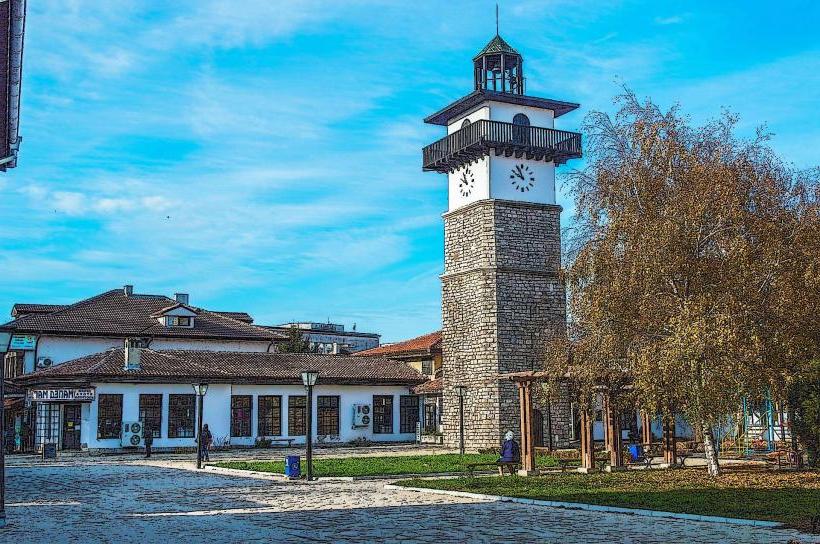
The main museum building (the Museum of Modern and Contemporary History) is a late 20th-century functionalist structure with a grey concrete and stone facade, distinguished by its award-winning "Archscar" design. Nearby, the associated Old Dobrich Ethnographic Museum consists of reconstructed 19th-century timber-framed houses with white-washed walls and red-tiled roofs. Another branch, the Ethnographic House, is a restored 1860s National Revival residence featuring a symmetrical layout and typical period wooden ornamentation.
Location & Access Logistics
The primary museum site is located at 18 Dr. Konstantin Stoilov Street within the Sveti Georgi City Park, approximately 0.8km from the city's central administrative square. It is accessible by car via the main city ring road (Route 97) with public parking available on adjacent streets. From the Dobrich Central Bus Station, the museum is a 15-minute walk. Local bus lines connecting the central districts stop at stations within 300 meters of the park entrances.
Historical & Ecological Origin
The museum was formally founded in 1953 as a scientific and educational institute to preserve the heritage of the Dobrudzha crossroads. The modern exhibition facility was completed in 1980–1981, designed by architects A. Stoyanov and P. Ganchev. The site is positioned on the flat, fertile Danubian Plain, a region historically characterized by loess soils and extensive steppe-like landscapes.
Key Highlights & Activities
The museum houses one of the world's most significant prehistoric collections from the Durankulak Lake archaeological complex (5300–4000 BC). Visitors can view a large collection of medieval weaponry and the unique "Yordan Yovkov" literary fund. Educational programs include traditional craft demonstrations (pottery, woodcarving) at the Old Dobrich site and guided tours of the diorama cycles representing extinct regional steppe fauna.
Infrastructure & Amenities
The museum facilities include indoor restrooms, wheelchair ramps at the modern building, and shaded outdoor pathways within the surrounding park. 4G and 5G cellular coverage is excellent throughout the city-center sites. While there are no food vendors inside the museum galleries, the Old Dobrich complex features a traditional cafe ("kafené") and several bakeries selling local pastries.
Best Time to Visit
The museum operates Monday through Friday, typically 09:00 to 18:00 (May–October) and 08:30 to 17:30 (November–April). The best time for photography is the early morning, particularly in the Old Dobrich open-air section, to capture architectural details in soft light. Spring (May–June) and early autumn (September) offer the most temperate conditions for walking between the various museum branches.
Facts & Legends
The museum stores the oldest processed gold in the world (contemporary with the Varna Necropolis) discovered at the Durankulak site. A local legend associated with the collection involves "The White Swallow," a symbol of hope popularized by writer Yordan Yovkov, whose original manuscripts are kept in the museum’s literary department. A "secret" tip for visitors is to check the basement of the nearby Art Gallery (a former courthouse) to see the preserved Romanian-era prison cells.
Nearby Landmarks
Old Dobrich Ethnographic Complex: 0.2km North
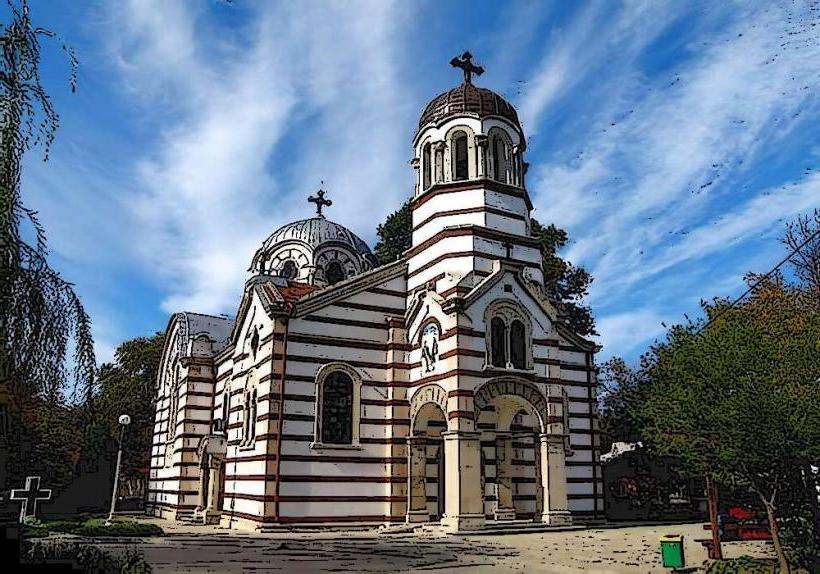
St. George Church: 0.4km Northeast
Dobrich Art Gallery: 0.6km Northeast
Zoo Dobrich: 1.2km West
Yordan Yovkov Memorial House: 0.5km East