Information
Landmark: Balluta BayCity: Sliema
Country: Malta
Continent: Europe
Balluta Bay, Sliema, Malta, Europe
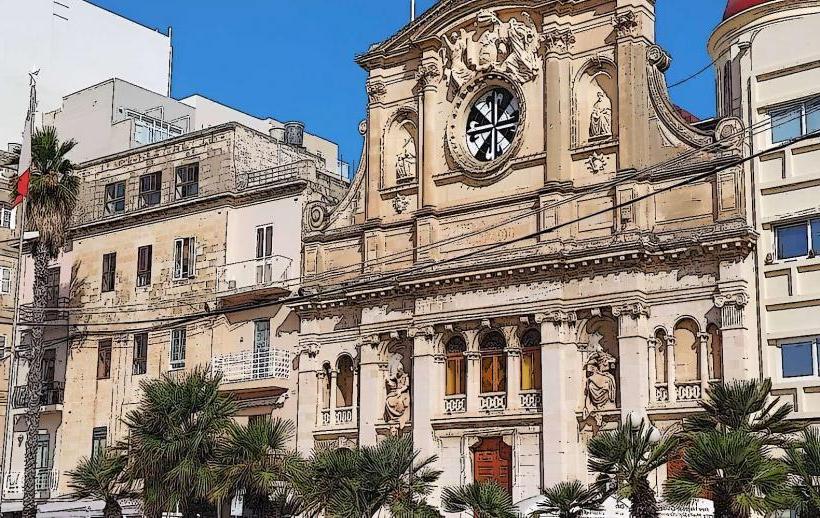
Balluta Bay is a small, urbanized bay and promenade located on the eastern coast of Malta, within the municipality of Sliema. It is characterized by its distinctive Neo-Gothic church and surrounding residential and commercial developments.
Visual Characteristics
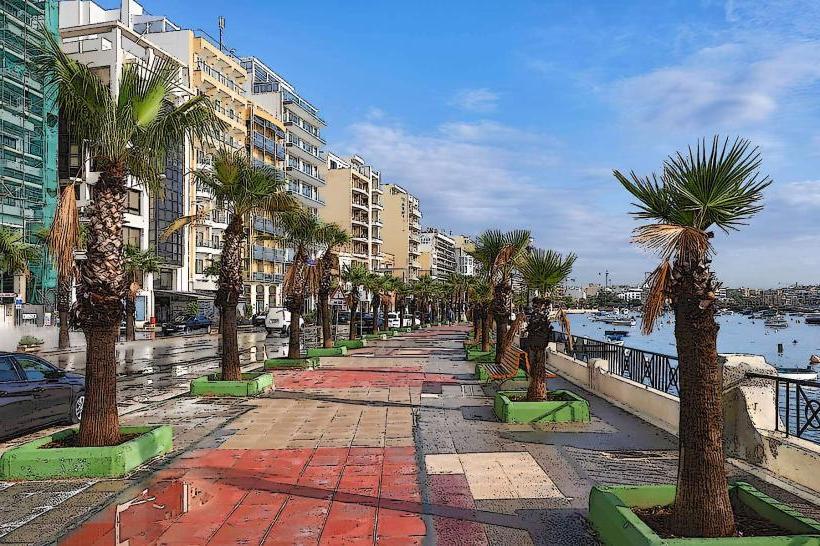
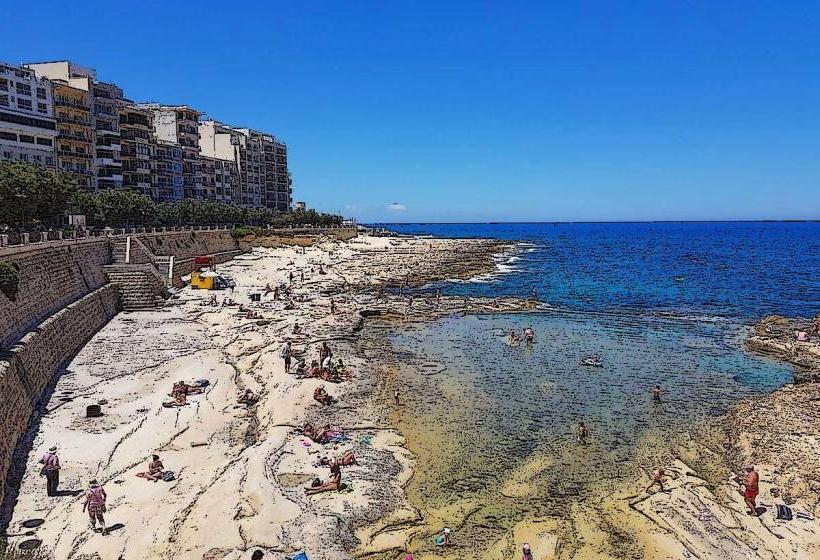
The bay features a small, sandy beach area flanked by concrete promenades and rocky outcrops. The dominant visual element is the Balluta Parish Church, a Neo-Gothic structure built from local limestone, exhibiting a light ochre color. The church features intricate carvings and a prominent spire. The surrounding buildings are primarily residential and commercial, constructed from similar limestone, ranging from three to seven stories in height. The water in the bay is typically clear, displaying shades of turquoise and blue, with a visible seabed in shallower areas.
Location & Access Logistics
Balluta Bay is situated along the Triq Manwel Dimech (Manuel Dimech Street) and Triq it-Torri (Tower Road) coastal road in Sliema. It is approximately 2.5 kilometers south of Sliema city center (Ferries area) and 6 kilometers northeast of Valletta. Public parking is limited to street-side spaces, which are often occupied, particularly during peak hours. Several public bus routes serve the bay, including lines 13, 13A, 14, 16, 21, 22, 110, 202, and 203, with stops directly adjacent to the bay.
Historical & Ecological Origin
The bay itself is a natural geological indentation along the coastline, formed by coastal erosion. The most prominent man-made structure, the Balluta Parish Church, was constructed between 1925 and 1933, designed by architect Giuseppe Psaila. Its original purpose was to serve the growing Catholic community in the area, which was expanding rapidly in the early 20th century. The surrounding promenade and urban development evolved throughout the 20th century, transforming the area into a residential and leisure hub.
Key Highlights & Activities
Visitors can swim in the designated swimming areas within the bay, which include a small sandy beach and concrete platforms. Sunbathing is possible on these areas. The promenade facilitates walking, jogging, and leisurely strolls along the coastline. Dining and drinking establishments are located directly overlooking the bay, offering outdoor seating. Kayaking and paddleboarding are occasionally observed within the calm waters of the bay.
Infrastructure & Amenities
Public restrooms are available near the promenade. Limited natural shade is provided by a few palm trees, with more extensive shade offered by umbrellas and awnings of adjacent commercial establishments. Cell phone signal (4G/5G) is consistently strong throughout the area. Numerous food vendors, restaurants, and cafes are directly accessible around the bay, offering a range of dining options from casual to upscale.
Best Time to Visit
The best time for photography, particularly of the church facade, is late afternoon when the sun illuminates the western side of the bay. The optimal months for swimming and outdoor activities are May through October, when temperatures are warm and rainfall is minimal. No specific tide requirements significantly affect access or activities within the bay, as the water level remains relatively consistent.
Facts & Legends
A historical oddity is the presence of a Roman bathhouse ruin discovered beneath the modern street level near the bay, indicating ancient human activity in the area dating back to the Roman period. A practical tip for visitors is to utilize public transport or ride-sharing services due to the scarcity of parking, especially during peak tourist seasons and evenings.
Nearby Landmarks
- Spinola Bay: 0.3km North
- St. Julian's Bay: 0.7km North
- Independence Garden: 1.5km South
- Portomaso Marina: 1.0km North-East
- Manuel Dimech Bridge: 0.8km West