Information
Landmark: Buffalo Springs National ReserveCity: Isiolo
Country: Kenya
Continent: Africa
Buffalo Springs National Reserve, Isiolo, Kenya, Africa
Buffalo Springs National Reserve is a protected area located in Isiolo County, Kenya. It is situated adjacent to the Samburu National Reserve.
Visual Characteristics
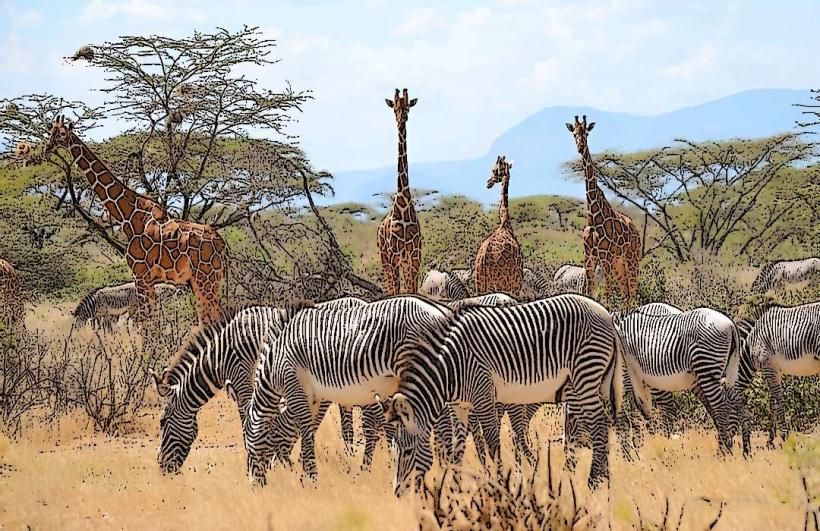
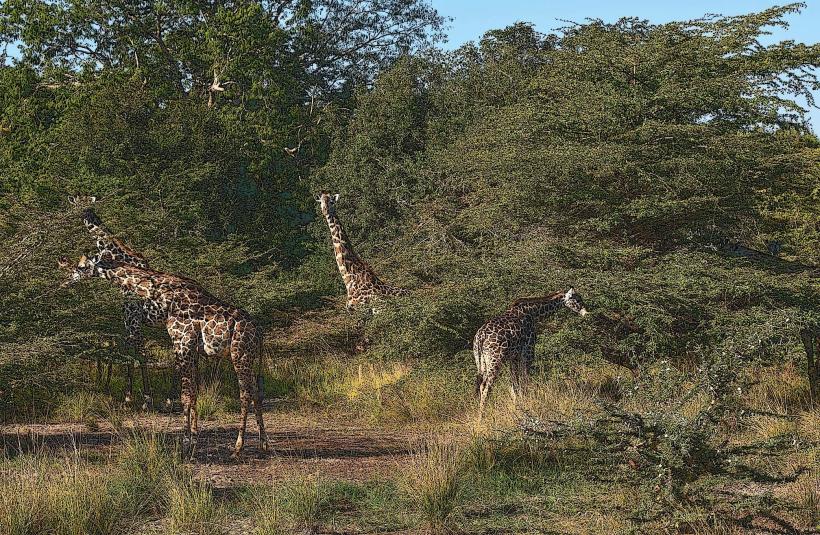
The reserve features semi-arid scrubland and acacia woodlands. The terrain is generally flat with some rocky outcrops. The Buffalo Springs River, a seasonal river, flows through the reserve, supporting a strip of riverine forest. Water color in the river varies from muddy brown to clear depending on rainfall. Vegetation density is low, with scattered trees and shrubs adapted to arid conditions. Wildlife is a primary visual characteristic, with large herds of plains game and predators often visible.
Location & Access Logistics
Buffalo Springs National Reserve is located approximately 350 kilometers north of Nairobi. Access is primarily via the A2 highway, turning off towards Isiolo town. From Isiolo, follow the B9 road for approximately 20 kilometers to the reserve entrance gate. The reserve is accessible by 2WD vehicles during the dry season. During the rainy season, 4WD is recommended. There is a designated parking area at the main gate and at various lodges within the reserve. Public transport to Isiolo is available from Nairobi; from Isiolo, private transport or a taxi is required to reach the reserve.
Historical & Ecological Origin
Buffalo Springs National Reserve was established in 1985. It was created to protect the unique wildlife and fragile ecosystem of the region. Ecologically, it is classified as a semi-arid savanna ecosystem, characterized by low rainfall and high temperatures. The reserve is part of a larger ecosystem that includes Samburu National Reserve and Shaba National Reserve, forming a critical corridor for wildlife movement.
Key Highlights & Activities
Game drives are the primary activity, with opportunities to observe elephants, lions, leopards, cheetahs, Grevy's zebras, reticulated giraffes, and Beisa oryx. Birdwatching is also significant, with over 350 recorded species. Guided walking safaris are available in designated areas. The Buffalo Springs themselves, which are permanent water sources, are a focal point for wildlife viewing.
Infrastructure & Amenities
Basic amenities are available within the reserve, including designated picnic sites. There are several lodges and tented camps offering accommodation, restaurants, and guided activities. Restrooms are typically found at lodges and designated public areas. Cell phone signal (4G/5G) is generally available in and around the lodges but can be intermittent in remote areas of the reserve. Shade is provided by acacia trees and lodge structures.
Best Time to Visit
The best time for wildlife viewing is during the dry season, from June to October, when animals congregate around water sources. The cooler months, from July to September, offer more comfortable temperatures. For photography, early morning (06:00-09:00) and late afternoon (16:00-18:30) provide optimal lighting conditions with softer shadows. There are no specific tide requirements as it is a land-based reserve.
Facts & Legends
The reserve is named after a natural spring that remains a reliable water source throughout the year, attracting a high concentration of wildlife. A specific tip for visitors is to explore the riverine forest areas, which often harbor elusive species and offer excellent birdwatching opportunities.
Nearby Landmarks
- Samburu National Reserve (0.5km West)
- Shaba National Reserve (15km East)
- Buffalo Springs (within the reserve)
- Isiolo Town (20km South)