Landmark: Chronicle of Georgia
City: Tbilisi
Country: Georgia
Continent: Asia
Chronicle of Georgia, Tbilisi, Georgia, Asia
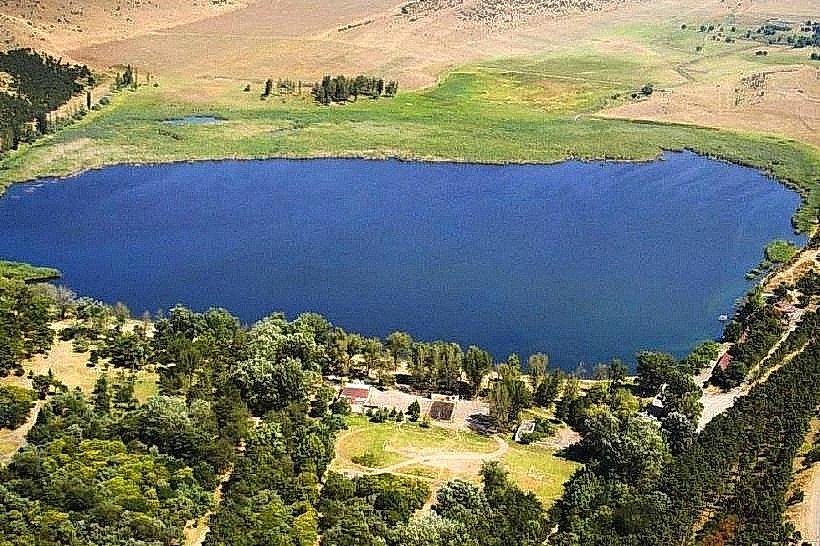
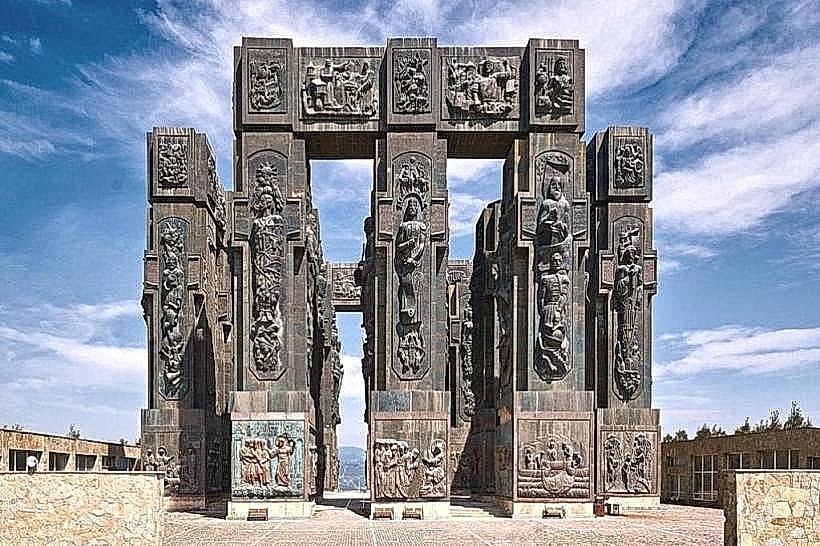
The Chronicle of Georgia is a monumental structure located on the Tbilisi Sea reservoir, north of Tbilisi, Georgia.
Visual Characteristics
The monument consists of 16 massive pillars, some reaching heights of 35 meters. The pillars are constructed from stone and depict scenes from Georgian history and religion. The central pillars are larger and feature representations of kings, queens, and significant figures. The overall design is imposing and geometric, with a stark, unadorned aesthetic.
Location & Access Logistics
The Chronicle of Georgia is situated approximately 10 kilometers north of Tbilisi's city center. Access is primarily via private vehicle. The nearest main road is the Tbilisi Sea Road. There is a gravel parking area at the base of the monument. Public transport options are limited; the closest bus stop is several kilometers away, requiring a significant walk or taxi transfer.
Historical & Ecological Origin
Construction of the Chronicle of Georgia began in 1985, initiated by sculptor Zurab Tsereteli. The project was intended to commemorate the 3,000th anniversary of the Georgian nation and the 2,000th anniversary of Christianity in Georgia. The monument remains unfinished due to funding issues and political changes.
Key Highlights & Activities
Visitors can observe the scale of the monument and examine the stone carvings. Walking around the base of the pillars provides different perspectives. Photography is a primary activity due to the monument's size and location. There are no organized tours or specific activities offered on-site.
Infrastructure & Amenities
There are no permanent facilities at the Chronicle of Georgia. Restrooms, shade, and food vendors are not available at the site. Cell phone signal (4G/5G) is generally present but can be intermittent depending on the specific location around the monument.
Best Time to Visit
For photography, late afternoon light offers optimal illumination on the stone surfaces. The best months for visiting are from April to October, avoiding the colder and potentially wet winter months. There are no tidal considerations for this inland monument.
Facts & Legends
A local anecdote suggests that the monument's unfinished state is due to a curse placed upon it by those who disagreed with its scale and cost. Another point of interest is the sheer volume of stone required for its construction, estimated to be thousands of cubic meters.
Nearby Landmarks
- Tbilisi Sea Reservoir (0.2km West)
- Tbilisi Botanical Garden (8.5km South)
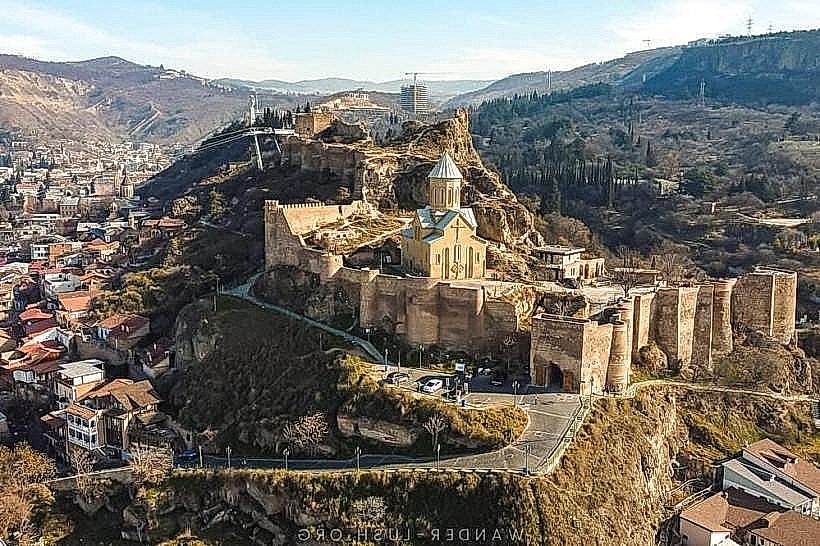
- Narikala Fortress (9.0km South)
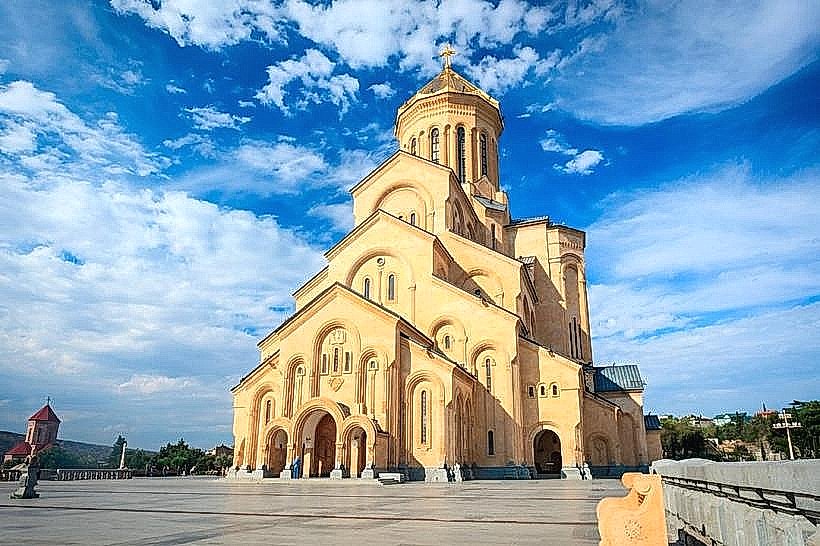
- Holy Trinity Cathedral of Tbilisi (9.5km South)
- Rustaveli Avenue (10.0km South)