Information
Landmark: Church of St. SofiaCity: Ohrid
Country: North Macedonia
Continent: Europe
Church of St. Sofia, Ohrid, North Macedonia, Europe
The Church of St. Sophia is a medieval architectural monument located in the old town core of Ohrid, North Macedonia. Originally built as a cathedral for the Bulgarian Orthodox Church and later serving as the seat of the Archbishopric of Ohrid, it remains one of the most significant Byzantine structures in the Balkan region.
Visual Characteristics
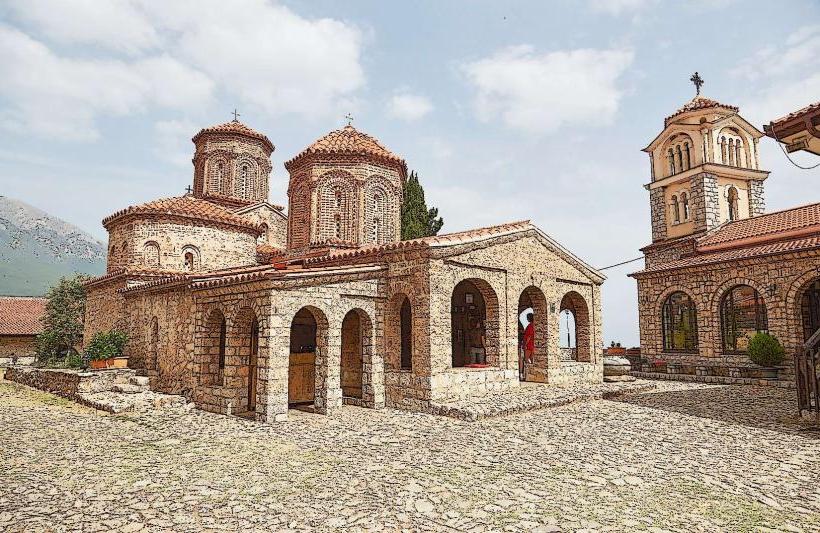
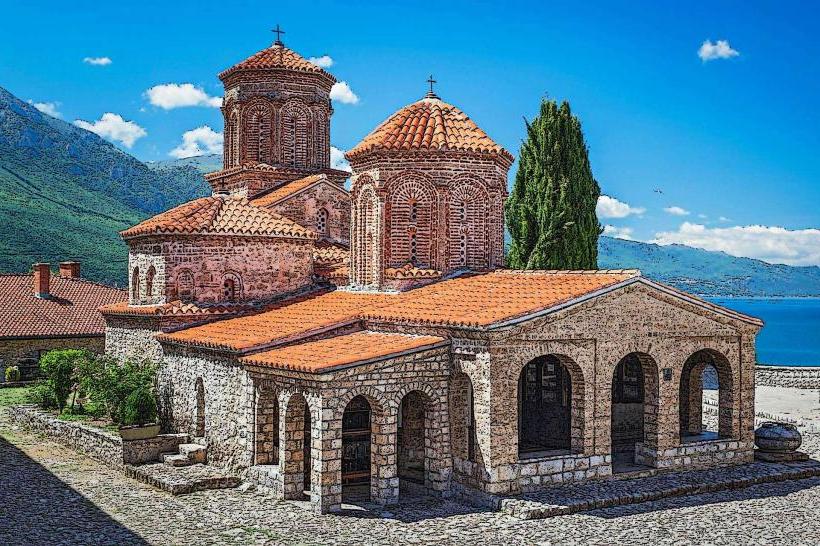
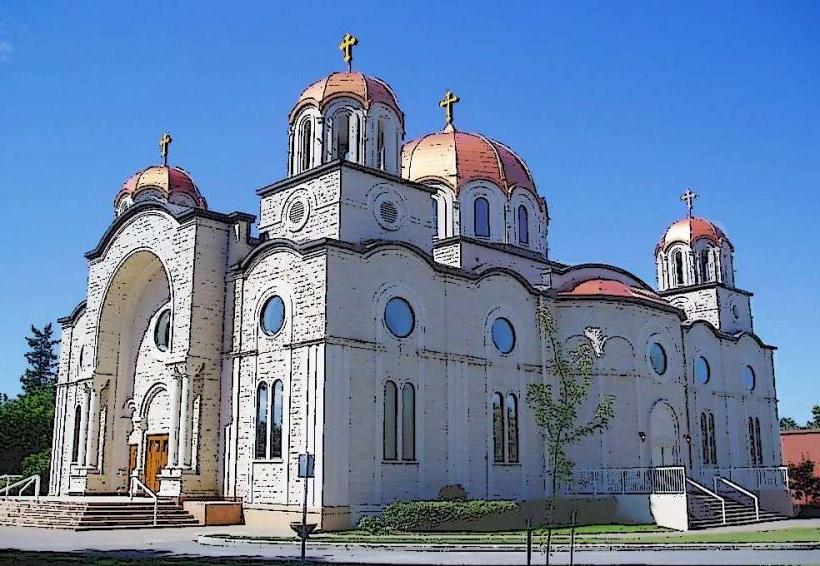
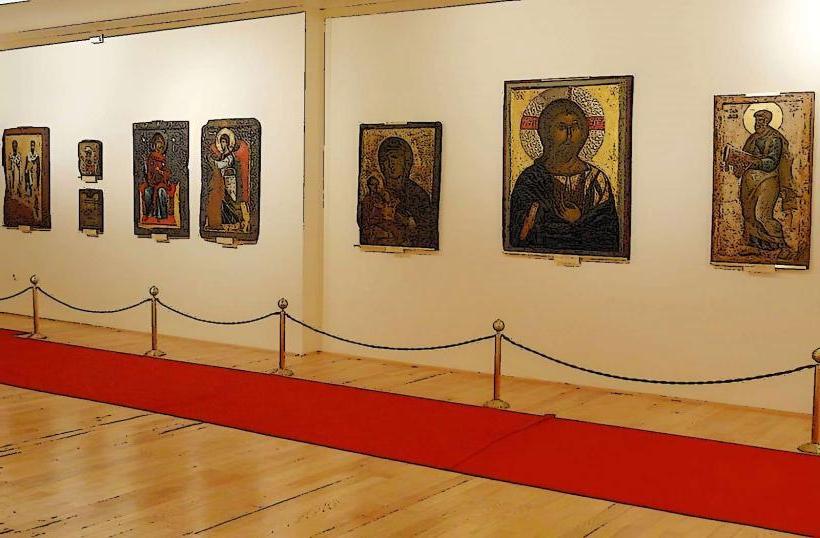
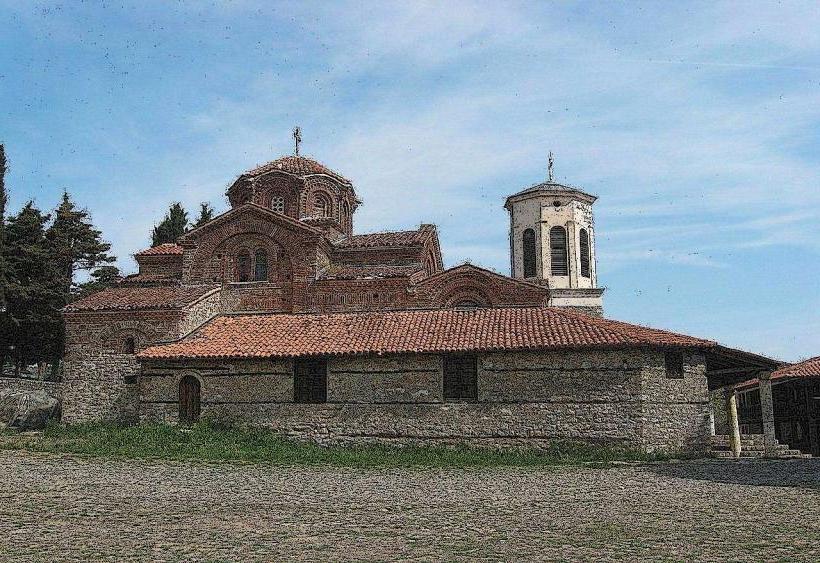
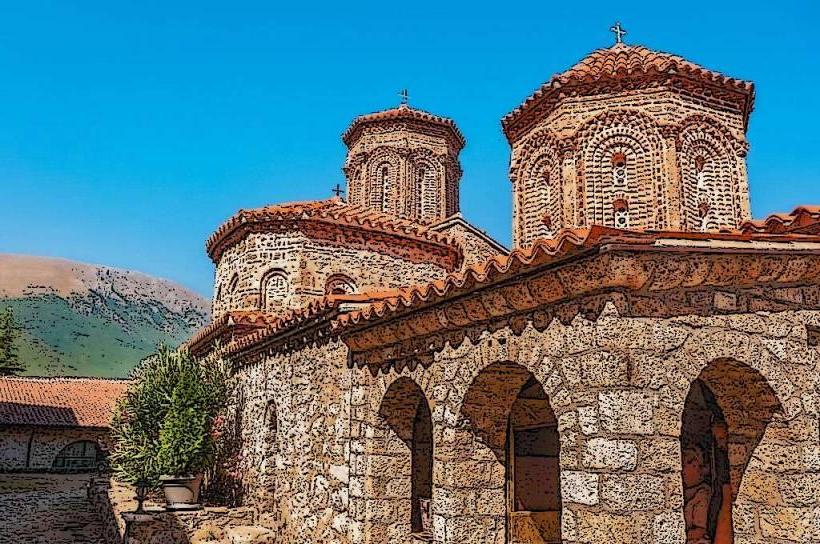
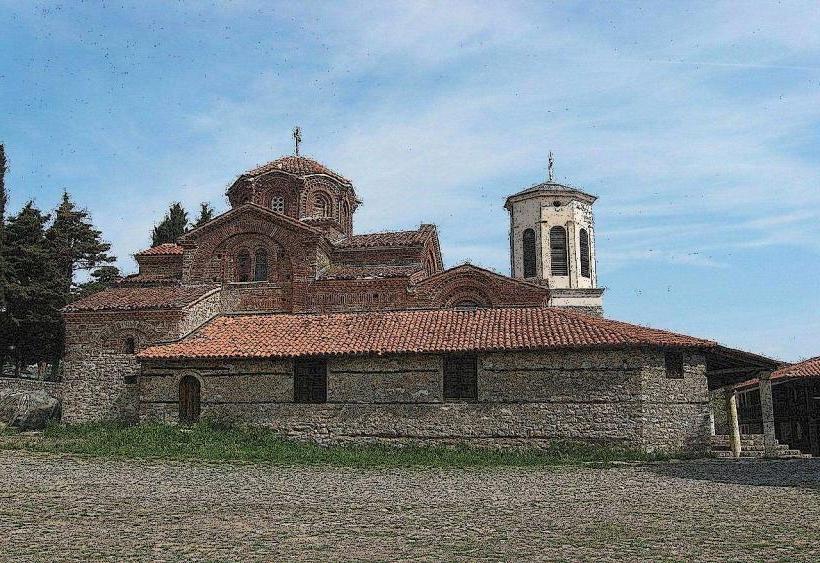
The church is a large three-aisled basilica featuring a central dome and an expansive two-story exonarthex with flanking towers. Its exterior masonry consists of alternating layers of limestone and red brick arranged in decorative meander and fret patterns. The interior is characterized by a high central nave and houses a massive cycle of 11th, 12th, and 13th-century frescoes, notable for their muted earth tones and strict frontal hagiographic poses.
Location & Access Logistics
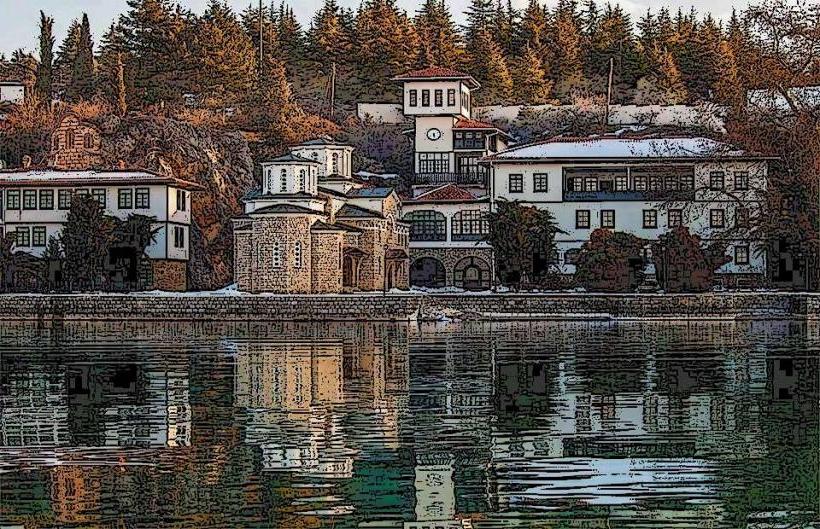
The site is situated on Car Samoil Street, approximately 0.4km west of the Ohrid Port. It is accessible via a 5-minute walk from the central square along the lower pedestrian road of the old town. Vehicle access is restricted to residents; visitors arriving by car should utilize the public parking lot at the Upper Gate (Gorna Porta) and descend through the historic district. No public bus lines operate within these narrow residential streets.
Historical & Ecological Origin
The current structure dates primarily to the 11th century, commissioned by Archbishop Leo between 1037 and 1056 on the foundations of an Early Christian basilica. During the Ottoman period, the church was converted into a mosque, which involved whitewashing the frescoes and adding a minaret, both of which were reversed during 20th-century restoration. The building rests on stable lacustrine sediment near the shore of Lake Ohrid.
Key Highlights & Activities
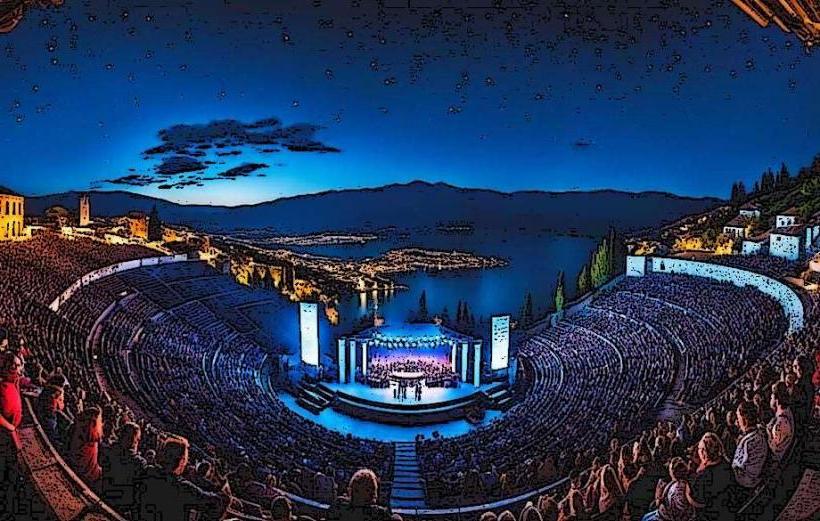
Visitors can view the unique 11th-century fresco of the "Assumption of the Virgin" and the rare depictions of popes and patriarchs in the altar space. The church’s open-air courtyard and the 14th-century Gregory’s Gallery serve as a primary venue for the Ohrid Summer Festival due to the site's exceptional acoustics. Photography is strictly prohibited inside the nave to preserve the pigments of the medieval frescoes.
Infrastructure & Amenities
The complex includes a ticket office and a small souvenir desk at the entrance. Public restrooms are available in the adjacent park area. 4G and 5G cellular signals are consistently strong throughout the site. The interior remains cool even in peak summer, while the exterior courtyard offers limited shade under the stone colonnades. Numerous teahouses and traditional restaurants are located within 0.05km of the church entrance.
Best Time to Visit
The best time for exterior photography is in the early morning when the sun illuminates the eastern apse and its decorative brickwork. The church is open daily from 09:00 to 18:00. Visiting during the off-season (October–April) allows for a more detailed inspection of the frescoes without the large tour groups common during the summer months.
Facts & Legends
A verified historical oddity is that the church contains the only known 11th-century depiction of the "Communion of the Apostles" where the figures are shown in a distinct rhythmic movement rather than static positions. A local tip for visitors is to look for the "Turkish" architectural additions in the exonarthex, such as the stone mimbar, which was left intact as a record of the building's history as a mosque.
Nearby Landmarks
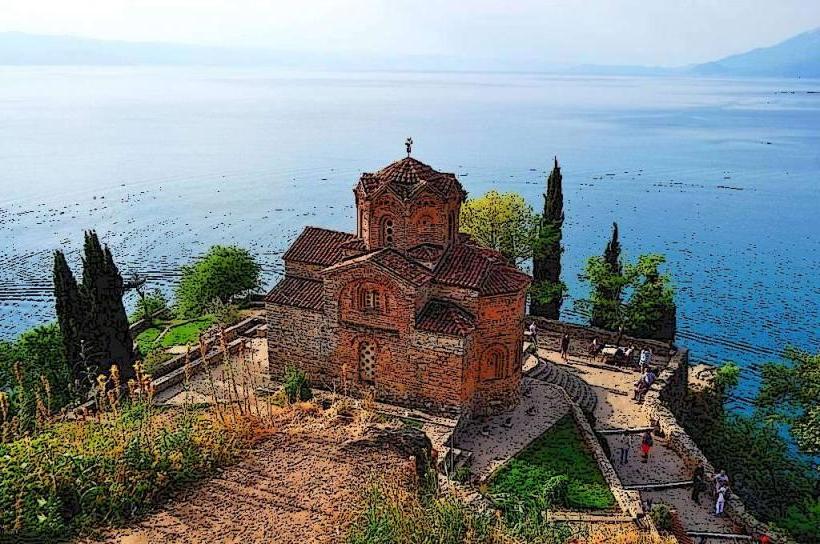
Church of St. John at Kaneo (0.6km West)
Ancient Theatre of Ohrid (0.4km North)
Ohrid Port (0.4km East)
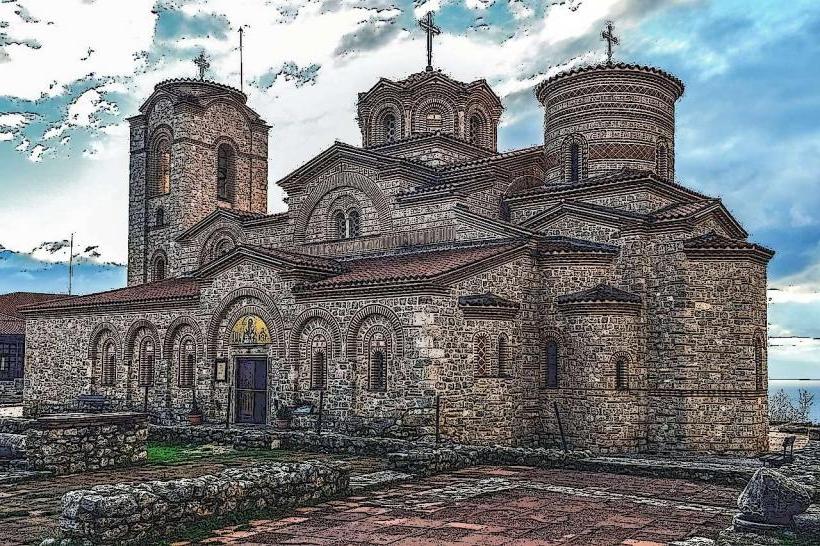
Church of St. Clement of Ohrid (Plaoshnik) (0.4km North-West)
National Workshop for Handmade Paper (0.2km East)