Information
Landmark: Holy Virgin MonasteryCity: Ohrid
Country: North Macedonia
Continent: Europe
Holy Virgin Monastery, Ohrid, North Macedonia, Europe
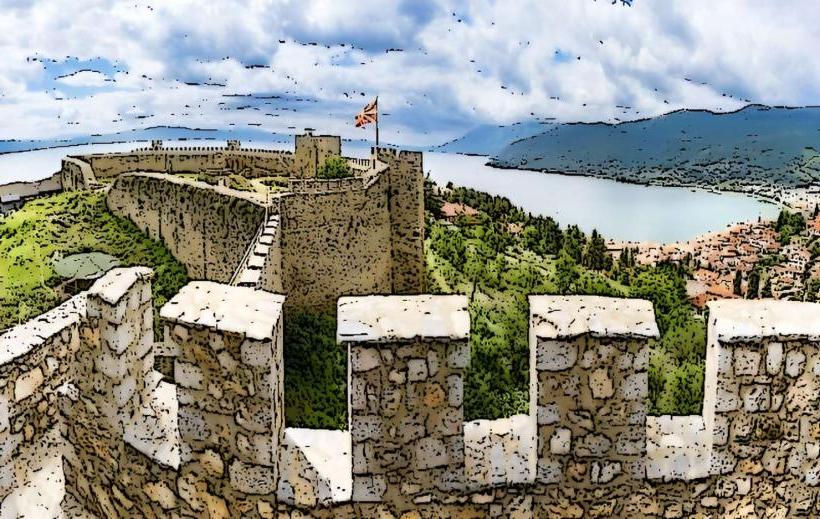
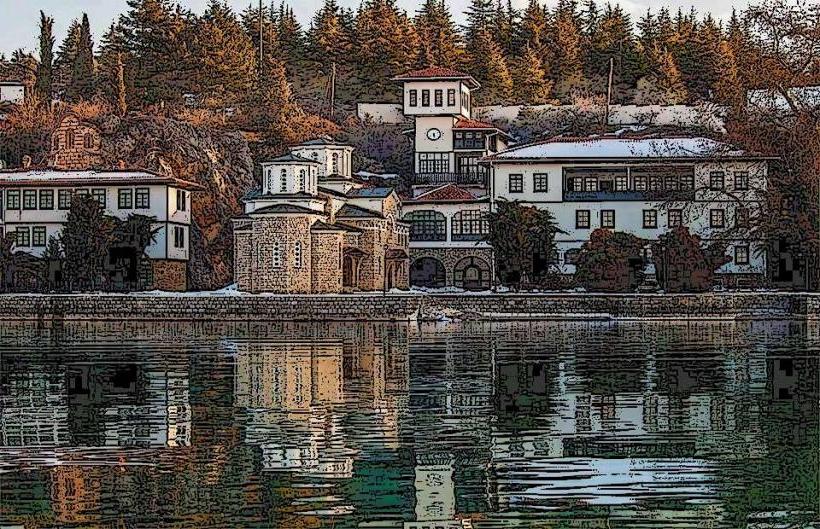
The Holy Virgin Monastery, officially known as the Church of Saint Mary Perybleptos, is an Eastern Orthodox monastery situated in the historic city of Ohrid, North Macedonia. It is positioned on a prominent hill within the old town's fortified walls, offering views of Lake Ohrid.
Visual Characteristics
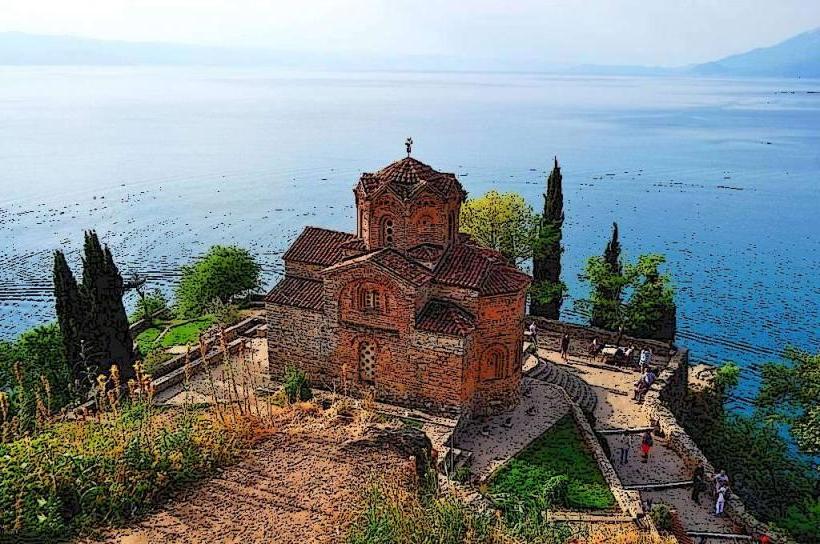
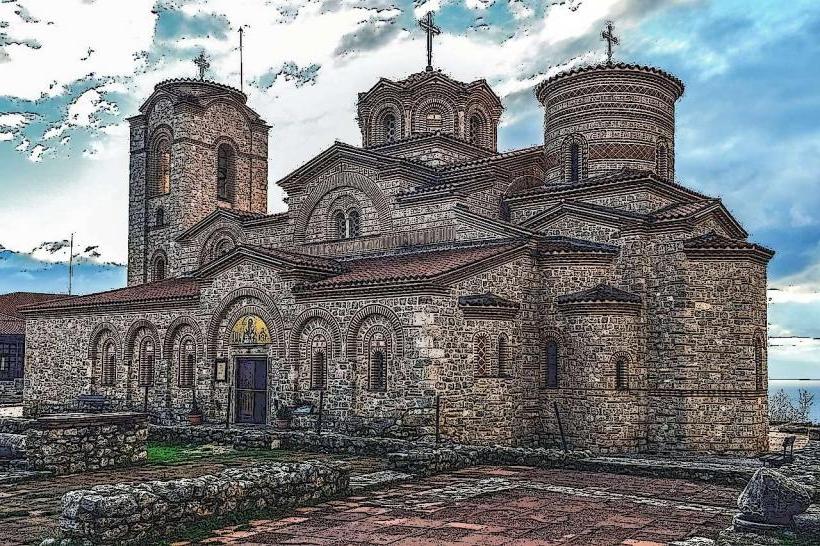
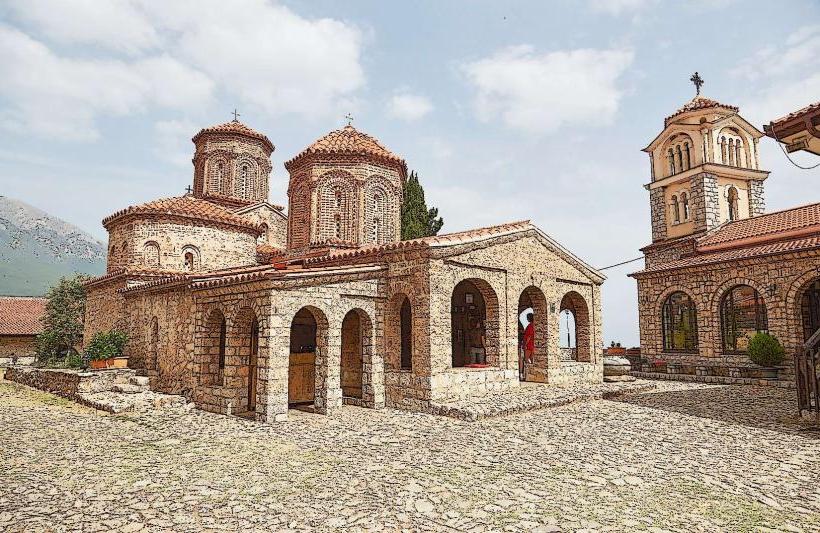
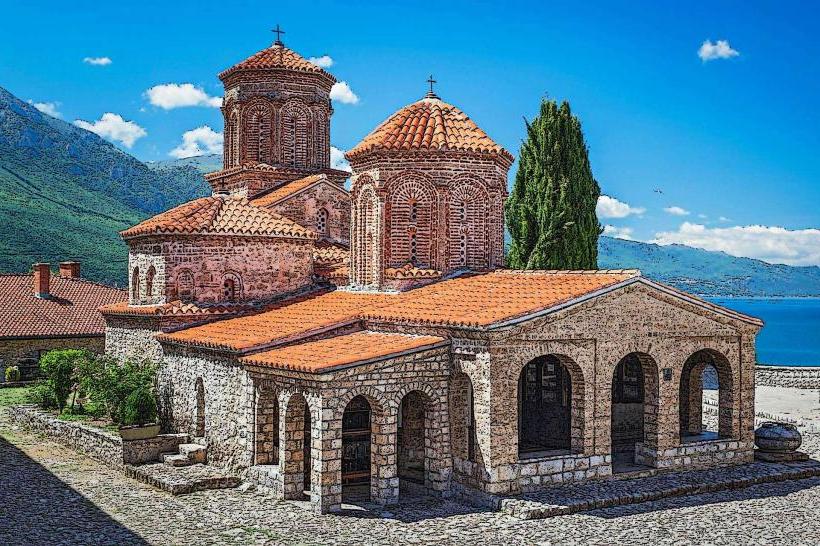
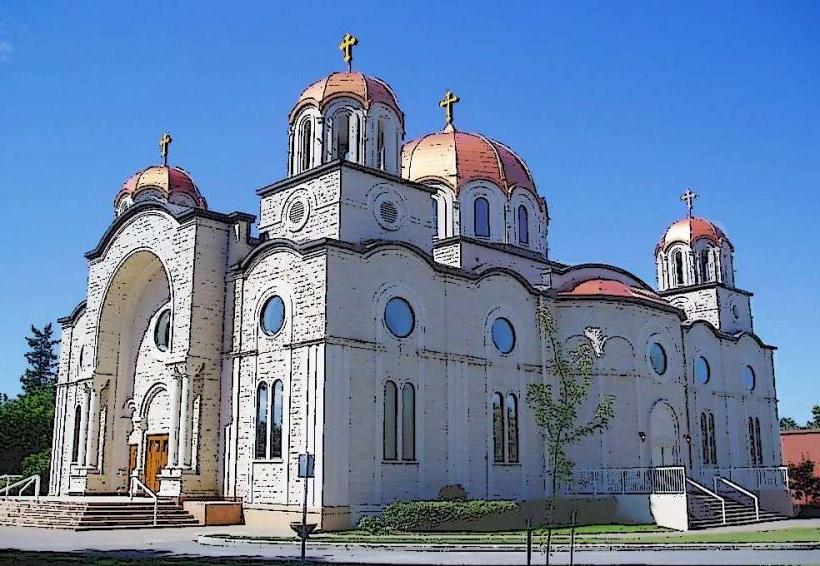
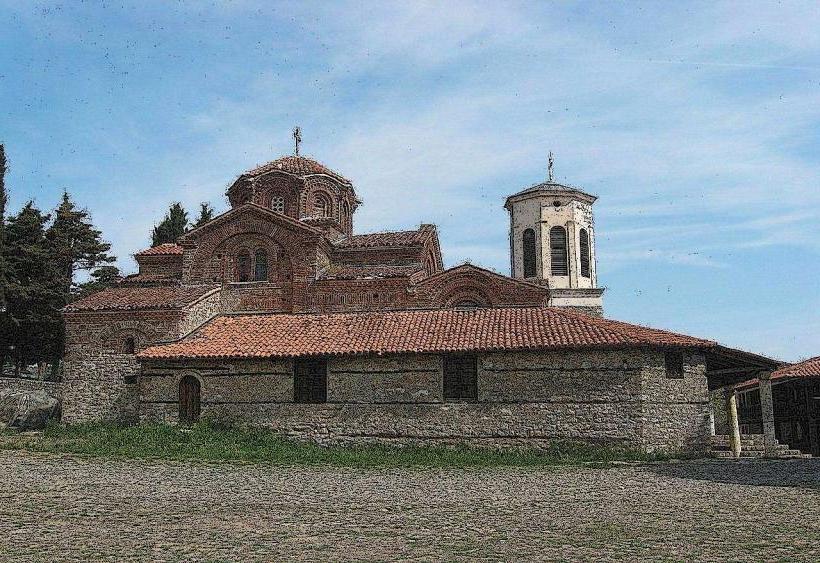
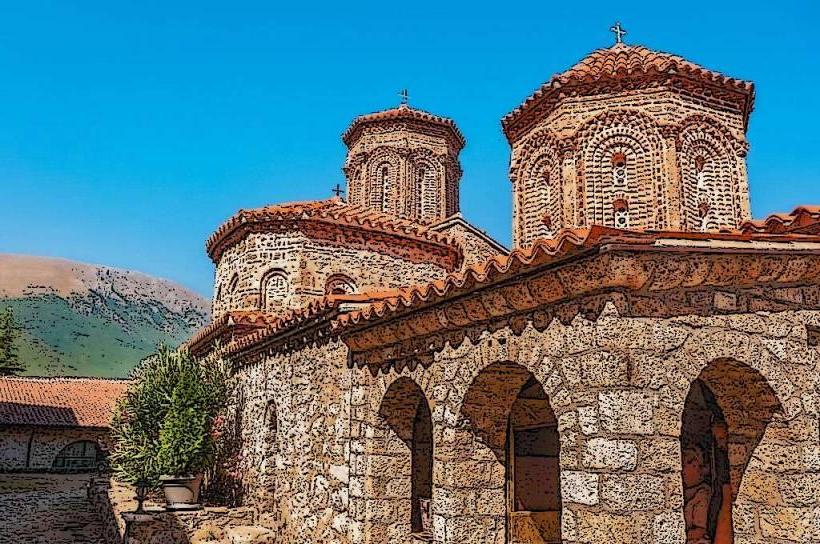
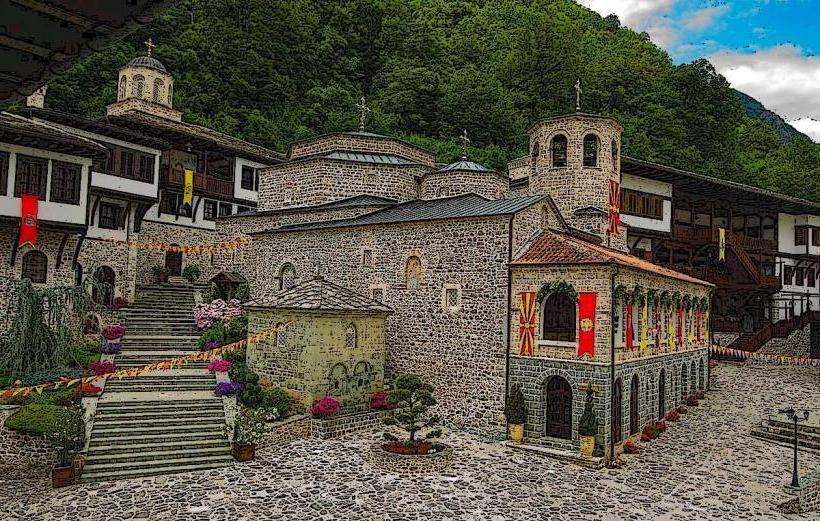
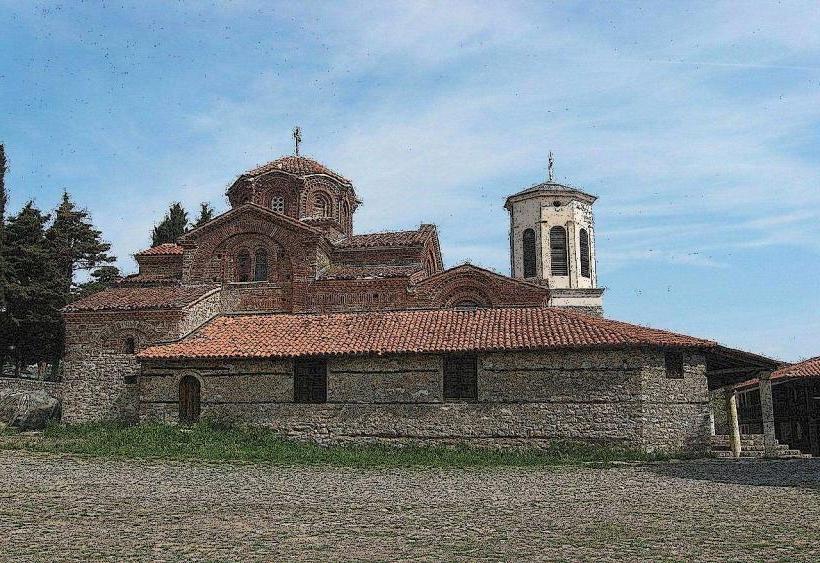
The monastery complex centers around the Church of Saint Mary Perybleptos, constructed primarily from stone and brick in a distinctive Byzantine architectural style. Its exterior features alternating bands of red brick and light-colored stone, characteristic of the late 13th-century Macedonian school. The church has a cross-in-square plan with a central dome and four smaller domes, creating a compact, vertical mass. The interior is extensively covered with frescoes, notable for their vibrant colors and dynamic compositions, depicting biblical scenes and saints.
Location & Access Logistics
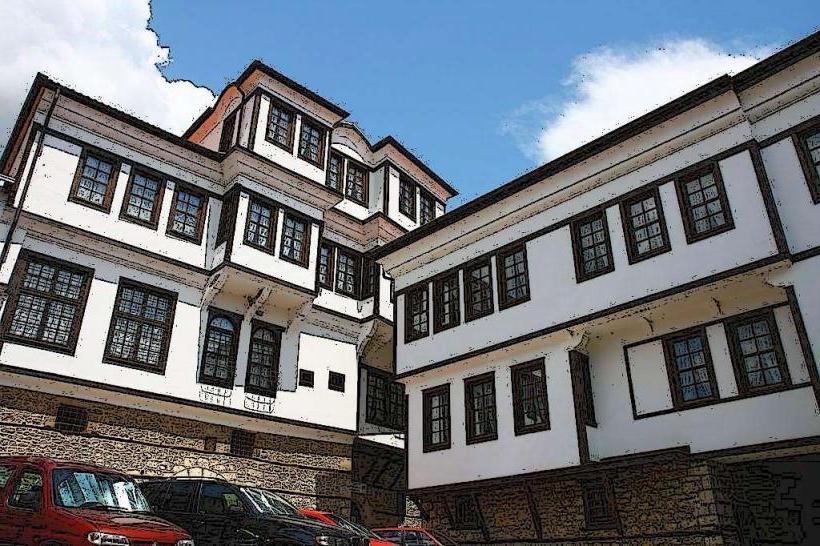
The Holy Virgin Monastery is located within the UNESCO-protected Old Town of Ohrid, approximately 0.8 kilometers southwest of the city center (Čaršija). Access is primarily on foot, as the old town's narrow, cobblestone streets are largely pedestrianized. Visitors can approach from the Upper Gate (Gorna Porta) or via paths leading up from the lakefront. Limited paid parking is available at the base of the old town, such as near the main port or along Tsar Samuil Street, requiring a walk uphill. Public transport, such as local buses, serves the perimeter of the old town, with stops requiring a subsequent walk to the monastery.
Historical & Ecological Origin
The Church of Saint Mary Perybleptos was constructed in 1295, commissioned by the Byzantine dignitary Progon Zgur, who was the son-in-law of Emperor Andronikos II Palaiologos. Its original purpose was to serve as a cathedral church for the Ohrid Archbishopric after the Church of Saint Sophia was converted into a mosque during Ottoman rule. The frescoes within were completed by the renowned painters Michael Astrapas and Eutychios, representing a significant period in Palaiologan Renaissance art.
Key Highlights & Activities
The primary activity is viewing the extensive and well-preserved frescoes that adorn the church's interior, considered masterpieces of Byzantine art. Visitors can observe the detailed iconography and narrative cycles. Exploring the church's exterior architecture and its position within the historic fortifications is also a key highlight. The surrounding area offers opportunities for walking through the old town's cobblestone streets.
Infrastructure & Amenities
Basic restroom facilities are available near the monastery entrance. The area around the church offers limited natural shade from trees. Cell phone signal (4G/5G) is generally reliable throughout the old town, including at the monastery. There are no dedicated food vendors directly at the monastery, but numerous cafes and restaurants are located within a 5-10 minute walk down the hill in the old town and along the lakefront.
Best Time to Visit
The best time to visit for optimal lighting for photography of the exterior is in the morning or late afternoon. For comfortable exploration, the spring (April-May) and autumn (September-October) months offer pleasant temperatures and fewer crowds. Summer months (June-August) are popular but can be hot, especially during midday. The monastery is accessible year-round, with no specific tide requirements.
Facts & Legends
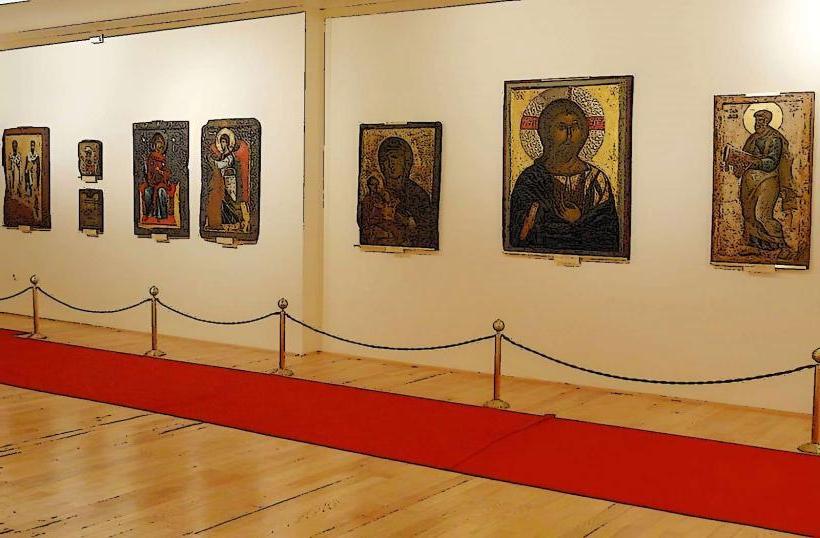
During the Ottoman period, the Church of Saint Mary Perybleptos was renamed the Holy Virgin Monastery when it became the seat of the Ohrid Archbishopric. A unique historical oddity is that the frescoes inside contain one of the earliest known depictions of the "Tree of Jesse" in Byzantine art, illustrating the genealogy of Christ. The monastery also houses a significant collection of icons, some dating back to the 11th century, which were moved here for safekeeping.
Nearby Landmarks
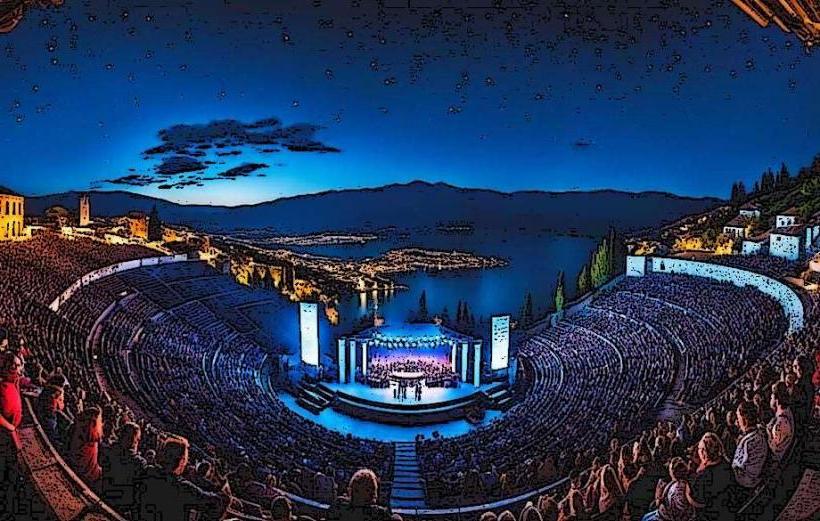
- Ancient Theatre of Ohrid: 0.3km North
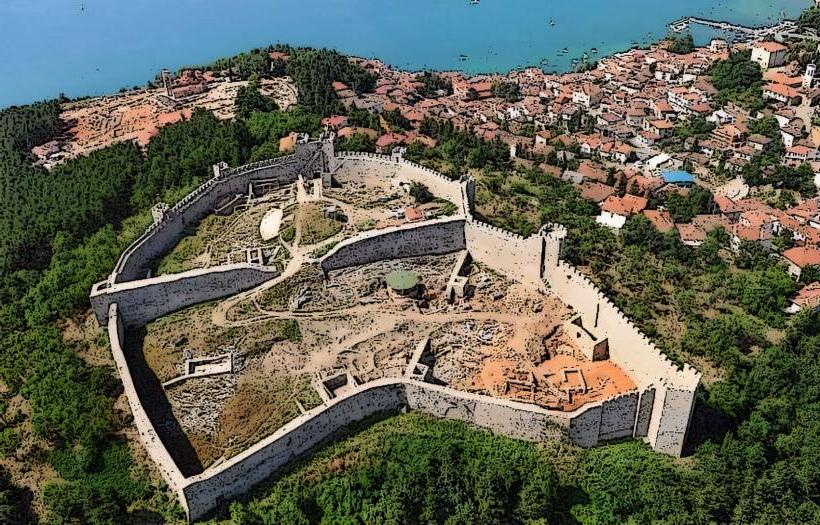
- Samuil's Fortress: 0.4km West
- Church of Saints Clement and Panteleimon (Plaoshnik): 0.6km Southwest
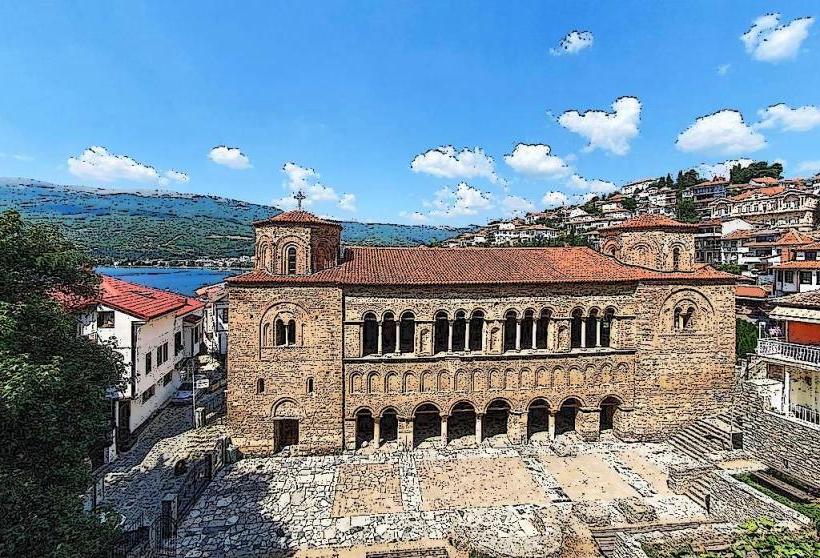
- Church of Saint Sophia: 0.7km East
- Upper Gate (Gorna Porta): 0.1km North