Information
Landmark: Tsar Samuel's FortressCity: Ohrid
Country: North Macedonia
Continent: Europe
Tsar Samuel's Fortress, Ohrid, North Macedonia, Europe
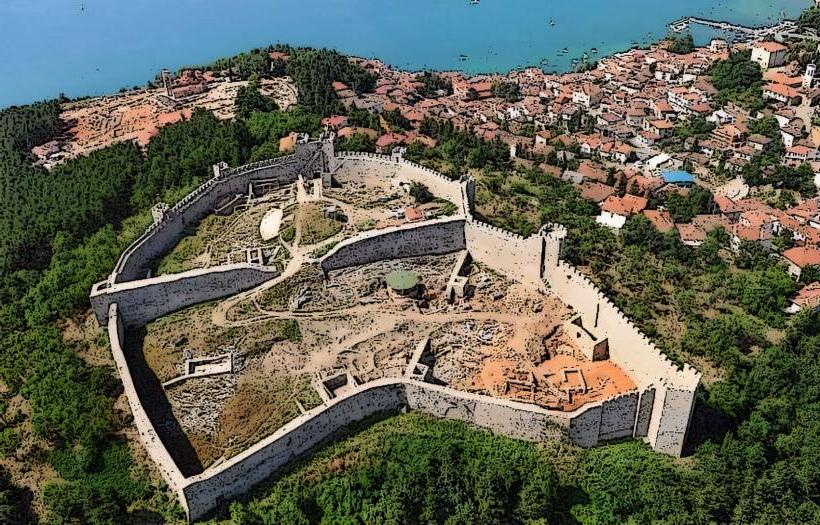
Tsar Samuel's Fortress is a medieval fortification situated on the highest hill overlooking the city of Ohrid, North Macedonia. Its walls enclose the ancient city, providing a panoramic view of Lake Ohrid and the surrounding region.
Visual Characteristics
The fortress consists of robust stone walls constructed primarily from local limestone and mortar, exhibiting a grey and earthy color palette. The walls reach heights of up to 16 meters in certain sections, featuring a perimeter of approximately 3 kilometers. The architectural style is characteristic of Byzantine-era fortifications, later reinforced, incorporating 18 towers and four main gates.
Location & Access Logistics
The fortress is located in the upper part of Ohrid's Old Town, approximately 1 kilometer uphill from Ohrid's main square. Access is primarily via narrow, cobblestone streets such as "Car Samoil" street. Limited parking is available near the main entrance for small vehicles; larger public parking lots are situated at the base of the Old Town, requiring an uphill walk. No direct public bus lines serve the fortress entrance; local taxis can reach the upper Old Town, but walking is the most common method of access from the city center.
Historical & Ecological Origin
The original fortifications on this site date back to the 4th century BC, attributed to King Philip II of Macedon. The current visible structure largely originates from the 10th-11th century, significantly expanded and reinforced during the reign of Tsar Samuel of the First Bulgarian Empire. Its primary purpose was to serve as a defensive stronghold for Ohrid, which functioned as the capital of the empire during that period.
Key Highlights & Activities
Visitors can walk along sections of the ancient ramparts. Exploration of the main gate, known as the Upper Gate, is possible. The elevated positions within the fortress offer opportunities for photography of Lake Ohrid and the city of Ohrid. Archaeological excavations within the fortress grounds are also visible.
Infrastructure & Amenities
Basic public restrooms are available near the main entrance. Shade within the fortress grounds is limited, primarily provided by the walls themselves or sparse vegetation. Cell phone signal coverage is reliable, with 4G/5G available throughout the area. No permanent food vendors operate inside the fortress; small kiosks selling water and snacks may be present seasonally near the entrance. Restaurants and cafes are located downhill in the Old Town.
Best Time to Visit
For optimal photography, early morning (sunrise) or late afternoon (sunset) provides softer light and minimizes harsh shadows on the fortress walls and city views. The best months for visiting are May, June, September, and early October, offering pleasant temperatures and fewer crowds. July and August are typically hot and experience higher visitor numbers. Tide requirements are not applicable for this inland fortress.
Facts & Legends
The fortress walls incorporate numerous spolia, which are reused architectural elements from earlier Roman and Byzantine structures, clearly visible in the masonry. For a less strenuous ascent, approach the fortress from the direction of Plaošnik, as this path generally involves a gentler incline compared to climbing directly from the lower Old Town.
Nearby Landmarks
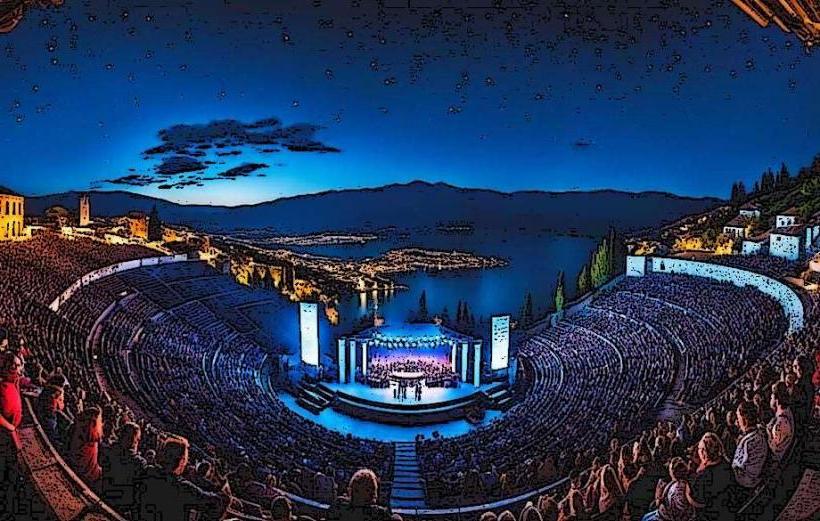
- Ancient Theatre of Ohrid: 0.3km East
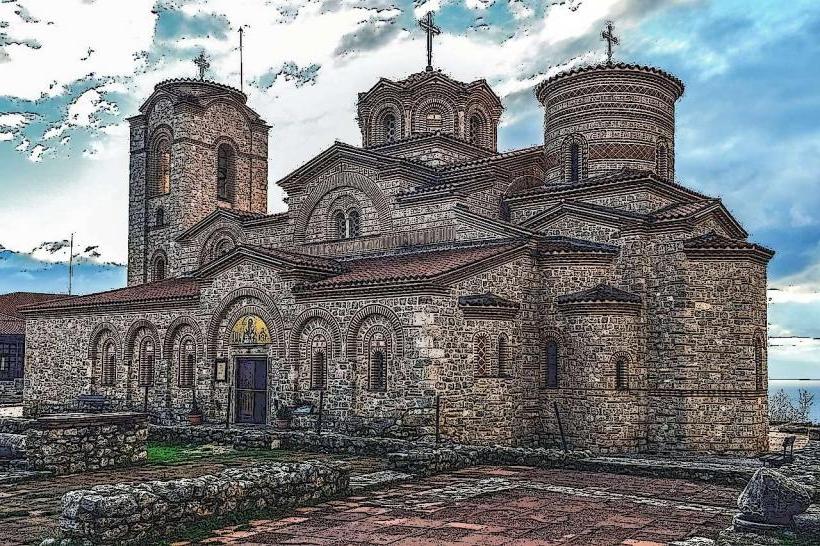
- Church of Saints Clement and Panteleimon (Plaošnik): 0.4km Southwest
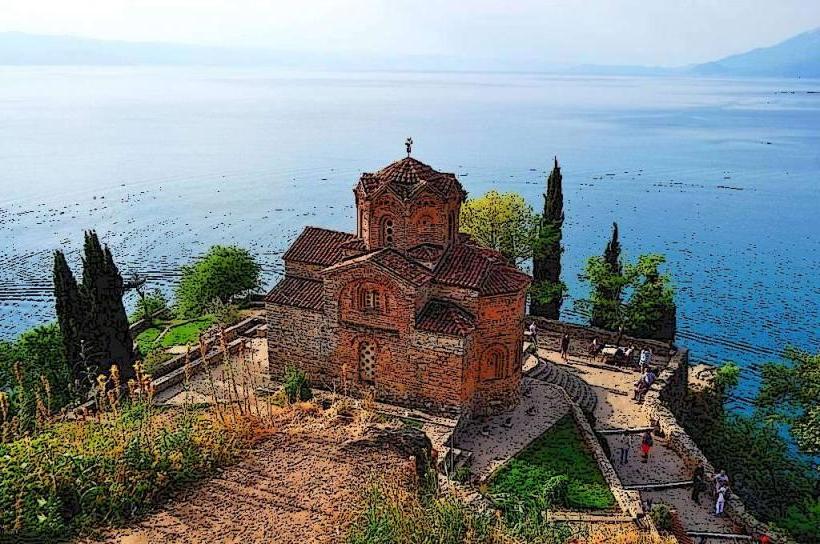
- Church of Saint John at Kaneo: 0.7km West
- Icon Gallery Ohrid: 0.5km South
- Robevi House Museum: 0.8km South