Landmark: Death Railway
City: Kanchanaburi
Country: Thailand
Continent: Asia
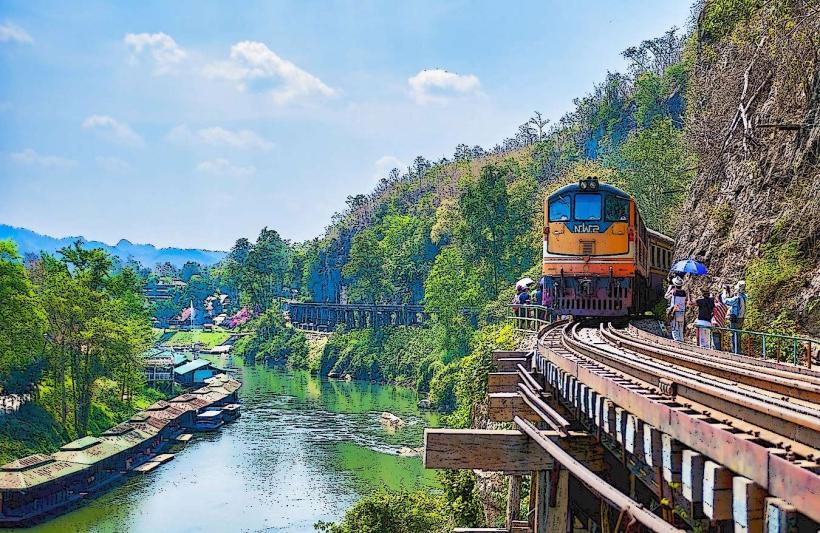
Death Railway, Kanchanaburi, Thailand, Asia
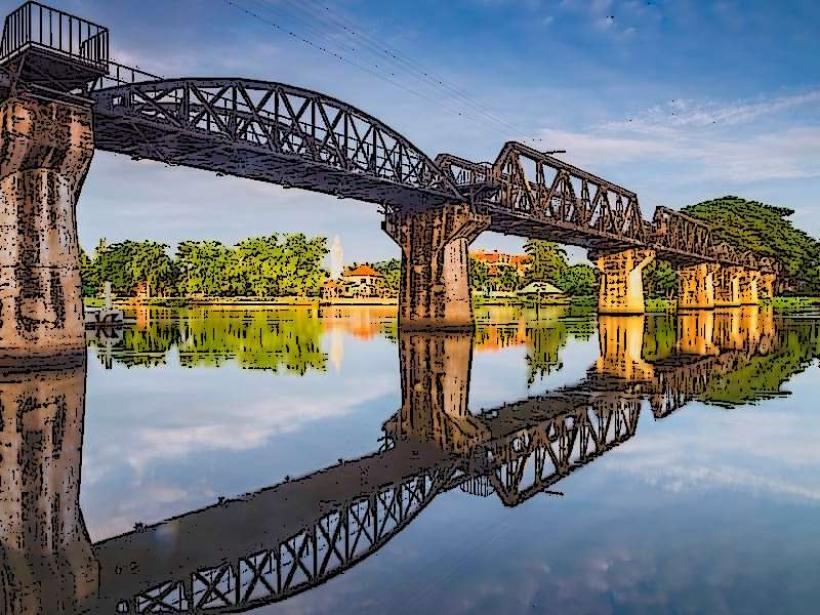
The Death Railway is a railway line constructed by forced labor during World War II, connecting Ban Pong, Thailand, to Thanbyuzayat, Burma (now Myanmar). It is located in the Kanchanaburi Province of Thailand.
Visual Characteristics
The railway line consists of a single track, primarily constructed from laterite and ballast. Sections of the track traverse steep inclines and cross ravines via wooden trestle bridges. The surrounding landscape is characterized by dense jungle vegetation, limestone cliffs, and the Kwai Noi River.
Location & Access Logistics
The Thai section of the Death Railway begins at Ban Pong, approximately 80 kilometers west of Kanchanaburi city. Access to specific points along the railway, such as the Bridge on the River Kwai, is via Highway 323. Kanchanaburi city is accessible by bus from Bangkok's Southern Bus Terminal (Sai Tai Mai) (approx. 2-3 hours). Local transport from Kanchanaburi city to railway points includes songthaews and taxis. The nearest train station to the start of the historical railway is Nam Tok Station, which is the terminus of the current operational line from Kanchanaburi city. Parking is available at various points, including the Bridge on the River Kwai and Nam Tok Station.
Historical & Ecological Origin
Construction of the railway commenced in October 1942 and was completed in October 1943. It was built by the Empire of Japan to supply its forces in Burma. The project utilized Allied prisoners of war (British, Australian, American, Dutch) and Asian laborers, many of whom perished due to harsh conditions, disease, and malnutrition. The railway traverses a tropical monsoon climate zone, supporting diverse flora and fauna within the surrounding jungle.
Key Highlights & Activities
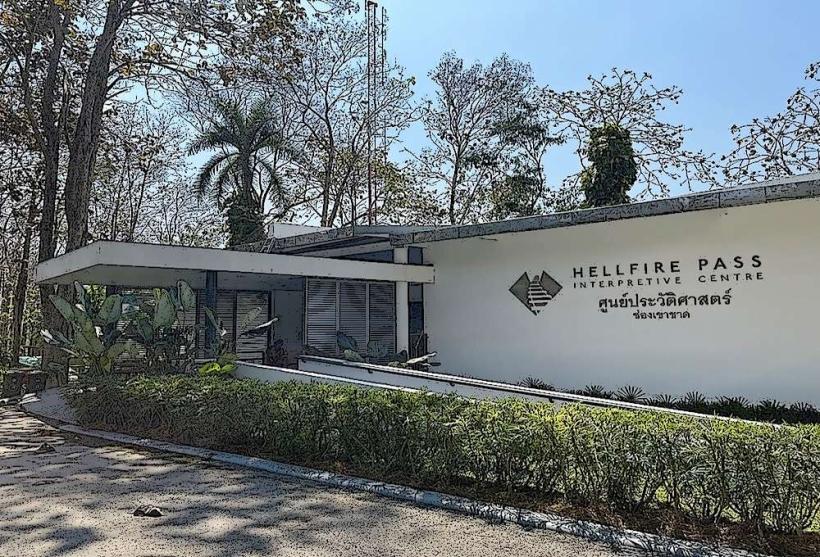
Visitors can walk across sections of the original railway, including the iconic Bridge over the River Kwai. Train journeys are available on the operational section from Kanchanaburi city to Nam Tok Station, offering views of the jungle and river. The Hellfire Pass Memorial Museum provides historical context and exhibits. Hiking along disused sections of the track is possible in certain areas.
Infrastructure & Amenities
Restrooms are available at major tourist points like the Bridge on the River Kwai and Nam Tok Station. Shade is limited along the open track sections. Cell phone signal (4G/5G) is generally available in populated areas and near stations but can be intermittent along remote track sections. Food vendors and small restaurants are located near the Bridge on the River Kwai and in Kanchanaburi city.
Best Time to Visit
The best time of year to visit is during the dry season, from November to February, when temperatures are moderate and rainfall is minimal. The best time of day for photography is generally in the morning or late afternoon to avoid harsh midday sun and capture softer light on the landscape and structures.
Facts & Legends
A significant portion of the railway was built using manual labor and basic tools, with sections carved directly into limestone cliffs. The nickname "Death Railway" stems from the estimated 100,000 laborers and POWs who died during its construction.
Nearby Landmarks
- Bridge on the River Kwai (0.1km West)
- Kanchanaburi War Cemetery (2km East)
- Chung Kai War Cemetery (4km Southwest)
- Wat Tham Suea (Tiger Cave Temple) (5km Northwest)