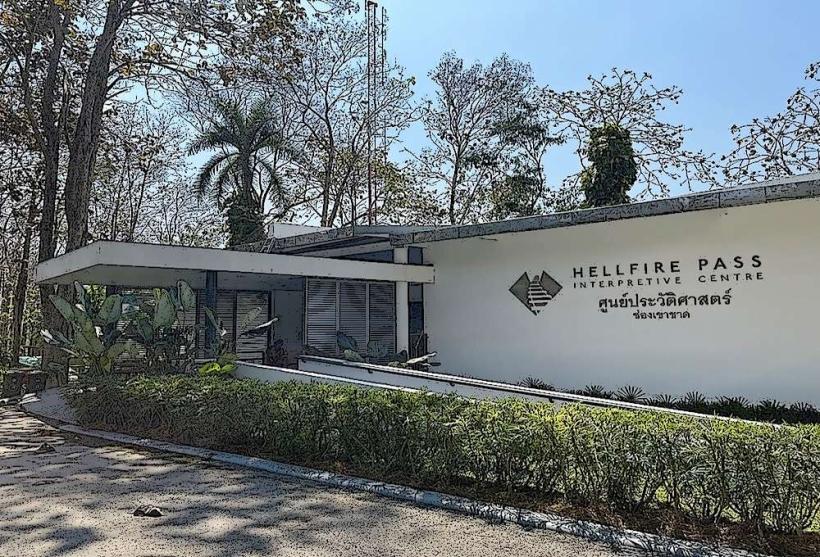
Landmark: Hellfire Pass Memorial Museum
City: Kanchanaburi
Country: Thailand
Continent: Asia
Hellfire Pass Memorial Museum, Kanchanaburi, Thailand, Asia
The Hellfire Pass Memorial Museum is a historical site located in Kanchanaburi, Thailand, commemorating the laborers who died during the construction of the Burma Railway.
Visual Characteristics
The museum structure is a low-profile building constructed primarily from concrete and local stone. Its design incorporates open-air elements and shaded walkways. The surrounding landscape features dense tropical vegetation, with steep, jungle-covered hillsides descending towards the former railway cutting. The memorial itself consists of a walking trail through the cutting, marked by interpretive panels and stone markers.
Location & Access Logistics
Hellfire Pass is situated approximately 80 kilometers northwest of Kanchanaburi city center, along Highway 323. The journey by car takes approximately 1.5 to 2 hours. Public transport options are limited; the most feasible is to hire a private taxi or join a guided tour from Kanchanaburi. There is a dedicated parking area at the museum entrance. The nearest train station is Nam Tok, which is a considerable distance away and requires onward transport.
Historical & Ecological Origin
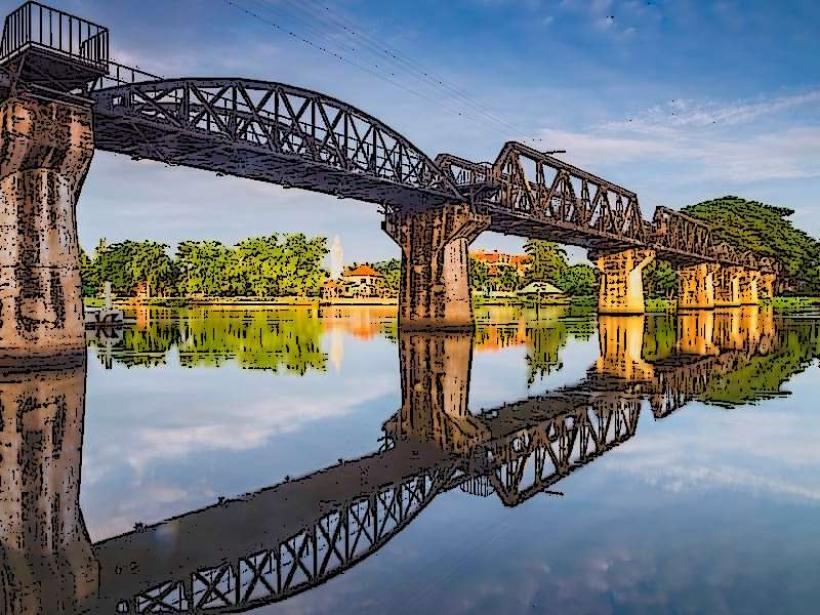
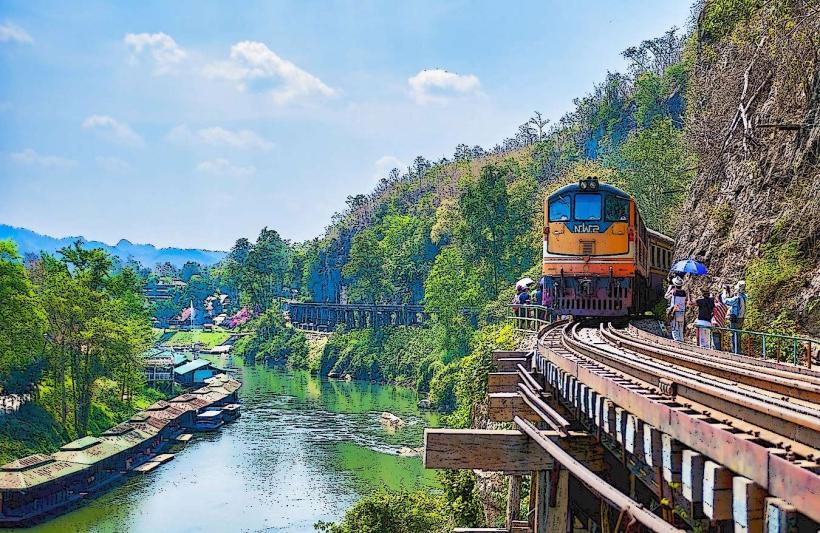
The site's historical significance stems from its role in the construction of the Burma Railway, also known as the Death Railway, by the Empire of Japan during World War II. The railway was built to support Japanese military operations in Burma. The cutting through the rock at Hellfire Pass was one of the most arduous sections, requiring immense manual labor under brutal conditions. The geological formation is primarily limestone karst, characteristic of the region.
Key Highlights & Activities
Visitors can walk the 4-kilometer trail through the original railway cutting, reading the detailed interpretive panels that recount the history and experiences of the prisoners of war and forced laborers. The museum provides in-depth information and exhibits. Photography of the cutting and surrounding jungle is permitted. The site is primarily for reflection and historical understanding.
Infrastructure & Amenities
The museum complex includes restrooms, a small gift shop, and shaded seating areas. There are no food vendors on-site, but basic refreshments may be available at the gift shop. Cell phone signal (4G/5G) is generally available but can be intermittent within the cutting itself due to the terrain.
Best Time to Visit
The best time of day for visiting is in the morning, between 8:00 AM and 11:00 AM, to avoid the peak heat of the day. The dry season, from November to February, offers the most comfortable weather conditions. The site is accessible year-round, but the rainy season (June to October) can result in slippery trails.
Facts & Legends
A specific tip for visitors is to wear sturdy, closed-toe shoes suitable for walking on uneven terrain. The name "Hellfire Pass" was given by the Allied prisoners of war due to the horrific conditions and the sight of the campfires illuminating the cutting at night, resembling a scene from hell.
Nearby Landmarks
Chong Kai War Cemetery: 65km South-East
Kanchanaburi War Cemetery: 70km South-East
Bridge over the River Kwai: 75km South-East
Erawan National Park: 30km North