Landmark: Ecusson
City: Montpellier
Country: France
Continent: Europe
Ecusson, Montpellier, France, Europe
The Écusson is the historic medieval center of Montpellier, France, characterized by its pentagonal shape which resembles an ancient shield. It is one of the largest pedestrianized urban zones in Europe, consisting of a dense network of narrow, winding streets dating back to the 10th century.
Visual Characteristics
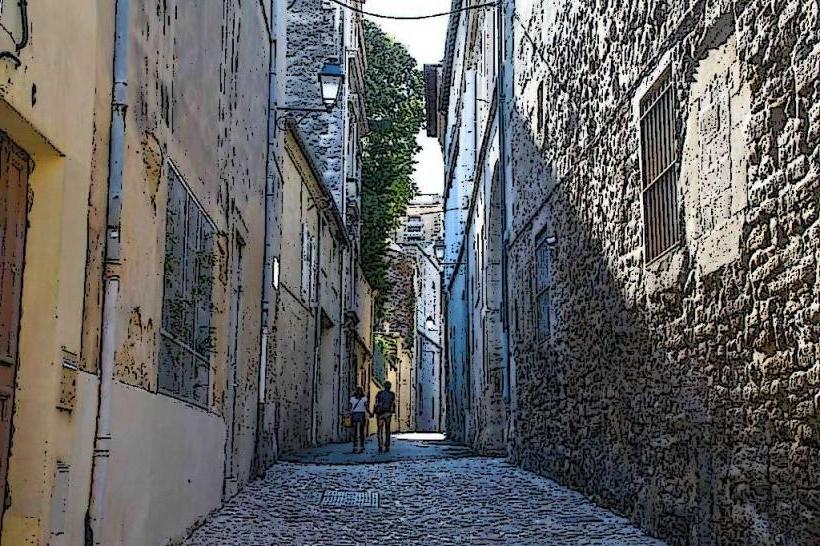
The district is defined by tall, narrow townhouses constructed from honey-colored soft limestone (Pierre de Montpellier). The streets are paved with polished marble or granite slabs and frequently open into small, shaded squares (placettes). Architectural details include medieval vaulted cellars, ornate iron balconies, and large wooden carriage gates that conceal private 17th-century interior courtyards (Hôtels Particuliers).
Location & Access Logistics
The Écusson is situated on a hill between the Place de la Comédie and the Promenade du Peyrou. It is strictly pedestrian; vehicle access is controlled by retractable bollards and limited to residents and delivery services. All four of the city's tram lines (1, 2, 3, and 4) encircle the district, with primary access points at "Comédie," "Corum," and "Saint-Guilhem-Courreau."
Historical & Ecological Origin
The district began developing in 985 AD under the Guilhem dynasty. Unlike many French cities, Montpellier was not a Roman settlement, so the Écusson lacks a grid system, following instead the organic contours of the terrain. The limestone used for construction was largely sourced from the nearby Castries quarries, which provided a porous material suited to the Mediterranean climate.
Key Highlights & Activities
Walking tours of the 80 remaining Hôtels Particuliers (private mansions) are a primary cultural activity. Significant landmarks within the district include the Montpellier Cathedral and the Mikvé (a 12th-century Jewish ritual bath). The area is the city's main commercial hub, featuring a high density of independent boutiques, antique dealers on Rue de l'Ancien Courrier, and nightlife on Rue de l'Université.
Infrastructure & Amenities
Public restrooms are available at the Halles Castellane market and the Place de la Comédie. Shade is naturally provided by the narrowness of the streets and plane trees in squares like Place de la Canourgue. 5G cellular signal is stable outdoors but can be weak inside the thick-walled stone buildings. Hundreds of cafes and small grocery stores are distributed throughout the zone.
Best Time to Visit
Morning (09:00–11:00) is best for observing the local markets and architectural details before pedestrian traffic peaks. Late afternoon provides the best lighting for the limestone facades as the sun hits the higher elevations of the district near the Peyrou. The summer months are hot, but the narrow medieval streets remain significantly cooler than modern urban areas.
Facts & Legends
A verified historical oddity is the "Street of the Treasure" (Rue du Petit Scel), where a hidden cache of medieval gold coins was discovered in the 1920s. A local "secret" is the Place de la Canourgue, the oldest square in the city, which offers a rare view of the Cathedral towers and served as the administrative center during the Middle Ages.
Nearby Landmarks
Montpellier Cathedral: 0.2km North
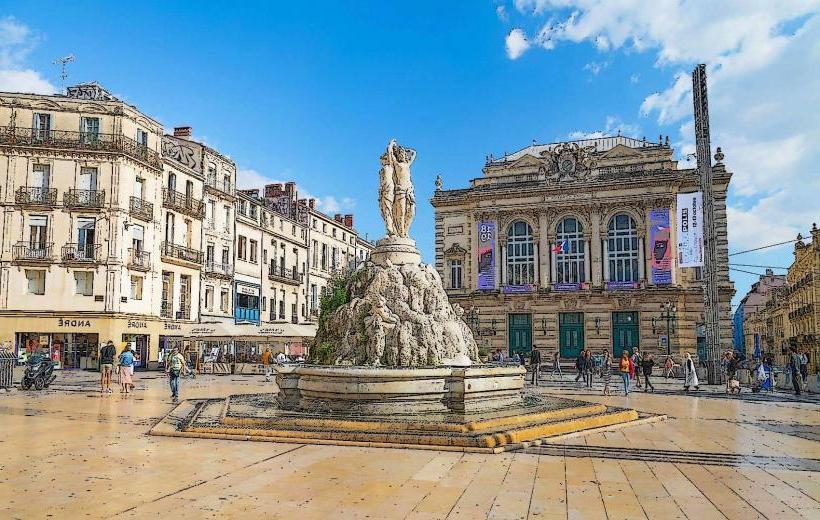
Place de la Comédie: 0.3km Southeast
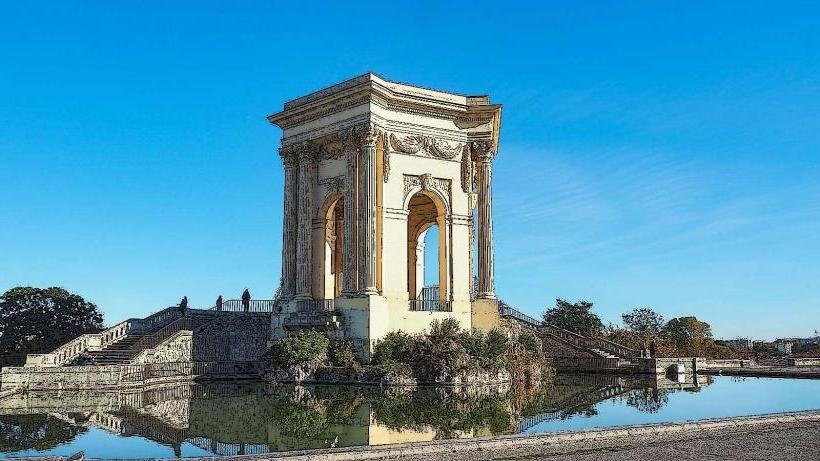
Promenade du Peyrou: 0.4km West
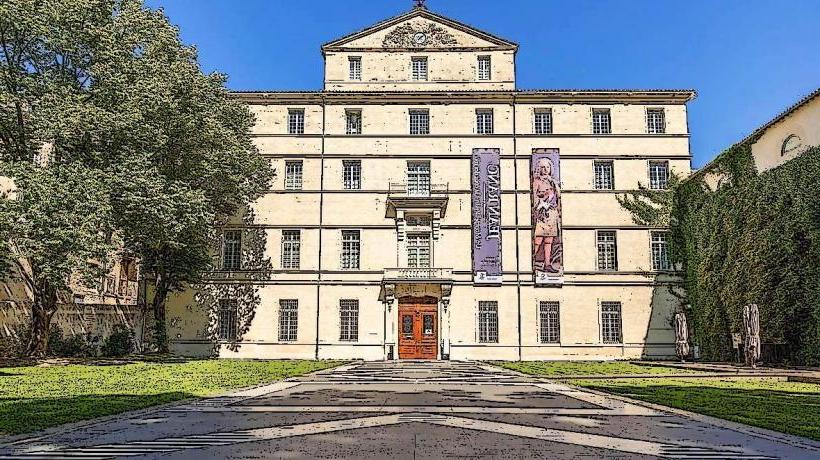
Musée Fabre: 0.3km East
Jardin des Plantes: 0.5km Northwest