Landmark: Emperor's Mosque (Careva Džamija)
City: Sarajevo
Country: Bosnia and Herzegovina
Continent: Europe
Emperor's Mosque (Careva Džamija), Sarajevo, Bosnia and Herzegovina, Europe
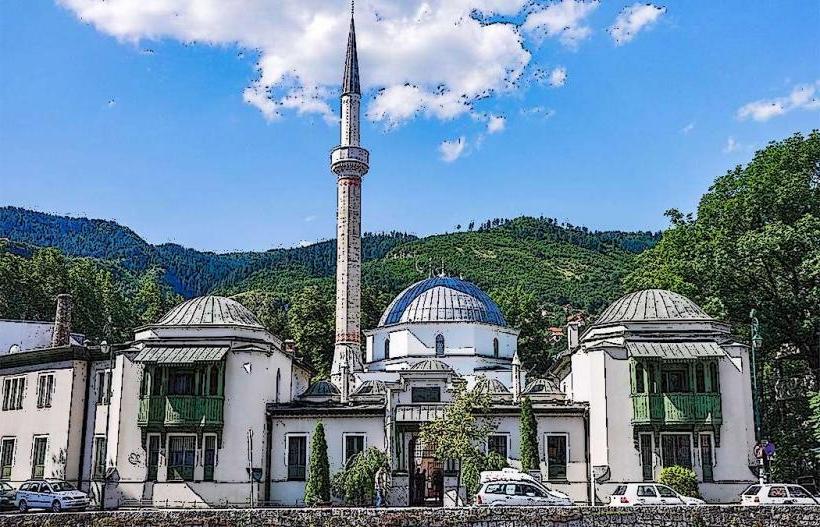
The Emperor's Mosque (Careva džamija) is the oldest mosque in Sarajevo and a premier example of classical Ottoman architecture in the Balkans. It was the first mosque built following the Ottoman conquest of Bosnia and serves as a primary religious and cultural landmark.
Visual Characteristics
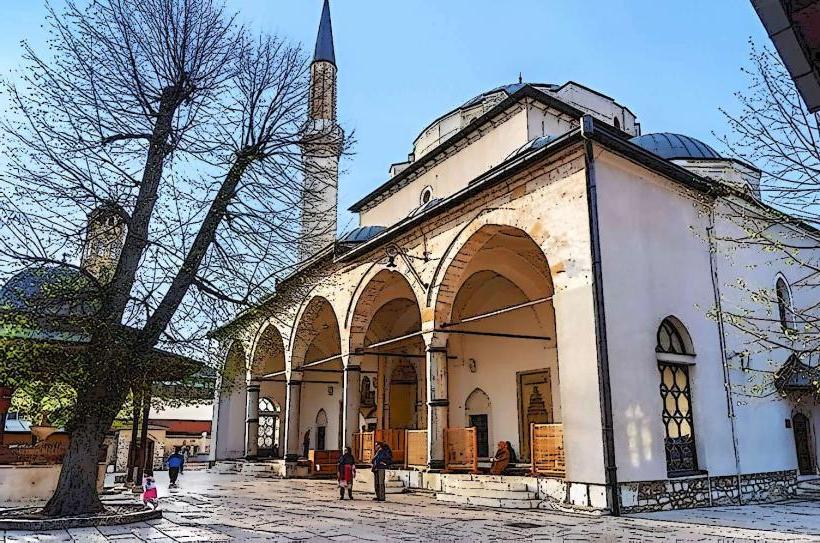
The mosque is the largest single-subdome mosque in Bosnia and Herzegovina. It features a massive central dome supported by a square base, with a high octagonal minaret reaching 45.6 meters.
Architecture: The exterior is characterized by thick stone walls (up to 2.2 meters) and a spacious portico (riwaq) with domes.
Interior: The prayer hall is notable for its ornate mihrab and minbar, along with intricate calligraphic inscriptions and floral motifs restored in the early 1980s. A unique feature is a hidden staircase within the walls leading to a gallery used to light lamps for illumination.
Location & Access Logistics
Address: Obala Isa-bega Ishakovića, Sarajevo.
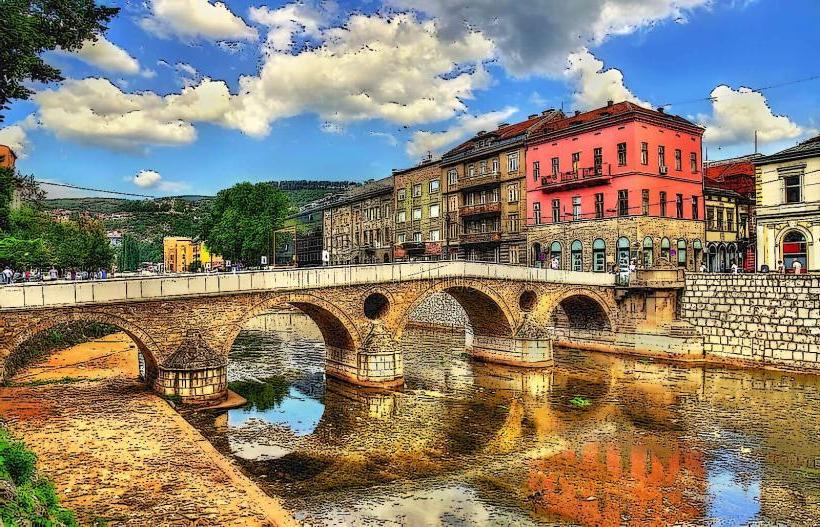
Transport: Located on the left bank of the Miljacka River, directly across from the Latin Bridge. It is a 3-minute walk from the heart of Baščaršija.
Entry: Open to the public between prayer times. Visitors must adhere to modest dress codes (shoulders and knees covered; headscarves for women are typically available at the entrance). Shoes must be removed before entering the prayer hall.
Hours: Generally accessible from 5:00 AM to 11:00 PM to accommodate the five daily prayers.
Historical Context
Founding: Originally built in 1457 by Isa-beg Ishaković, the founder of Sarajevo, and dedicated to Sultan Mehmed II "the Conqueror."
Reconstruction: The original wooden structure was destroyed in 1480 by Hungarian forces. It was rebuilt in stone in 1565, funded by Sultan Suleiman the Magnificent. The design is attributed to associates of the legendary Ottoman architect Mimar Sinan.
Modern History: The mosque was damaged during World War II and again during the Siege of Sarajevo (1992–1996) but underwent extensive restoration in 2014–2015.
Key Highlights & Activities
The Graveyard: The adjacent burial ground contains the tombs of prominent Sarajevo figures, including viziers, mullahs, and the city's founder, Isa-beg Ishaković.
Isa-beg’s Hammam: Located next to the mosque, the original 15th-century public bathhouse has been restored and now serves as a boutique hotel.
The Courtyard: A serene, enclosed garden and shadrvan (ablution fountain) provide a quiet space away from the city's main tourist corridors.
Infrastructure & Amenities
The mosque is located in a high-traffic urban area. 5G cellular coverage is excellent. Public restrooms and numerous traditional restaurants are available in the immediate vicinity of the Baščaršija bazaar across the river.
Best Time to Visit
Photography: The mosque is best captured from the Emperor's Bridge or Latin Bridge at sunset, when the minaret and dome are silhouetted against the sky.
Cultural Experience: Visiting shortly after the midday (Dhuhr) prayer allows for a view of the local community's religious life while ensuring the building is open for exploration.
Nearby Landmarks
Latin Bridge – 0.1km North (across the river)
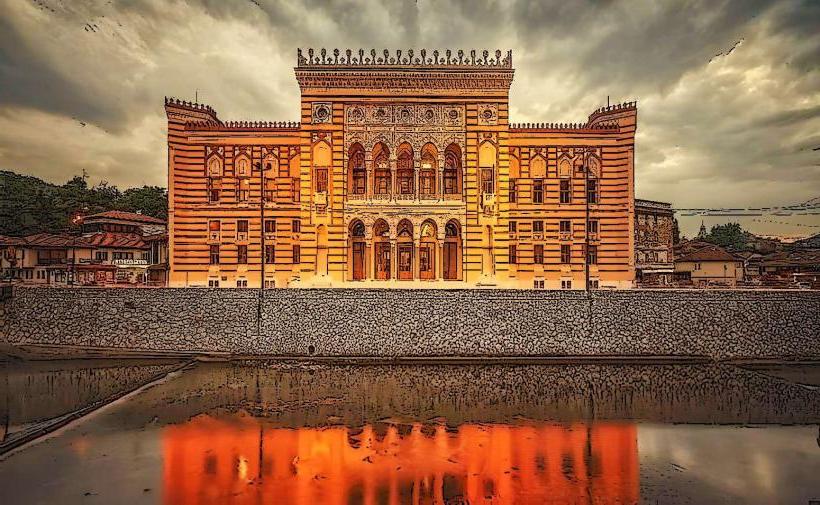
Sarajevo City Hall (Vijećnica) – 0.3km East
Gazi Husrev-beg Mosque – 0.4km North
Konak (Governor's Residence) – 0.1km South