Landmark: Fort Caspar Museum
City: Casper
Country: USA Wyoming
Continent: North America
Fort Caspar Museum, Casper, USA Wyoming, North America
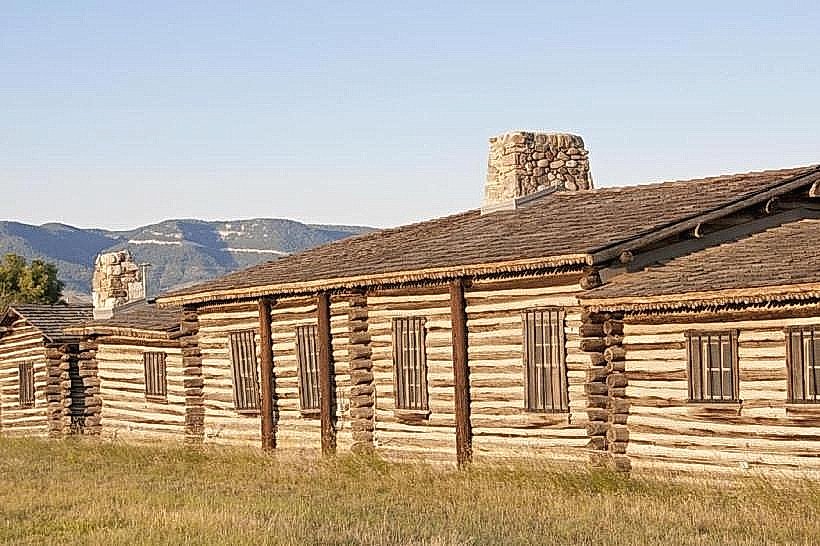
Fort Caspar Museum is a reconstructed 19th-century military post located in Casper, Wyoming. It preserves and interprets the history of the Oregon, California, and Mormon Trails.
Visual Characteristics
The fort is constructed primarily from adobe bricks and timber. Structures include a blockhouse, barracks, officers' quarters, and a blacksmith shop. The buildings are low-profile, designed for defensive purposes. The site is situated on a relatively flat plain adjacent to the North Platte River.
Location & Access Logistics
Fort Caspar Museum is located at 4001 Fort Caspar Road, Casper, Wyoming. This is approximately 3 miles west of downtown Casper. Access is via West 13th Street, which becomes Fort Caspar Road. Ample free parking is available on-site. Public transport options are limited; the nearest bus stop is approximately 1 mile east on West 13th Street.
Historical & Ecological Origin
The original Fort Caspar was established by the U.S. Army in 1865 to protect emigrants on the Overland Trails. It was named after Captain Caspar Collins. The current structures are reconstructions based on original plans and historical research, completed in the mid-20th century.
Key Highlights & Activities
Visitors can explore the reconstructed buildings, including the blockhouse, barracks, and officers' quarters. Living history demonstrations, such as blacksmithing and period crafts, are often conducted. Interpretive exhibits detail the fort's history and the experiences of trail travelers. Walking tours of the grounds are available.
Infrastructure & Amenities
Restrooms are available within the museum building. Limited shaded areas are present around the buildings. Cell phone signal (4G/5G) is generally available. No on-site food vendors; nearest options are located in Casper.
Best Time to Visit
The best time of day for photography is mid-morning or late afternoon when the sun angle provides definition on the adobe structures. The best months for visiting are May through September, when weather is typically mild and outdoor demonstrations are more frequent. No tide considerations apply.
Facts & Legends
A notable historical detail is that the fort was abandoned and burned by the Army in 1867, only to be rebuilt by civilian emigrants who used its remains as a base. The original fort was named after Lieutenant Caspar Collins, who was killed in a skirmish with Native Americans in 1865. His name was misspelled as "Caspar" on the fort's designation, and the misspelling persisted.
Nearby Landmarks
- Tate Geological Museum (2.5km East)
- David Street Station (3.0km East)
- Nicolaysen Art Museum (3.2km East)
- Central Wyoming College (3.5km Southeast)