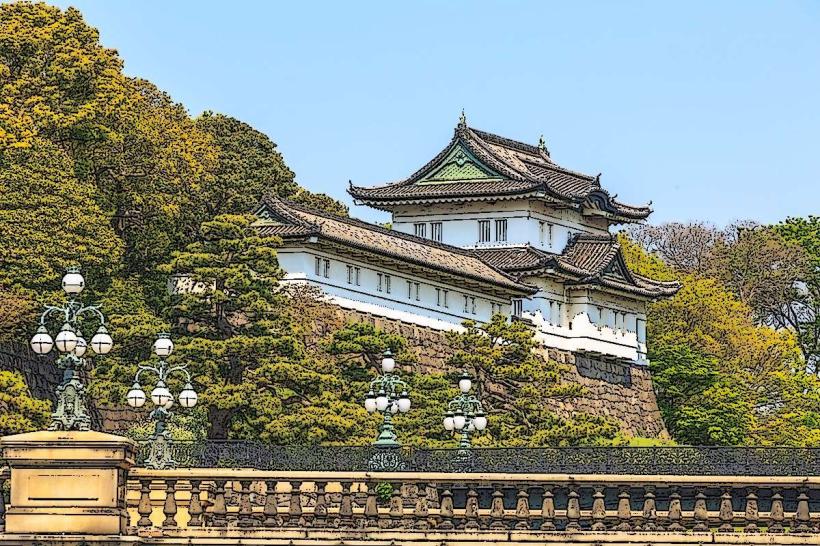
Landmark: Imperial Palace
City: Tokyo
Country: Japan
Continent: Asia
Imperial Palace, Tokyo, Japan, Asia
The Imperial Palace is the primary residence of the Emperor of Japan, located in the Chiyoda ward of Tokyo.
It is situated on the former site of Edo Castle and is surrounded by moats and extensive gardens.
Visual Characteristics
The current palace structures are primarily modern constructions, with the main residence being the Kyūden (Imperial Palace). The grounds feature traditional Japanese gardens, including the East Garden (Higashi Gyoen), which preserves remnants of the Edo Castle's fortifications. The remaining structures of Edo Castle include stone walls, moats, and guardhouses. The palace complex covers an area of approximately 1.15 square kilometers.
Location & Access Logistics
The Imperial Palace is located in central Tokyo. The nearest train stations are Tokyo Station (JR Lines, Marunouchi Line, Tozai Line, Chiyoda Line, Yurakucho Line, Namboku Line) and Otemachi Station (Marunouchi Line, Tozai Line, Chiyoda Line, Hanzomon Line, Mita Line). From Tokyo Station, it is approximately a 15-minute walk to the East Garden entrance. Limited public parking is available near the outer grounds, but it is generally recommended to use public transportation due to high demand and limited availability.
Historical & Ecological Origin
The site was originally the location of Edo Castle, built by the Tokugawa shogunate in 1603. The castle served as the seat of power for the Tokugawa shogunate for over 250 years. Following the Meiji Restoration in 1868, the Imperial family relocated from Kyoto to Edo, which was renamed Tokyo. The original Edo Castle structures were largely destroyed by fires and during World War II. The current Imperial Palace was rebuilt in a modern style, with construction of the main palace building completed in 1969.
Key Highlights & Activities
Visitors can explore the East Garden, which is open to the public and contains the foundations of the former castle keep and Ninomaru Garden. Guided tours of the inner palace grounds are available on specific days, requiring advance booking. The Nijubashi Bridge, a prominent symbol of the palace, can be viewed from the outer plaza. The Kitanomaru Park, adjacent to the palace, offers walking paths and the Nippon Budokan arena.
Infrastructure & Amenities
Restrooms are available in the East Garden and at designated tour starting points. Shaded areas are present within the East Garden. Cell phone signal (4G/5G) is generally available throughout the accessible areas. Food vendors are not present within the palace grounds, but numerous restaurants and convenience stores are located near Tokyo Station and Otemachi Station.
Best Time to Visit
The East Garden is open from 9:00 AM to 4:00 PM or 5:00 PM depending on the season, and is closed on Mondays and Fridays. The best time of day for photography of the palace exterior is generally in the morning or late afternoon for softer light. Spring (March-May) and Autumn (September-November) offer the most pleasant weather conditions for outdoor exploration.
Facts & Legends
A unique historical detail is that the current Imperial Palace is built on the exact site of the former Edo Castle, which was the administrative center of Japan for over two centuries under the Tokugawa Shogunate. The palace grounds are protected by a complex system of moats, walls, and guardhouses, reflecting the defensive architecture of the original castle.
Nearby Landmarks
- Tokyo Station (0.5km Southeast)
- Nijubashi Bridge (0.3km Southwest)
- Kitanomaru Park (0.2km Northwest)
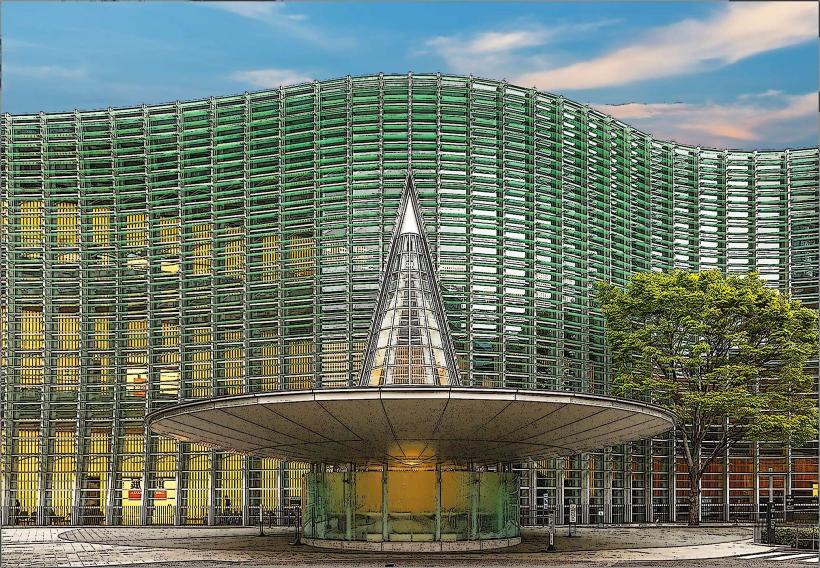
- National Museum of Modern Art, Tokyo (0.7km Northwest)
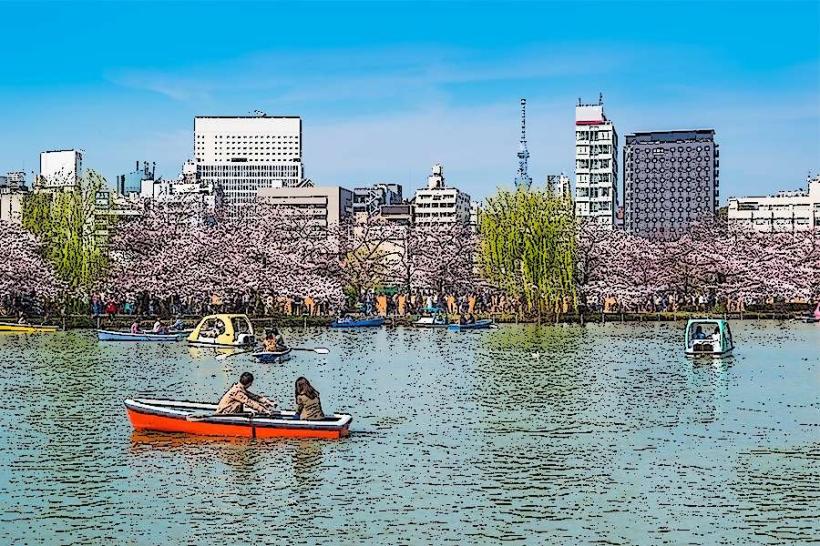
- Chidorigafuchi (0.8km West)