Landmark: Leuven Town Hall
City: Leuven
Country: Belgium
Continent: Europe
Leuven Town Hall, Leuven, Belgium, Europe
The Leuven Town Hall (Stadhuis) is one of the most famous Gothic buildings in the world, renowned for its lace-like architecture and intricate statuary. It is located on the Grote Markt, directly across from St. Peter's Church.
Visual Characteristics
The building is a masterpiece of Brabantine Late Gothic architecture. Its exterior is defined by an extreme level of detail, featuring three tiers of 236 statues nestled in ornate niches. The structure has three main floors, a steep roof with four tiers of dormer windows, and six octagonal turrets (four at the corners and two in the center of the gables). The stone used is primarily light-colored limestone, which gives the building its delicate, "carved" appearance.
Location & Access Logistics
The site is located at Grote Markt 9, 3000 Leuven.
Public Transport: 10-minute walk from Leuven Railway Station; numerous city buses stop at "Leuven Rector De Somerplein."
Parking: The nearest public underground facility is Parking Ladeuze.
Access: The exterior is visible 24/7. Access to the interior (Salons) is restricted to guided tours, which take place daily at 3:00 PM.
Historical Origin
Construction began in 1439 and was completed in 1469. It was designed by architects Sulpitius van Vorst, Jan Keldermans II, and Matheus de Layens. While the building itself is 15th-century, the 236 statues were only added after 1850. The building miraculously survived the German "Burning of Leuven" in 1914 during WWI and sustained only moderate damage from a bomb strike in 1944 during WWII.
Key Highlights & Activities
The Statues: The niches contain figures representing local historical figures, artists, saints, and the Counts of Leuven.
The Interior Salons: Features the 19th-century Council Chamber and the "Small Gothic Hall" with its original 15th-century oak ceiling.
The Basement: Houses the local tourist information center and occasional regional exhibitions.
Corbels: The stone supports beneath the statues feature carved biblical scenes intended to provide moral lessons to the city's magistrates.
Infrastructure & Amenities
The Tourist Office is located within the building, providing maps and city guides. Public restrooms are located nearby at the Rector De Somerplein. 5G signal is excellent throughout the Grote Markt. The building is in a high-density zone for dining and retail.
Best Time to Visit
The Town Hall is best viewed in the late afternoon or evening when the setting sun highlights the depth of the stone carvings, or when it is illuminated by floodlights at night. To see the interior, you must book the 3:00 PM daily tour in advance through the Visit Leuven website.
Facts & Legends
A verified historical detail is that the statues were added in the 19th century at the suggestion of Victor Hugo, who visited the city and noted the empty niches. A local legend involves the "Fiere Margriet" (Proud Margaret), a local folk hero whose story is depicted in some of the city's iconography and whose statue can be seen nearby.
Nearby Landmarks
St. Peter's Church – Directly opposite
University Library & Ladeuze Square – 0.4km East
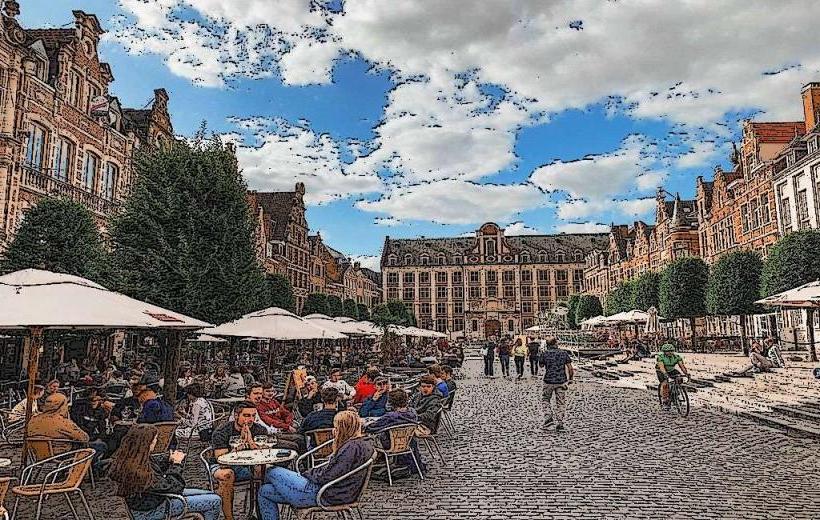
Oude Markt (The "Longest Bar in Europe") – 0.1km West
M Leuven (Art Museum) – 0.3km East
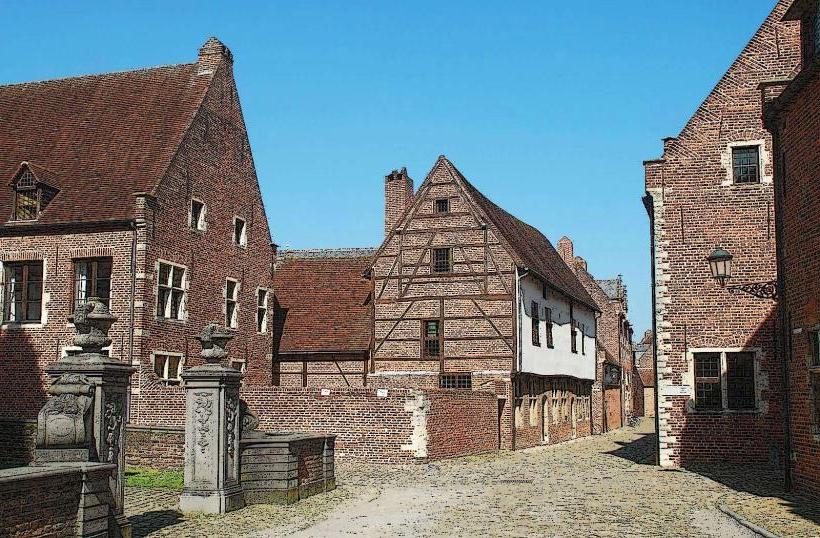
Great Beguinage – 1.2km South