Landmark: Mdina Gate
City: Mdina
Country: Malta
Continent: Europe
Mdina Gate, Mdina, Malta, Europe
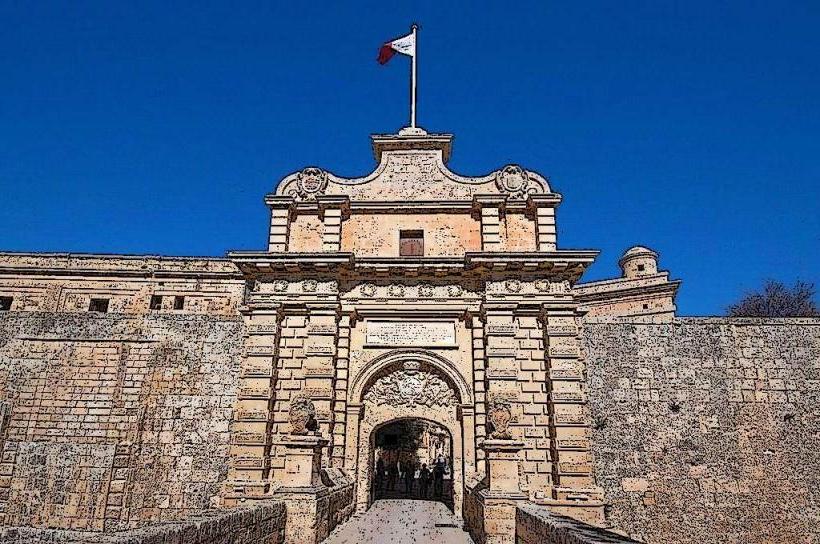
The Mdina Gate is the principal entrance to the fortified city of Mdina, located on a central plateau in Malta. It functions as a significant example of Baroque architecture and a primary historical access point.
Visual Characteristics
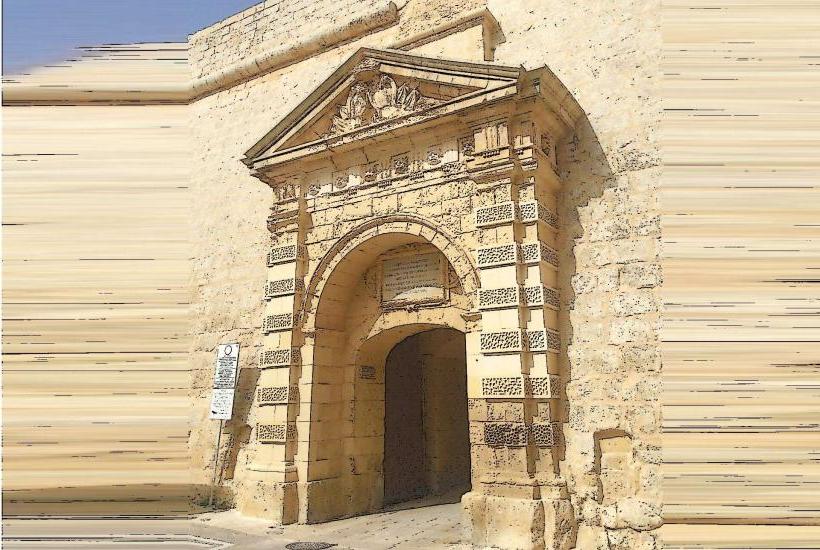
The Mdina Gate is constructed from local globigerina limestone, presenting a honey-colored hue. It features a Baroque design, characterized by ornate carvings, pilasters, and a central archway. The gate stands approximately 10 meters high and includes a bridge spanning a dry moat.
Location & Access Logistics
The gate is situated at the eastern entrance of Mdina, accessible via Triq is-Sur. Mdina is approximately 12 km west of Valletta, Malta's capital. Public parking is available outside the city walls, specifically in the designated car park near the Roman Villa (Domus Romana), which is a short walk to the gate. Several bus routes, including numbers 51, 52, and 53, terminate at the Mdina bus stop directly outside the gate.
Historical & Ecological Origin
The current Mdina Gate was constructed in 1724, replacing an earlier medieval gate. It was designed by the Maltese architect Charles François de Mondion during the magistracy of Grand Master António Manoel de Vilhena. Its original purpose was to serve as the primary defensive and ceremonial entrance to the fortified city.
Key Highlights & Activities
Visitors can walk through the main archway to enter the city of Mdina. Photography of the gate's Baroque facade and the adjacent bridge is a common activity. The gate marks the beginning of a walking tour through Mdina's narrow streets.
Infrastructure & Amenities
Public restrooms are available within Mdina, a short walk past the gate. Limited shade is provided by the gate's archway itself. Cell phone signal (4G/5G) is generally strong in the area. Several cafes and restaurants are located immediately inside the city walls, offering food and beverages.
Best Time to Visit
The best time to visit for photography is in the early morning or late afternoon when the sun casts a warm light on the limestone facade. The months of April to June and September to October offer pleasant weather conditions, avoiding the peak summer heat. No tide requirements apply.
Facts & Legends
A historical oddity is that the gate features the coat of arms of Grand Master António Manoel de Vilhena, along with a Latin inscription praising him. A practical tip for visitors is to arrive early in the morning to experience the gate and the city with fewer crowds.
Nearby Landmarks
- St. Paul's Cathedral: 0.1km East
- Palazzo Falson Historic House Museum: 0.2km East
- Domus Romana (Roman Villa): 0.1km West
- Ta' Qali Crafts Village: 2.5km Southeast
- San Anton Gardens: 4.0km East