Landmark: National Theatre of Szeged
City: Szeged
Country: Hungary
Continent: Europe
National Theatre of Szeged, Szeged, Hungary, Europe
The National Theatre of Szeged (Szegedi Nemzeti Színház) is the primary cultural venue of southern Hungary and a masterpiece of 19th-century theater architecture.
Visual Characteristics
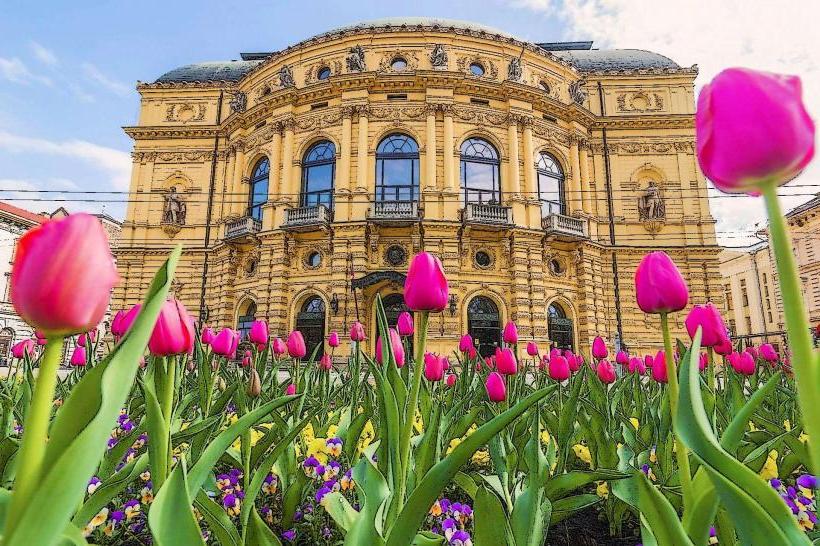
The building is a prominent example of Eclectic and Neo-Baroque architecture. Its curved main facade features a monumental portico with five open axes and a semicircular design. The exterior is adorned with allegorical statues representing theatrical arts-specifically Tragedy, Comedy, and the Acting Profession. Two notable statues of Hungarian icons József Katona (playwright) and Ferenc Erkel (composer) occupy niches on the facade. The interior is lavishly decorated with gold leaf, velvet, and intricate stucco work, featuring a horseshoe-shaped auditorium with three tiers of boxes.
Location & Access Logistics
Address: Vaszy Viktor tér 1, 6720 Szeged.
Public Transport: Located in the city center near the Tisza river. Accessible via Tram Lines 1 and 2 (stop: Széchenyi tér) followed by a 2-minute walk.
Access: Entry for performances requires a ticket. The Ticket Office is located nearby at Stefánia 6.
Parking: Limited street parking is available in the "Green Zone" surrounding the theater.
Historical Origin
The theater was designed by the renowned Viennese duo Ferdinand Fellner and Hermann Helmer, who specialized in European theater design. It opened on October 14, 1883, in the presence of Emperor Franz Joseph I. Tragedy struck only 18 months later when a fire destroyed the interior. It was quickly rebuilt with improved fire safety-replacing wooden structures with iron-and reopened in 1886. A major modernization occurred between 1978 and 1986, and its energy systems were recently upgraded.
Key Highlights & Activities
Ceiling Frescoes: The auditorium ceiling features stunning allegorical paintings by Zsigmond Vajda (formerly Gusztáv Mannheimer), depicting Courtly Music, Peasant Dance, Child Masquerade, and Musicians.
Performance Sections: The theater operates three distinct branches: Drama, Opera, and the world-renowned Szeged Contemporary Ballet.
Technical Scale: The stage features a 13-meter diameter revolving stage and an adjustable orchestra pit.
Kisszínház (Small Theater): A secondary chamber theater located on Horváth Mihály Street, used for more intimate contemporary plays and ballet.
Infrastructure & Amenities
The main auditorium currently seats approximately 680–700 people. The facility includes a lavish foyer with yellow brass railings and traditional mirrors. Changing rooms are equipped to serve up to 200 artists simultaneously. Modern climate control and heating systems were installed in 2012 to ensure audience comfort.
Best Time to Visit
Performance seasons typically run from September to June. For architecture enthusiasts, the exterior is best viewed at night when the wrought iron lanterns and facade are illuminated.
Facts & Legends
Gold Weight: It is estimated that approximately 1.5 kilograms of 23-carat gold were used for the gilding of the auditorium ornaments and boxes.
The "Phoenix" of the Tisza: Due to its survival through the 1885 fire and later damage during WWII, locals often refer to the building as the "Phoenix on the bank of the Tisza."
Imperial Scenery: After the fire, some of the replacement stage designs were purchased from the famous Ringtheater in Vienna.
Nearby Landmarks
Stefánia Park – 0.1km East
Móra Ferenc Museum – 0.1km Southeast
Széchenyi Square – 0.2km West
Belvárosi Bridge – 0.3km South