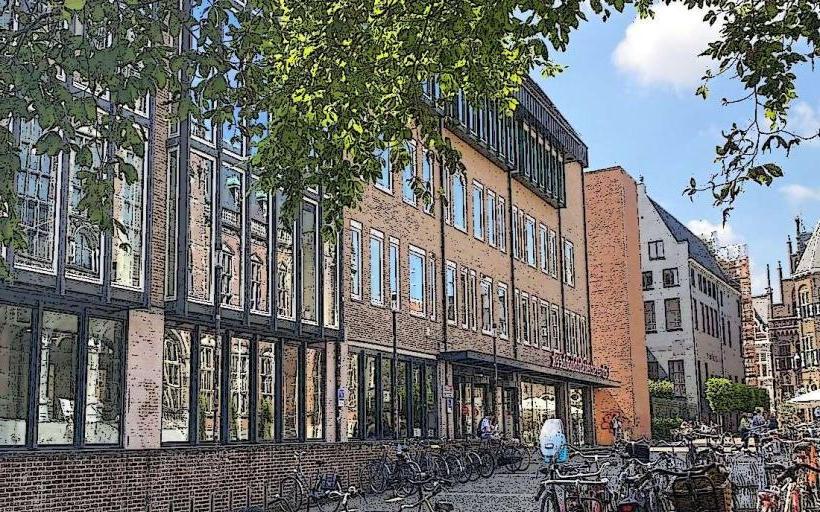
Landmark: Noorderplantsoen Park
City: Groningen
Country: Netherlands
Continent: Europe
Noorderplantsoen Park, Groningen, Netherlands, Europe
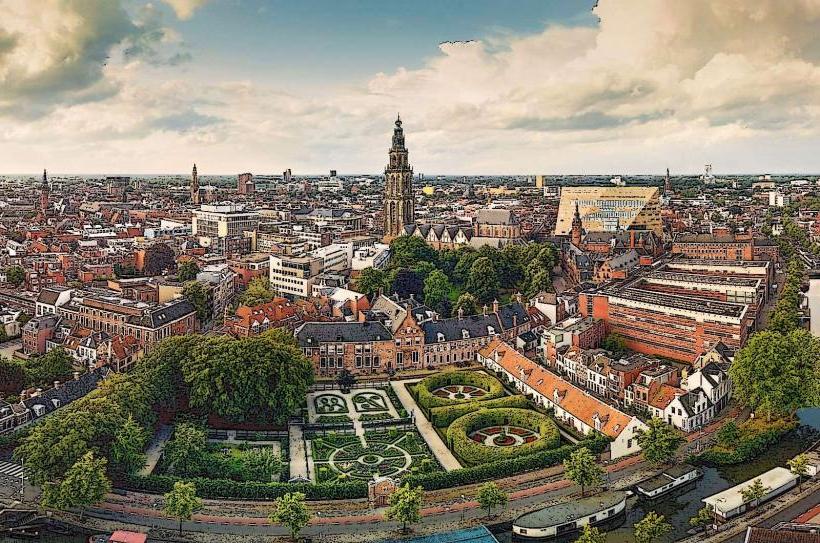
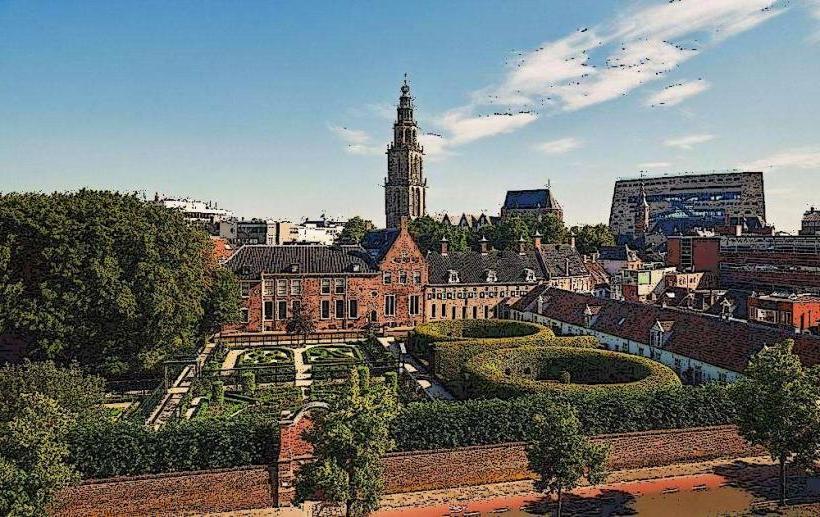
The Noorderplantsoen is an urban public park located on the northern edge of Groningen’s city center in the Netherlands. It occupies the land where the city’s 17th-century defensive ramparts and moats once stood.
Visual Characteristics
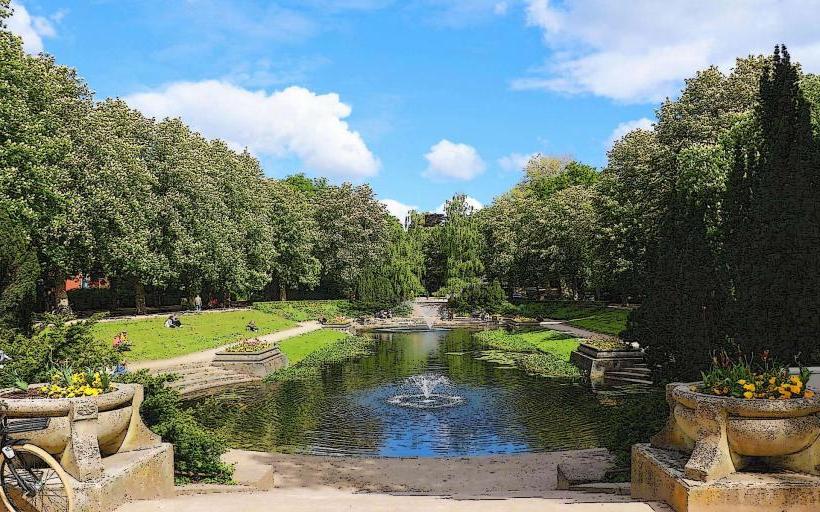
The park is characterized by its long, narrow, and winding layout following the former fortifications. It features steep grassy slopes (former bastions) and a series of interconnected ponds which were originally part of the city moat. Vegetation is dense, consisting of mature deciduous trees including beech, oak, and chestnut, interspersed with manicured lawns and paved asphalt paths.
Location & Access Logistics
The park is situated approximately 0.8 kilometers north of the Grote Markt. It is bordered by the Noorderbinnensingel and Noorderstationsstraat. Public transport access is available via bus lines 1, 9, and 19, stopping at the "Pijpstraat" or "Nieuwe Ebbingestraat" stations. The park is a car-free zone; the nearest paid parking is "Parkeergarage Boterdiep," located 0.4 kilometers to the east.
Historical & Ecological Origin
The park was designed in 1880 by landscape architect L.P. Roodbaard in the English Landscape Style. It was established after the 1874 Vestingwet (Fortress Act) allowed for the decommissioning of the city's defensive walls. Geologically, the area sits on the northern tip of the Hondsrug, a sand ridge formed during the Pleistocene epoch.
Key Highlights & Activities
Common activities include walking, jogging, and picnicking on the grassy slopes. The park serves as the primary venue for the Noorderzon Performing Arts Festival held annually in August. A historic 1920s brick pavilion, originally a tea house, now functions as a restaurant centrally located within the park.
Infrastructure & Amenities
The park features public restrooms at the central pavilion (Zondag restaurant). Several playgrounds and a dedicated dog-walking area are provided. 5G cellular signal is strong throughout the grounds. Benches and trash receptacles are positioned along all major paths. Shade is abundant due to the high density of mature trees.
Best Time to Visit
The park is most utilized during the spring and summer months (May–August) for outdoor recreation. Early morning offers the best conditions for wildlife observation, specifically waterfowl in the ponds. During winter, the ponds are frequently used for ice skating if temperatures remain below freezing for several consecutive days.
Facts & Legends
A unique historical feature is the "Jezuïetenberg" (Jesuit Mountain), a high point in the park that was formerly a defensive bastion. The park transitioned from a high-traffic road to a car-free zone in the 1990s following a local referendum, which significantly altered the ecological quietude of the area.
Nearby Landmarks
Nieuwe Kerk – 0.3km Southeast
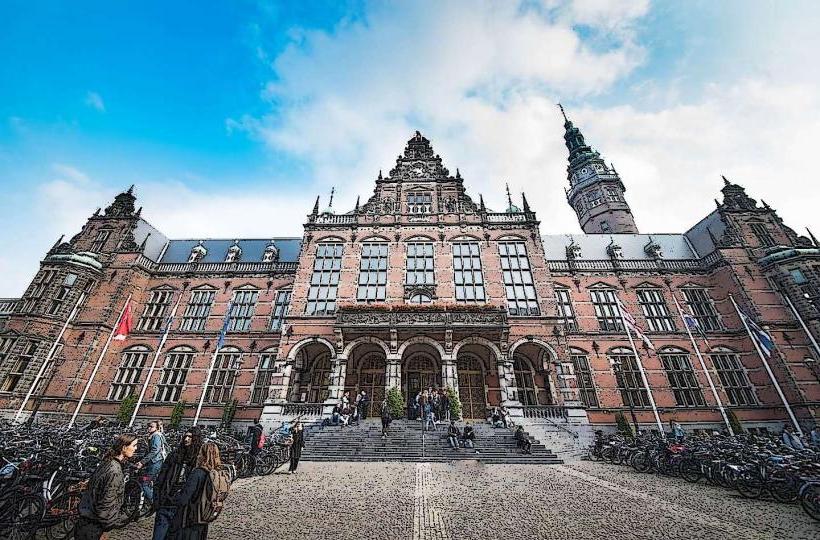
University of Groningen Academy Building – 0.6km South
Dot (3D Cinema) – 0.5km Northeast
Guyotplein – 0.4km South
Noorderstation (Train Station) – 0.7km North