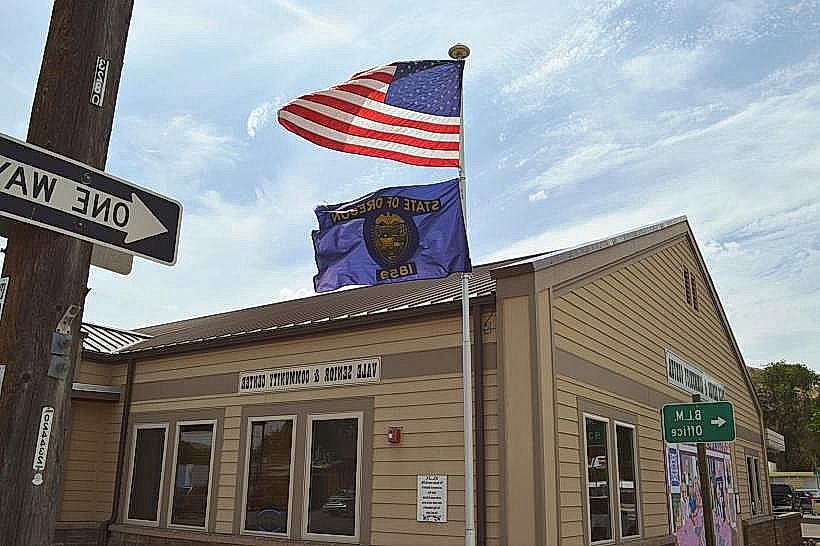
Landmark: Oregon Trail Interpretive Center
City: Ontario
Country: USA Oregon
Continent: North America
Oregon Trail Interpretive Center, Ontario, USA Oregon, North America
The Oregon Trail Interpretive Center is a historical site located in Ontario, Oregon, USA.
It documents the experiences of emigrants traveling the Oregon Trail during the 19th century.
Visual Characteristics
The center features a replica of a 19th-century pioneer fort, constructed primarily from timber and sod. The main building is a modern, low-profile structure designed to blend with the surrounding high desert landscape. Exhibits are housed indoors and include dioramas and artifact displays.
Location & Access Logistics
The center is situated approximately 5 miles west of Ontario, Oregon, directly off Interstate 84 at Exit 376. Follow the signs for the Oregon Trail Interpretive Center. Ample free parking is available on-site for passenger vehicles and RVs. Public transportation options are not available to reach this location.
Historical & Ecological Origin
The Oregon Trail was a 2,170-mile (3,490 km) east-west wagon route that connected the Missouri River to valleys in Oregon. It was heavily used from 1840 to 1860. The interpretive center was established to preserve and present the history of this significant migration route. The surrounding environment is high desert, characterized by arid conditions and sagebrush steppe vegetation.
Key Highlights & Activities
Visitors can explore the reconstructed fort, examine historical artifacts, and view exhibits detailing emigrant life. Ranger-led programs are offered seasonally. A short interpretive trail provides views of the surrounding landscape.
Infrastructure & Amenities
Restrooms are available within the main visitor center. Limited shade is provided by the fort structures and picnic tables. Cell phone signal (4G/5G) is generally available. No food vendors are located at the center; visitors should bring their own provisions.
Best Time to Visit
The best time of day for photography is late afternoon, when the sun angle creates longer shadows on the fort structures. The most favorable months for visiting are April through October, avoiding the harsher winter conditions. No tide considerations are applicable.
Facts & Legends
A specific historical oddity is the "Donner Party" exhibit, which details the tragic fate of a group of emigrants who became snowbound in the Sierra Nevada mountains. A visitor tip is to wear sturdy footwear, as the grounds are uneven.
Nearby Landmarks
- Malheur National Wildlife Refuge (35km Southwest)
- Snake River (8km East)
- Payette National Forest (40km Northeast)
- Weiser, Idaho (15km East)