Landmark: Palácio do Governo
City: Benguela
Country: Angola
Continent: Africa
Palácio do Governo, Benguela, Angola, Africa
The Palácio do Governo is the seat of the provincial government located in the city of Benguela, Angola.
This administrative building occupies a prominent position within the urban landscape of Benguela.
Visual Characteristics
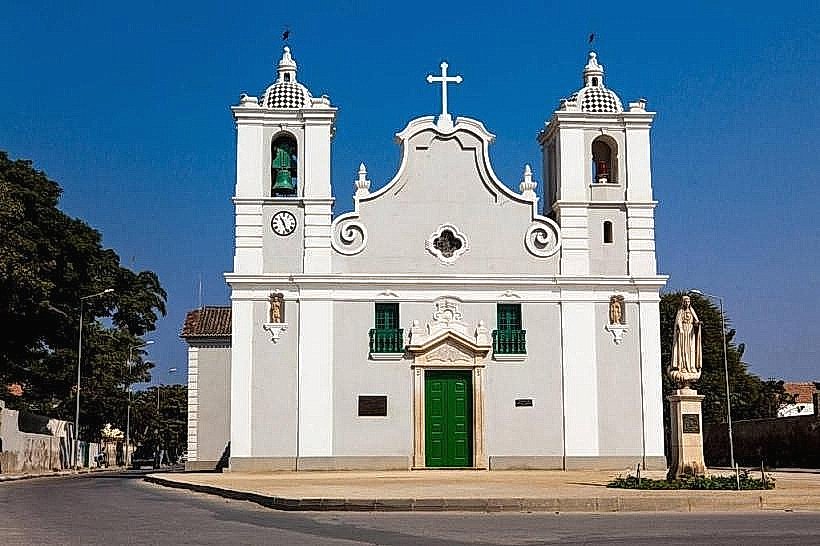
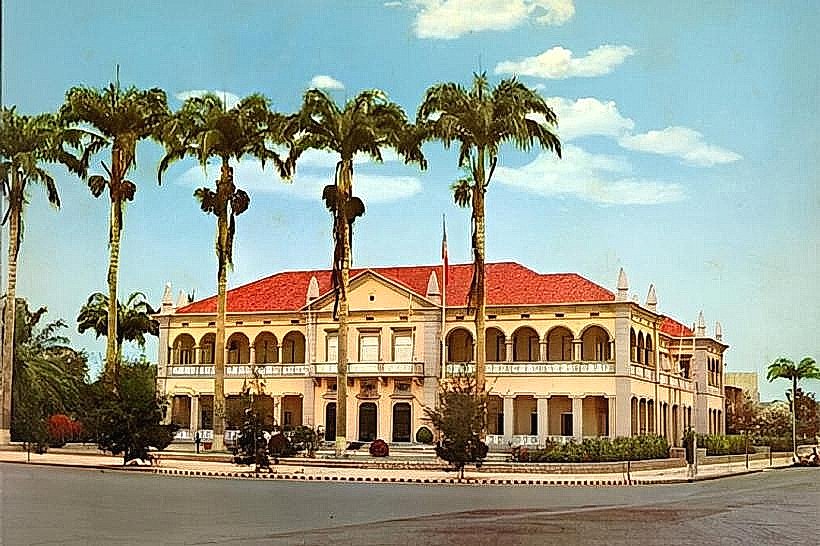
The Palácio do Governo is a two-story structure constructed primarily from concrete and painted in a pale yellow hue. Its architectural style is colonial, characterized by arched windows and a symmetrical facade. The roof is tiled with red clay.
Location & Access Logistics
The palace is situated at Praça da República, the central square of Benguela. It is approximately 0.2km from the city center. Vehicle access is direct from Avenida 1º de Maio. Public parking is available on Praça da República, though spaces can be limited during peak hours. No specific public transport lines directly serve the immediate vicinity of the palace, but several bus routes terminate within a 0.5km radius.
Historical & Ecological Origin
Construction of the Palácio do Governo began in the early 20th century, during the Portuguese colonial administration. Its original purpose was to serve as the administrative headquarters for the Benguela province. The building's design reflects the architectural trends of the era, emphasizing functionality and a formal presence.
Key Highlights & Activities
Access to the interior of the Palácio do Governo is generally restricted to official business. However, the exterior architecture and the surrounding Praça da República are points of interest. Visitors can observe the building's facade and the historical context of the central square.
Infrastructure & Amenities
Restrooms are not publicly accessible within the Palácio do Governo. Shade is available from trees lining Praça da República. Cell phone signal (4G/5G) is generally strong in this central urban area. Food vendors are typically present around Praça da República.
Best Time to Visit
For external viewing and photography, the late afternoon (approximately 16:00 to 17:30) offers favorable lighting conditions due to the angle of the sun. Any time of day is suitable for observing the exterior, as access is not time-dependent.
Facts & Legends
A local anecdote suggests that during the colonial era, the building's clock tower was used to signal important announcements to the city, with specific chime patterns indicating different events.
Nearby Landmarks
- Museu Nacional de Arqueologia (0.3km West)
- Igreja da Nossa Senhora da Pópulo (0.4km Southwest)
- Mercado Municipal (0.6km North)
- Forte de São Sebastião (0.8km South)