Landmark: Pioneer Park
City: St George
Country: USA Utah
Continent: North America
Pioneer Park, St George, USA Utah, North America
Pioneer Park is a public recreational area situated in St. George, Utah, USA. It encompasses a significant portion of the city's western edge.
Visual Characteristics
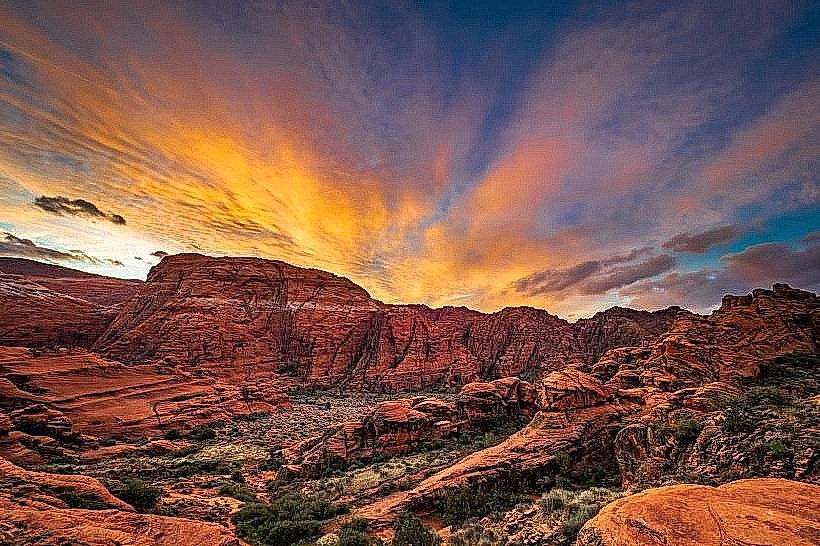
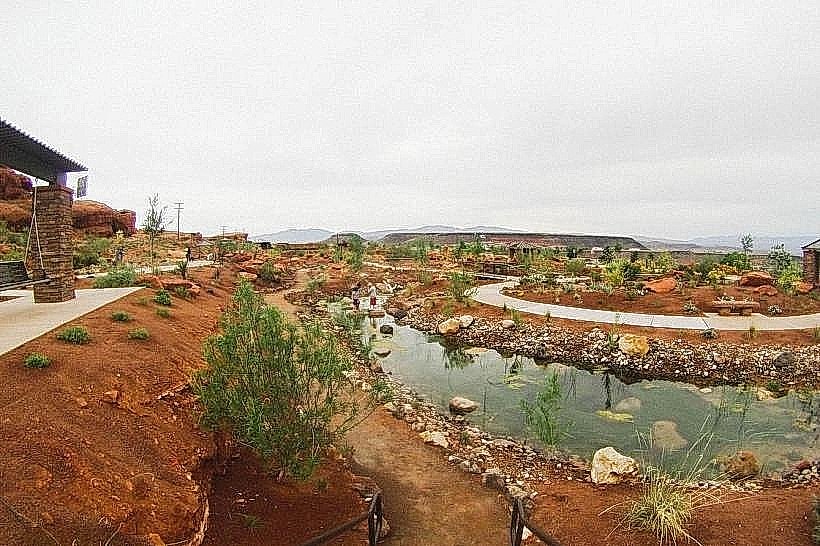
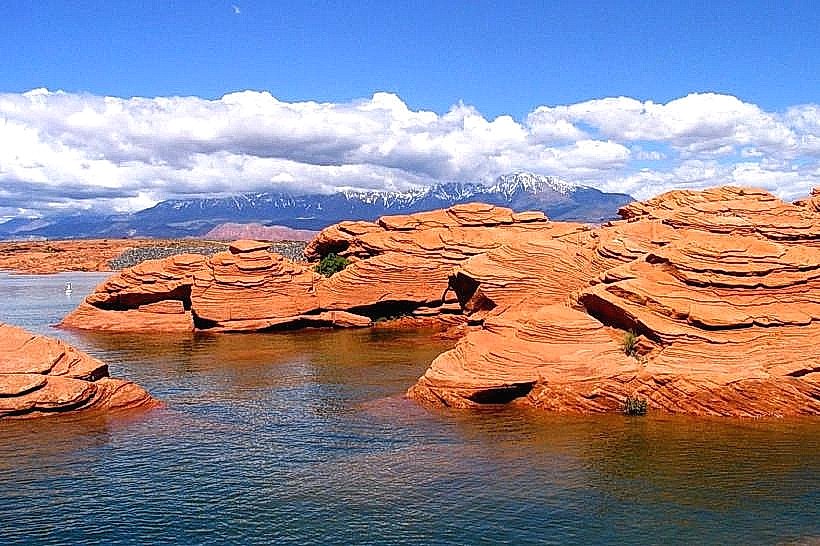
The park features sandstone formations, primarily red and orange in hue, with varying degrees of erosion creating natural arches and alcoves. Vegetation is sparse, consisting mainly of desert scrub, cacti, and drought-resistant trees like junipers. The terrain is uneven, with significant elevation changes.
Location & Access Logistics
Pioneer Park is located approximately 2.5 kilometers west of downtown St. George. Access is via Sunset Boulevard, turning north onto Pioneer Drive. Parking is available at the main entrance off Pioneer Drive, with additional overflow parking during peak times. No public transport directly serves the park; visitors typically arrive by private vehicle.
Historical & Ecological Origin
The sandstone formations are part of the Moenkopi Formation, dating back to the Triassic period, approximately 230 million years ago. These sedimentary rocks were shaped by millions of years of wind and water erosion. The area was historically used by indigenous peoples and later by early Mormon settlers for grazing and resource gathering.
Key Highlights & Activities
Activities include hiking on designated trails, rock scrambling on approved formations, and photography of the geological features. The park contains several natural arches, including the "White Dome" and "Scout Cave." Observation points offer views of the surrounding St. George basin.
Infrastructure & Amenities
Restrooms are available at the main entrance. Limited shade is provided by natural rock overhangs and a few strategically placed shelters. Cell phone signal (4G/5G) is generally available within the park. No food vendors operate within the park; visitors are advised to bring their own provisions.
Best Time to Visit
For photography, early morning and late afternoon provide optimal lighting conditions due to the angle of the sun on the sandstone. The best months for visiting are March through May and September through October, when temperatures are moderate. Summer months (June-August) can experience extreme heat, making daytime activity difficult.
Facts & Legends
A local legend suggests that Scout Cave was used as a hiding place by outlaws during the late 19th century. Geologically, the park is known for its "hoodoos," tall, thin spires of rock formed by erosion.
Nearby Landmarks
- Red Hills Desert Garden (1.2km East)
- St. George Tabernacle (2.8km East)
- Town Square Park (3.1km East)
- Dixie State University (3.5km East)
- Jacob Hamblin Home (4.0km Southeast)