Landmark: St. George Dinosaur Discovery Site
City: St George
Country: USA Utah
Continent: North America
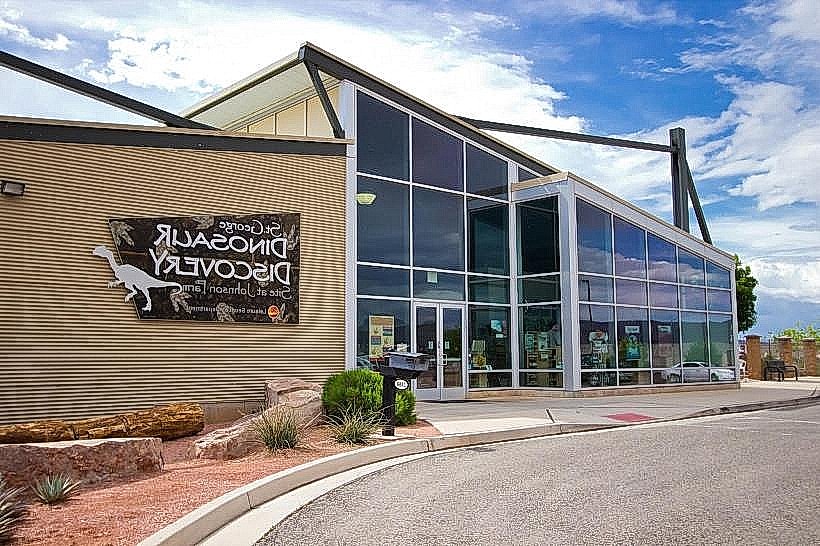
St. George Dinosaur Discovery Site, St George, USA Utah, North America
The St. George Dinosaur Discovery Site is a paleontological location in St. George, Utah, USA, preserving dinosaur footprints and fossilized remains.
Visual Characteristics
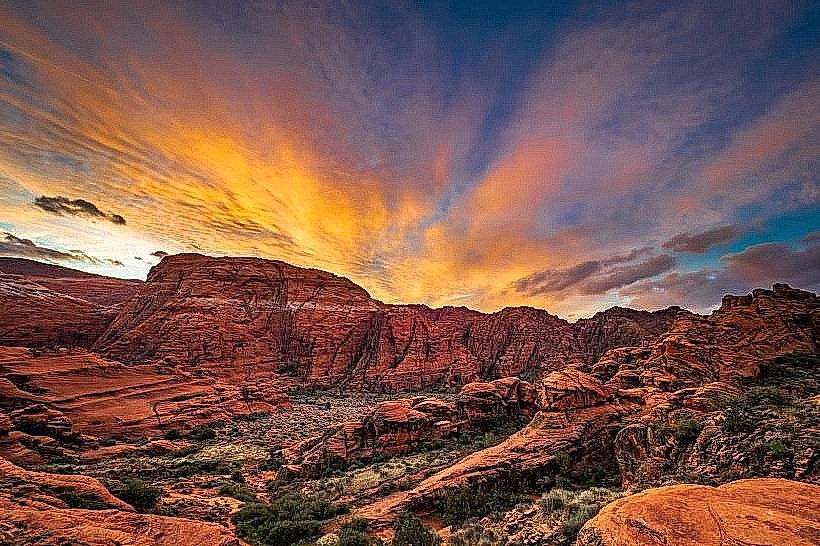
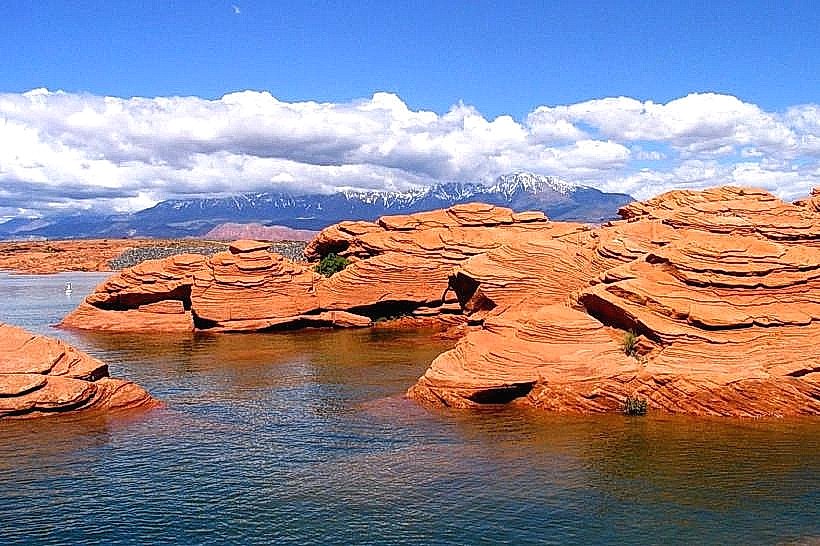
The site features exposed sandstone layers containing fossilized dinosaur tracks. The rock formations are primarily Navajo Sandstone, exhibiting reddish-brown and tan coloration. The tracks are imprinted into the rock surface, varying in size and depth, indicating different dinosaur species and gaits. The surrounding landscape is arid desert terrain with sparse vegetation.
Location & Access Logistics
The St. George Dinosaur Discovery Site is located at 2181 East 350 South, St. George, Utah. It is approximately 3.2 kilometers (2 miles) east of the St. George city center. Access is via East 350 South, which leads directly to the site's parking area. Ample free parking is available on-site. Public transport options are limited; the nearest bus stop is several kilometers away, requiring a significant walk or taxi service.
Historical & Ecological Origin
The site preserves evidence from the Early Cretaceous period, approximately 190 to 200 million years ago. The tracks were made by various dinosaur species, including theropods and sauropods, as they moved across ancient mudflats. The geological formation is part of the Moenave Formation and Kayenta Formation, which represent ancient river systems and floodplains. The discovery of these tracks provides insight into the paleontology and paleoenvironment of the region during that era.
Key Highlights & Activities
Visitors can observe numerous dinosaur footprints preserved in situ. Interpretive displays explain the geological context and the types of dinosaurs that inhabited the area. Educational signage details the fossilization process. The site is accessible via paved pathways for viewing the tracks.
Infrastructure & Amenities
Restrooms are available on-site. Limited shade structures are present. Cell phone signal (4G/5G) is generally available. No food vendors are located directly at the site; visitors should bring their own provisions.
Best Time to Visit
The best time of day for photography is in the early morning or late afternoon when the sun's angle creates shadows that enhance the visibility of the tracks. The best months for visiting are April through October, avoiding the extreme heat of mid-summer. The site is accessible year-round, with no tide requirements.
Facts & Legends
One of the most significant discoveries at this site is the presence of tracks from the earliest known sauropods, indicating their presence in North America much earlier than previously thought. The site also contains fossilized fish and plant material, offering a more complete picture of the ancient ecosystem.
Nearby Landmarks
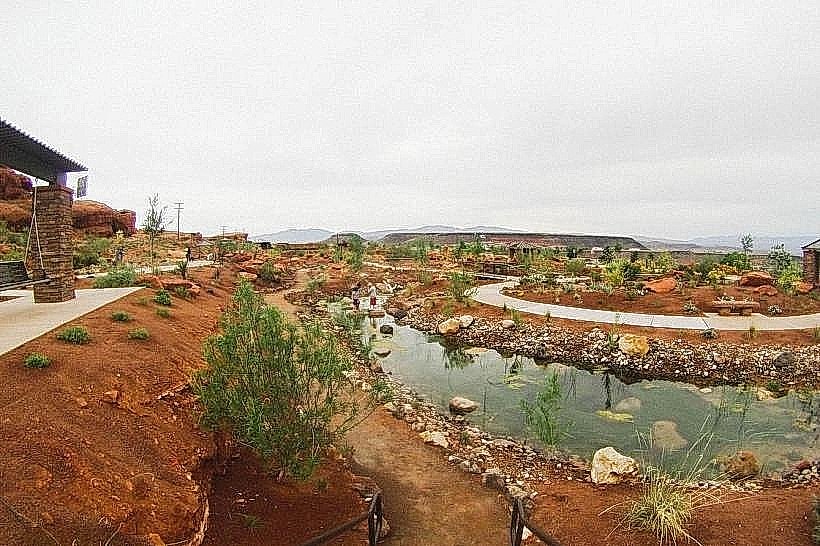
- Red Hills Desert Garden (0.8km West)
- Pioneer Park (1.5km Northwest)
- St. George Tabernacle (2.5km West)
- Dixie State University (2.8km West)
- Town Square Park (3.0km West)