Information
Landmark: Prinsenhof MuseumCity: Delft
Country: Netherlands
Continent: Europe
Prinsenhof Museum, Delft, Netherlands, Europe
Museum Prinsenhof Delft is a Dutch national heritage site and municipal museum located in the historic center of Delft. It is best known as the site of the assassination of William the Silent, the founding father of the Netherlands.
Visual Characteristics
The museum is housed in a former medieval monastery complex. It features traditional Dutch red-brick masonry, stepped gables, and a tranquil inner courtyard (Sint Agathaplein) shaded by monumental chestnut trees. A notable modern addition is the glass-roofed atrium (12 by 25 meters) which provides views of the surrounding historic church towers. The interior retains the austere character of its monastic roots, with whitewashed walls and heavy timber beams.
Location & Access Logistics
Address: Sint Agathaplein 1, 2611 HS Delft.
Public Transport: The museum is an 8-minute walk from Delft Central Station (NS). A tram and bus stop named "Prinsenhof" is located 2.5 minutes away, served by tram line 1 and bus lines 51 and 53.
Parking: The city center is largely car-free. On-site parking is unavailable. Use the Prinsenhofgarage (Kampveldweg 3) or Phoenixgarage (Phoenixstraat 29), both within a 3-5 minute walk.
Arrival: Visitors typically enter via the Sint Agathaplein courtyard.
Historical & Ecological Origin
The building was founded in the 14th century as the Sint Agathaklooster (Saint Agatha’s Monastery), a convent for noblewomen. In 1572, it became the residence of William the Silent (Prince of Orange) when he sought refuge in the walled city of Delft during the Dutch Revolt. It transitioned into a municipal museum (Gemeentemuseum Delft) in 1906 and was officially inaugurated as Museum Prinsenhof Delft in 1948 following a major renovation.
Key Highlights & Activities
The Bullet Holes: The primary attraction is the set of two bullet holes in the wall near the main stairs, where Balthasar Gérard assassinated William the Silent on July 10, 1584.
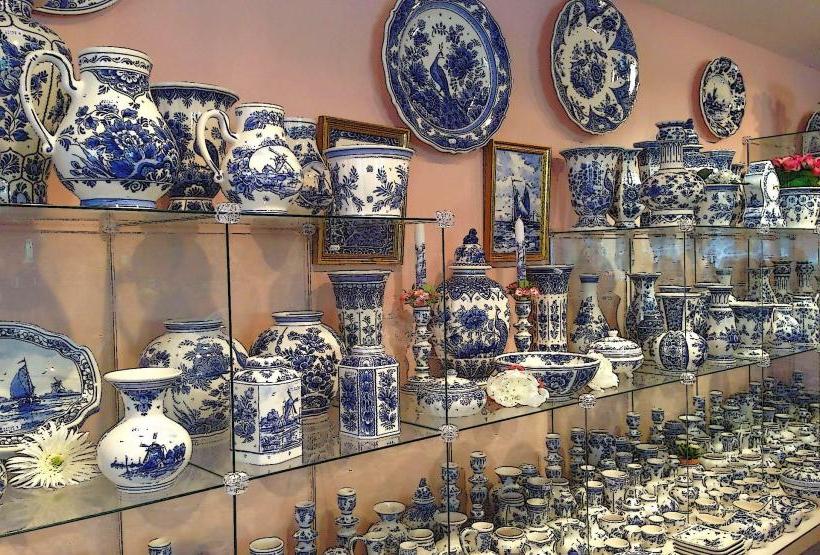
Exhibitions: The museum focuses on three pillars: William the Silent and the birth of the Dutch Republic, Delftware (pottery), and the Delft Masters (art and science).
Gardens: The Prinsentuin, a former monastery garden, is accessible for walking and relaxation.
Infrastructure & Amenities
Facilities: Public restrooms and free lockers/cloakrooms are provided on-site.
Accessibility: The site is undergoing ongoing refurbishments to improve accessibility, including ramps and a glass elevator; however, some sections of the historic building remain challenging for those with limited mobility.
Food: Food and drinks are prohibited inside the galleries. The Sint Agathaplein square is surrounded by various independent cafes and restaurants.
Connectivity: 5G cellular signal is excellent throughout the courtyard and building.
Best Time to Visit
The museum is open Tuesday through Sunday, 11:00 AM to 5:00 PM. For photography, visit in the early morning or late afternoon to capture the courtyard's light. Spring (April–May) is optimal for seeing the Prinsentuin gardens in bloom.
Facts & Legends
The Secret of the Holes: Local historical analysis and modern research suggest that the famous bullet holes were likely "artificially enlarged" over the centuries by curious visitors and tour guides to make the event more dramatic. They are now protected by a glass casing.
Monastic Tunnels: Local lore often mentions hidden passages used by the Prince, though many were simply part of the extensive cellar and drainage systems of the original monastery.
Nearby Landmarks
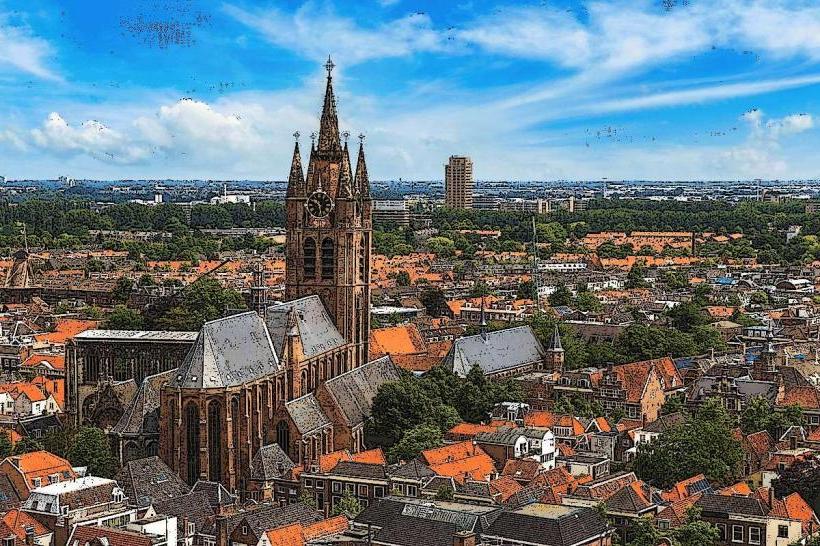
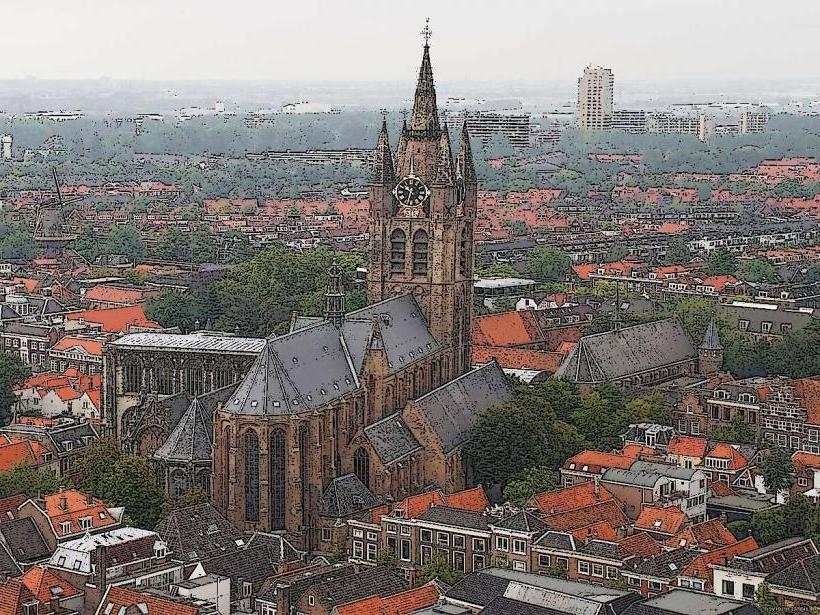
Old Church (Oude Kerk) – 0.2km East (featuring the leaning tower).
Prinsentuin – 0.05km North (immediately adjacent gardens).
Vermeer Centrum Delft – 0.4km East.
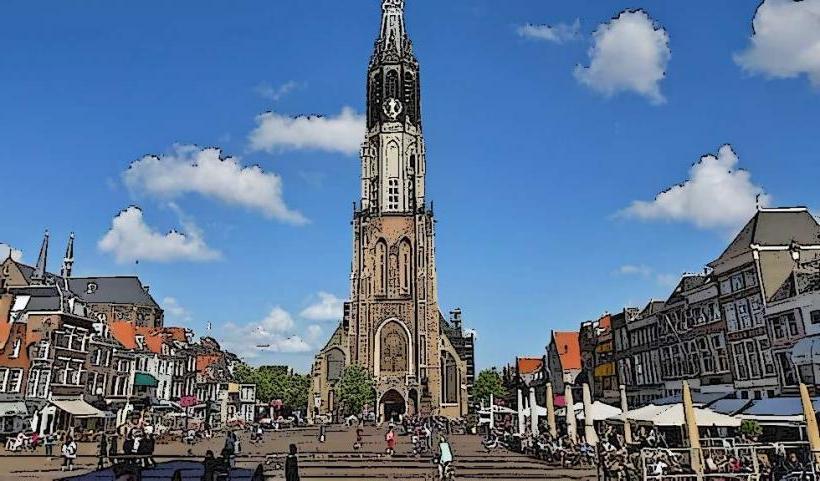
Nieuwe Kerk (New Church) – 0.6km East.
St. Hippolytus Chapel – 0.3km South.