Landmark: Rishon LeZion Museum
City: Rishon Lezion
Country: Israel
Continent: Asia
Rishon LeZion Museum, Rishon Lezion, Israel, Asia
The Rishon Lezion Museum is a historical heritage site located at the intersection of Ahad Ha'am and Rothschild streets in the center of Rishon LeZion. It occupies a complex of restored buildings that formed the core of the first agricultural settlement established during the First Aliyah in 1882.
Visual Characteristics
The museum consists of several single and two-story structures built primarily from local sandstone and limestone with red-tiled roofs. Architectural styles reflect late 19th-century European influences adapted for the Levant, featuring thick walls and arched doorways. The Schalit House displays period-authentic wooden shutters and a stone-paved courtyard. The site is characterized by open-air pathways connecting various thematic pavilions, including a reconstructed stable and a tall masonry water tower.
Location & Access Logistics
The main entrance is at 2 Ahad Ha'am Street, situated approximately 12km south of Tel Aviv. From Tel Aviv, express bus lines 190 and 193 provide the fastest transit, while lines 74 and 201 offer standard service. The Rishonim Railway Station is 2.5km to the south, with local bus connections available to the city center. Paid public parking is located at the adjacent G Rothschild Mall or in various municipal lots along Rothschild Street.
Historical & Ecological Origin
Established as an agricultural moshava in 1882 by 17 families from the Russian Empire, the site was financed in its early years by Baron Edmond de Rothschild. The museum buildings were originally functional residential and administrative spaces, such as the 1883 Schalit House and the 1885 Medicine House. The settlement’s primary purpose was viticulture and citrus farming, facilitated by the drilling of the first local well in 1883 which reached a depth of 48 meters.
Key Highlights & Activities
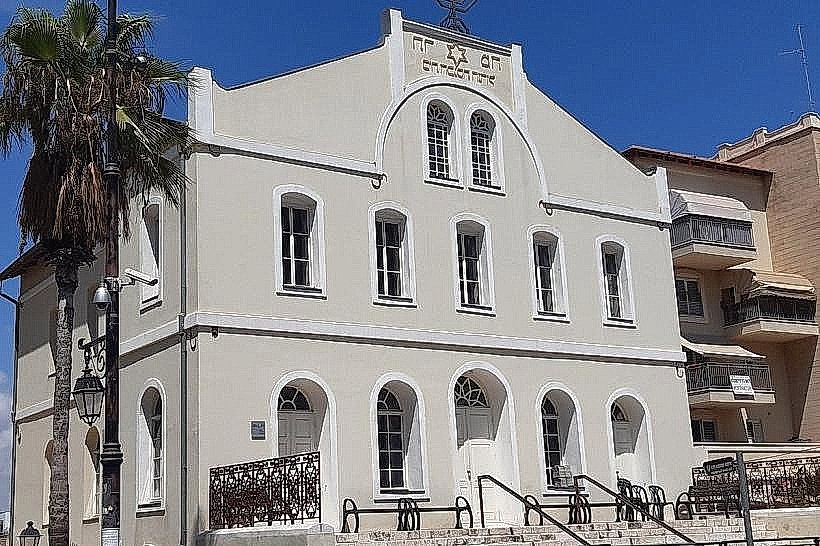
The museum offers a self-guided "Founders' Trail" using digital audio guides available in multiple languages. Key exhibits include the "Man and His Land" agricultural display and the "Fashion in the Old Days" gallery. Visitors can view the basement where Naftali Herz Imber lived while writing the lyrics to "Hatikvah," Israel's national anthem. The Great Synagogue, completed in 1889, is accessible for viewing from the exterior and during specific tour hours.
Infrastructure & Amenities
The museum grounds feature 5G cellular connectivity and a central reception desk providing maps. Public restrooms are located in the main administrative building. Shaded outdoor benches are placed throughout the courtyard areas. Food and beverage options are located immediately outside the museum gates along the Rothschild pedestrian mall. The majority of the historic buildings are accessible via ramps, though some upper floors require stair access.
Best Time to Visit
Operational hours are Sunday through Thursday from 09:00 to 14:00, with extended evening hours on Mondays until 19:00. The museum is also open on the first Saturday of each month from 10:00 to 14:00. Photography is optimal in the morning hours when sunlight directly illuminates the eastern facades of the historic houses. The months of October through April provide the most comfortable temperatures for exploring the outdoor sections of the complex.
Facts & Legends
A verified historical oddity of the site is that it served as the birthplace of the modern Israeli flag; the blue and white design with the Star of David was first flown here during the settlement's third-anniversary celebrations in 1885. Local lore tells of the "Water Discovery" in 1883, where the successful drilling of the well prompted the famous telegram to Baron Rothschild stating, "We found water!"-an event that secured the settlement's survival.
Nearby Landmarks
The Great Synagogue - 0.1km East
Haviv Hebrew School - 0.2km South
The Founders' Well - 0.3km East
Gan Ha'ir (City Garden) - 0.2km West
Carmel Winery Historic Cellars - 0.5km South-West