Landmark: Salar de Coipasa
City: Uyuni
Country: Bolivia
Continent: South America
Salar de Coipasa, Uyuni, Bolivia, South America
Salar de Coipasa is a large salt flat located in the Oruro Department of southwestern Bolivia, west of the city of Uyuni.
It is the second-largest salt flat in Bolivia, covering an area of approximately 2,200 square kilometers.
Visual Characteristics
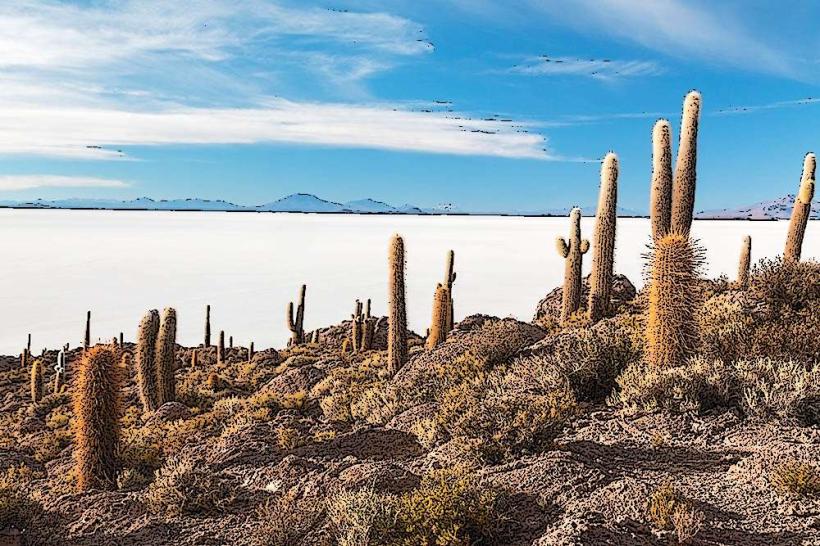
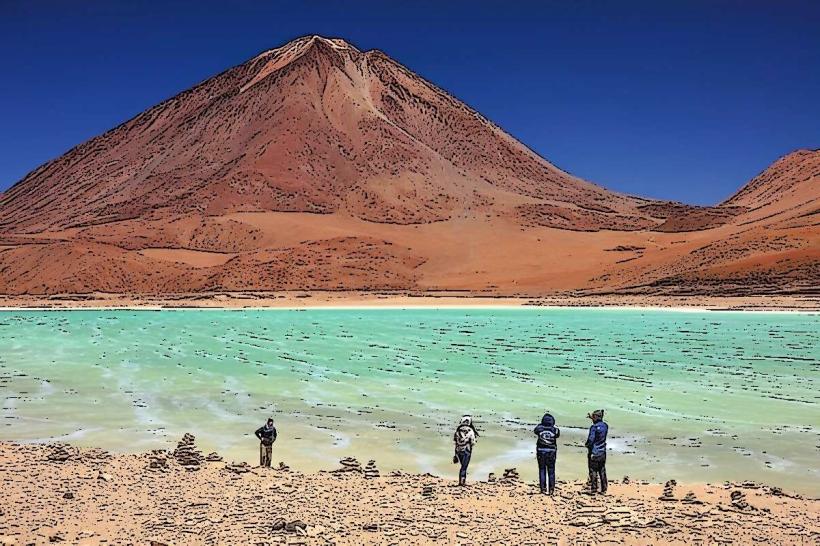
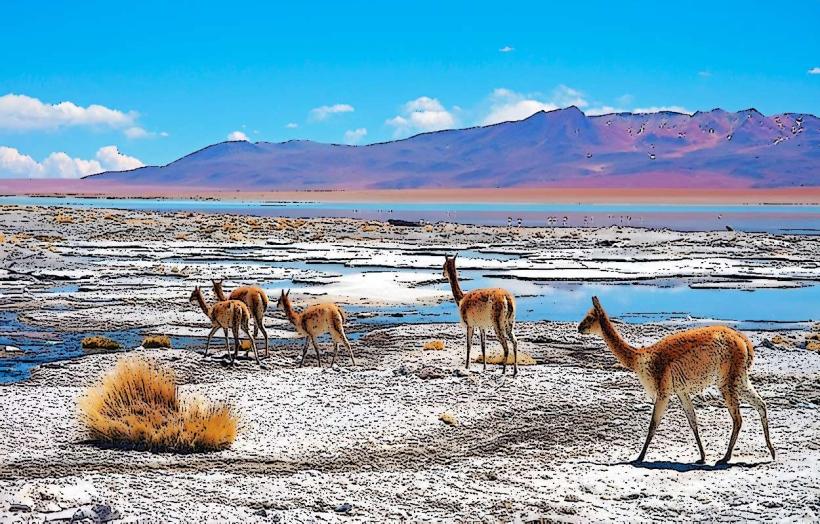
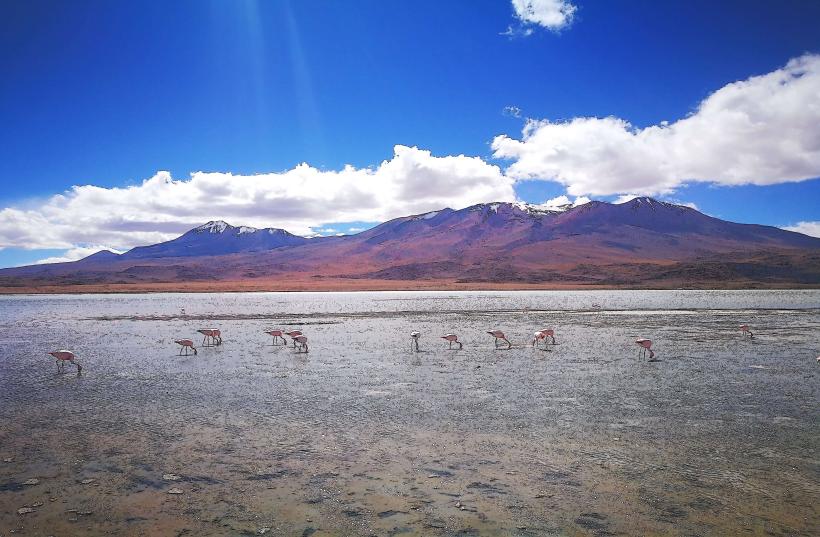
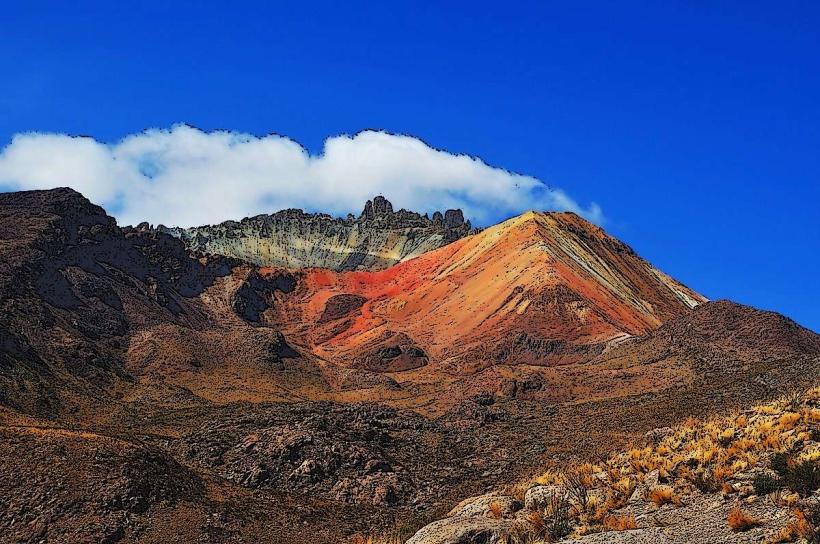
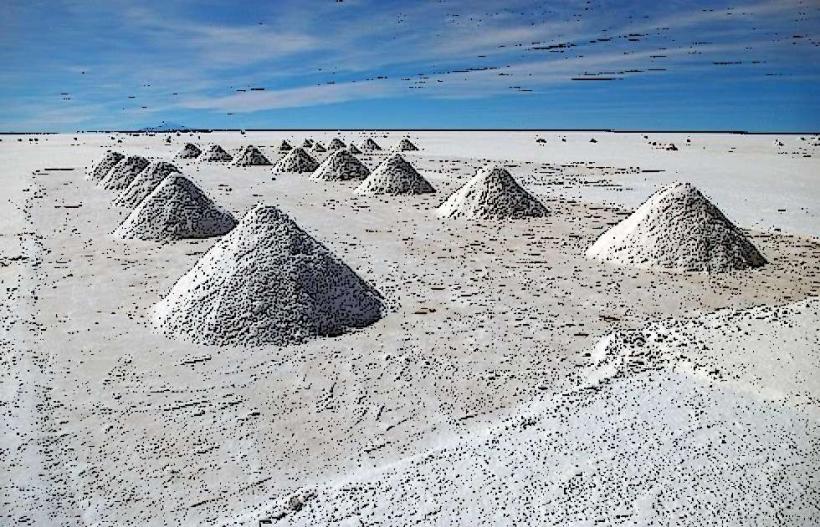
The surface of Salar de Coipasa consists of a thick crust of salt, primarily sodium chloride, with a crystalline texture. During the dry season, the salt crust is white and appears flat. In the wet season, a thin layer of water covers the salt, creating a reflective surface that mirrors the sky. The surrounding landscape is arid and mountainous, with volcanic peaks visible on the horizon.
Location & Access Logistics
Salar de Coipasa is situated approximately 150 kilometers west of Uyuni. Access is primarily via unpaved roads. The main route from Uyuni involves traveling west on the Ruta 12 for approximately 80 kilometers, then turning north onto a secondary track. Vehicle access onto the salt flat itself is possible during the dry season, but requires a 4x4 vehicle due to the uneven salt surface. There are no public transport services directly to Salar de Coipasa; visitors typically arrange private transport from Uyuni or nearby communities.
Historical & Ecological Origin
Salar de Coipasa is a remnant of prehistoric lakes that once covered large areas of the Altiplano. It is classified as a lacustrine deposit, formed by the evaporation of water from ancient lakes over millions of years. The salt deposits are rich in minerals, including lithium, potassium, and magnesium.
Key Highlights & Activities
Walking across the salt crust during the dry season. Observing the reflective effect when covered by water during the wet season. Photography of the expansive salt surface and surrounding volcanic landscapes. Visiting the small island of Coipasa located in the center of the salt flat, which features ancient petroglyphs.
Infrastructure & Amenities
There are no permanent infrastructure or amenities directly on Salar de Coipasa. Basic services such as restrooms and food vendors are not available. Cell phone signal is generally absent. Visitors should carry all necessary supplies, including water and food. Limited shade is available on the island of Coipasa.
Best Time to Visit
The dry season, from May to October, offers the most stable conditions for accessing the salt flat. The wet season, from November to April, can make access difficult due to water coverage and potential for vehicles to get stuck. For photography, early morning and late afternoon provide optimal lighting conditions due to the low angle of the sun.
Facts & Legends
Local Aymara legends speak of a giant woman named Waka who cried tears that formed the salt flats after her lover, Tunupa, abandoned her. The island of Coipasa is considered sacred by local communities.
Nearby Landmarks
- Salar de Uyuni (150km East)
- Tunupa Volcano (40km Northeast)
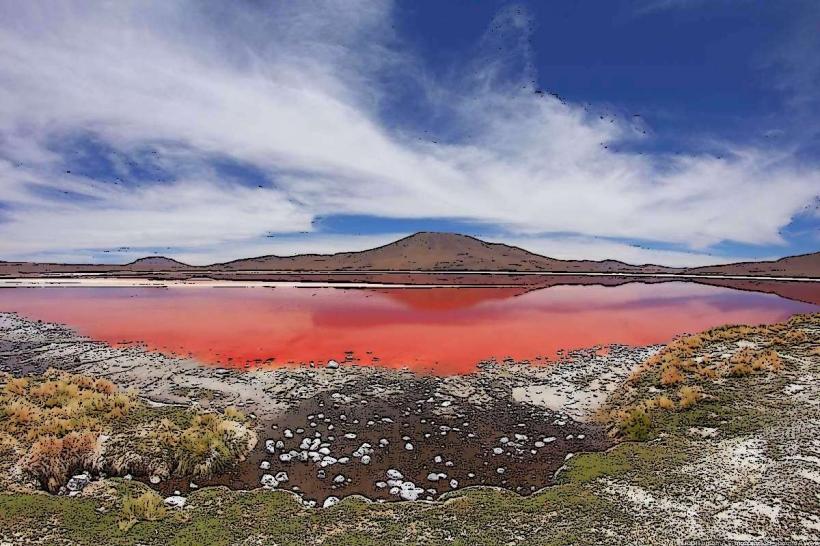
- Laguna Colorada (200km South)
- Eduardo Avaroa Andean Fauna National Reserve (220km South)