Landmark: Speicherstadt
City: Hamburg
Country: Germany
Continent: Europe
Speicherstadt, Hamburg, Germany, Europe
Speicherstadt is the world’s largest integrated complex of warehouses, built on a series of oak-pile foundations within Hamburg’s harbor. It is a UNESCO World Heritage site and a primary example of Neo-Gothic brick architecture.
Visual Characteristics
The district is defined by multi-story red-brick warehouses featuring decorative gables, turrets, and terracotta ornaments. It is intersected by a network of canals (Fleets) and connected by numerous iron bridges. At night, the buildings are illuminated by over 800 spotlights. A key visual anchor is the Wasserschloss (Water Castle), a historic building situated at the confluence of two canals, and the Sandtorkai, where traditional architecture meets the modern glass structures of HafenCity.
Location & Access Logistics
The district is located in the Hamburg-Mitte borough (Postcode 20457).
Public Transit: Served by U-Bahn line U3 (Baumwall) or U4 (Überseequartier).
On Foot: Directly adjacent to the Elbphilharmonie and Hamburg Harbor.
Canal Access: Tourist boats (Barkassen) can navigate the canals only during high tide; during low tide, the canals are too shallow for transit.
Parking: Limited street parking; use the "Parkhaus Speicherstadt" on Am Sandtorkai.
Historical & Ecological Origin
Constructed between 1883 and 1927, the district was built as a duty-free zone to allow merchants to store and process goods without paying customs. It was designed by engineer Andreas Meyer. During WWII, approximately 50% of the structures were destroyed but were later reconstructed to original specifications. Ecologically, the district is subject to the tidal movements of the Elbe; the ground floors of the warehouses are designed to withstand periodic flooding.
Key Highlights & Activities
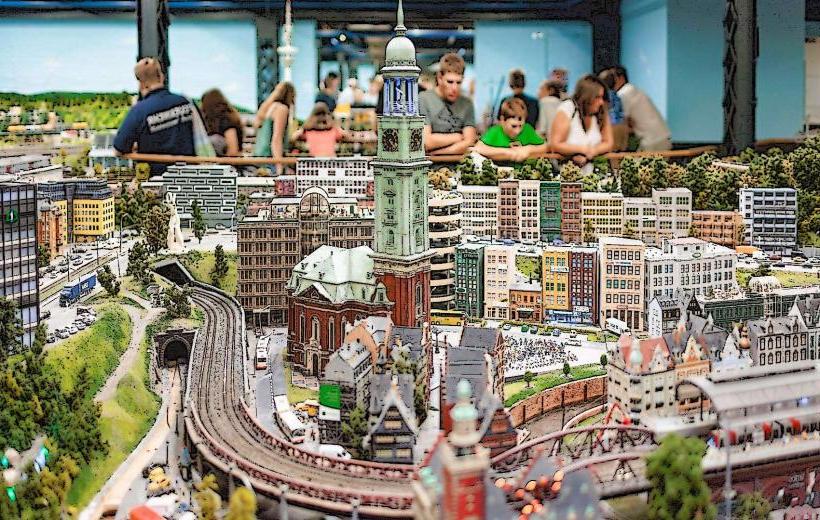
Miniatur Wunderland: The world's largest model railway.
Hamburg Dungeon: An interactive show based on Hamburg's dark history.
Speicherstadtmuseum: Exhibits on the history of the coffee and tea trade.
Spicy’s Gewürzmuseum: A museum dedicated to the global spice trade, reflecting the district's history as a storage hub for exotic goods.
Coffee Roasteries: Several active roasteries continue the tradition of the district’s commodity trade.
Infrastructure & Amenities
The area features numerous cafes and restaurants integrated into the warehouse ground floors. Public restrooms are located within the major museums (Miniatur Wunderland, Dungeon). Most main thoroughfares are wheelchair accessible, though some historic bridges have steep gradients and cobblestone paving. 5G signal is robust throughout the district.
Best Time to Visit
Photography is optimal during the Blue Hour (twilight) when the architectural lighting is activated and reflects in the canals. Low tide reveals the moss-covered oak foundations, while high tide allows for boat tours. Weekday mornings are quietest for walking.
Facts & Legends
The district houses the world's largest warehouse for oriental carpets. A historical oddity is that the buildings have no road-side loading docks; goods were historically winched directly from boats in the canals using hydraulic cranes. Legend suggests that the gold-plated skulls of executed pirates were once hidden in the foundations of the older warehouses.
Nearby Landmarks
Elbphilharmonie – 0.4km West
HafenCity – 0.1km South
Miniatur Wunderland – 0.2km Central
International Maritime Museum – 0.5km East
St. Catherine's Church – 0.4km North