Landmark: Taj Mahal
City: Agra
Country: India
Continent: Asia
Taj Mahal, Agra, India, Asia
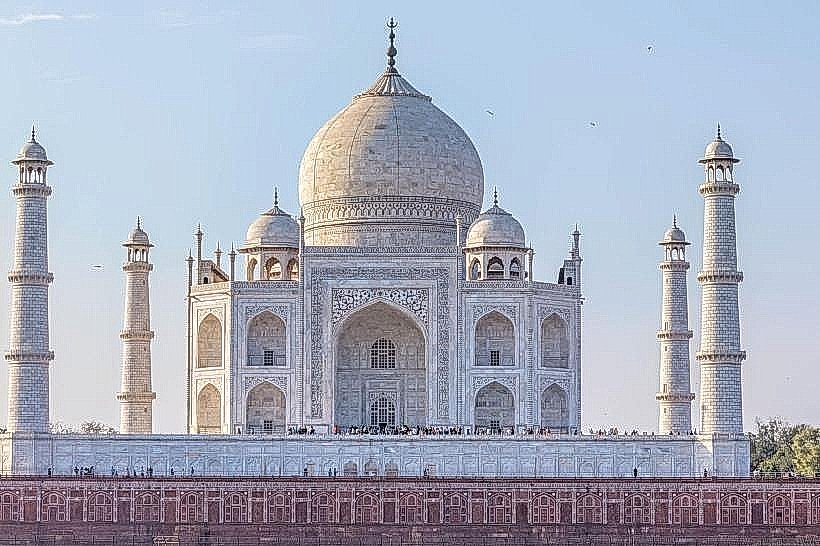
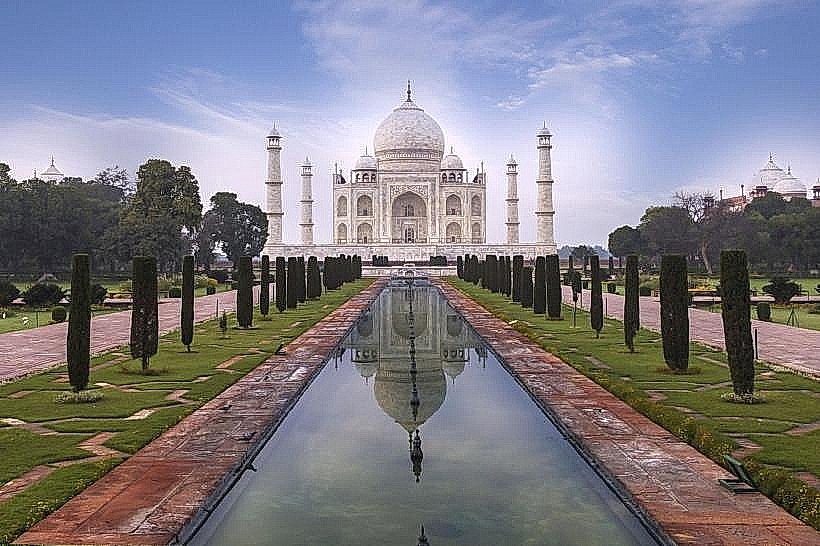
The Taj Mahal is a white marble mausoleum located on the south bank of the Yamuna River in Agra, India. It was commissioned in 1632 by the Mughal emperor Shah Jahan to house the tomb of his favorite wife, Mumtaz Mahal.
Visual Characteristics
The structure is constructed primarily of white Makrana marble. It features a central dome, four minarets at each corner of the plinth, and intricate inlay work of semi-precious stones. The main mausoleum is square with chamfered corners, measuring approximately 56 meters on each side. The height of the main dome is about 35 meters.
Location & Access Logistics
The Taj Mahal is situated approximately 2.5 kilometers south of the Agra Fort. Access is via the Eastern Gate, Western Gate, or Southern Gate. Vehicle access is restricted within 500 meters of the complex; visitors typically park at designated lots and utilize electric rickshaws or walk. Agra Cantt railway station is the nearest major railhead, approximately 5 kilometers away. The nearest airport is Agra Airport (AGR), about 13 kilometers from the site.
Historical & Ecological Origin
Construction began in 1632 and was completed around 1653. The principal architect is believed to be Ustad Ahmad Lahori. The original purpose was to serve as a tomb for Mumtaz Mahal and later for Shah Jahan himself. The site is located on a raised plinth, designed to protect it from flooding from the Yamuna River.
Key Highlights & Activities
Visitors can observe the main mausoleum, the mosque to the west, and the guest house (jawab) to the east. Photography is permitted within the complex but not inside the mausoleum. Guided tours are available from licensed guides at the ticket counter. Walking the grounds and observing the architectural details are primary activities.
Infrastructure & Amenities
Restrooms are available within the complex. Shaded areas are present in the gardens. Cell phone signal (4G/5G) is generally available. Food vendors are located outside the main gates; food and drinks are not permitted inside the mausoleum complex.
Best Time to Visit
For photography, early morning (sunrise) offers soft light and fewer crowds. Late afternoon (before sunset) also provides favorable lighting conditions. The best months for weather are generally October through March, avoiding the monsoon season (July-September) and extreme summer heat (April-June). High tide on the Yamuna River can affect the water level in the reflecting pool.
Facts & Legends
A persistent legend claims that Shah Jahan intended to build a black marble replica of the Taj Mahal across the river for himself, though historical evidence does not support this. The intricate floral patterns on the marble are not painted but are created using a technique called pietra dura, where semi-precious stones are precisely cut and inlaid into the marble.
Nearby Landmarks
- Agra Fort (0.5km North-West)
- Itmad-ud-Daulah's Tomb (2km North)
- Mehtab Bagh (0.8km North)
- Sikandra (10km North-West)