Landmark: Tarrafal Natural Pools
City: Tarrafal
Country: Cabo Verde
Continent: Africa
Tarrafal Natural Pools, Tarrafal, Cabo Verde, Africa
The Tarrafal Natural Pools are a series of rock formations containing seawater located on the coast of Tarrafal, Santiago Island, Cabo Verde.
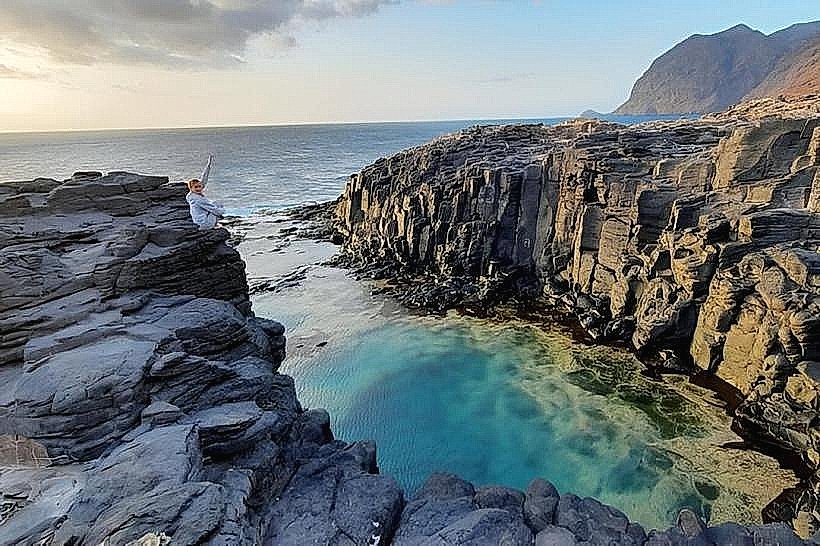
These pools are formed by volcanic rock, creating distinct basins that fill with ocean water.
Visual Characteristics
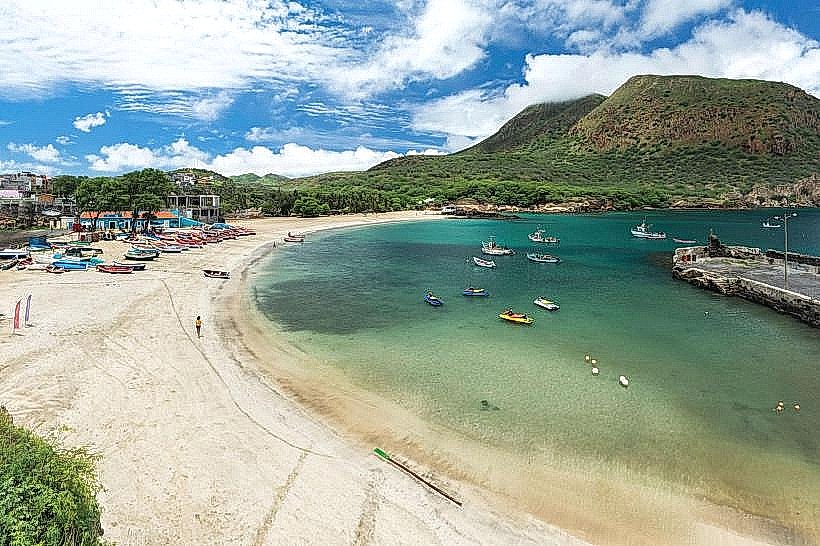
The pools are carved into dark, rough volcanic rock. The water within the pools ranges from clear to a deep blue, depending on depth and light penetration. The surrounding coastline features sandy areas interspersed with these rocky outcrops.
Location & Access Logistics
The Tarrafal Natural Pools are situated approximately 1 kilometer south of the main Tarrafal town center. Access is via the paved road leading south from Tarrafal, turning off onto a smaller dirt track for the final 200 meters. Parking is available on the dirt track adjacent to the pools. Public transport options include local "aluguer" (shared taxis) that run between Tarrafal town and nearby villages; disembark at the southern edge of Tarrafal and walk the remaining distance.
Historical & Ecological Origin
The pools are a result of coastal erosion and volcanic activity, characteristic of the island's geological formation. They represent a natural adaptation of the coastline to the Atlantic Ocean's tidal forces.
Key Highlights & Activities
Swimming and wading in the natural pools are the primary activities. The pools offer a sheltered environment for observing marine life. Exploration of the surrounding rocky coastline is also possible.
Infrastructure & Amenities
There are no formal amenities directly at the pools. Restrooms and food vendors are located in the main Tarrafal town, approximately 1 kilometer north. Cell phone signal (4G) is generally available in the area.
Best Time to Visit
The best time for photography is during the morning hours when the sun is at an angle that illuminates the water clearly. Visit during low tide to access the pools more easily and observe the exposed rock formations. The dry season, from November to June, offers the most stable weather conditions.
Facts & Legends
Local lore suggests that the pools were once used by fishermen to store their catch temporarily. A specific tip for visitors is to wear sturdy footwear due to the uneven volcanic rock surfaces.
Nearby Landmarks
- Praia de Tarrafal (0.8km North)
- Monte Graciosa (2.5km Northeast)
- Ribeira da Prata (4.0km Southwest)
- Ponta do Sul (3.0km South)