Landmark: Tel Arad National Park
City: Arad
Country: Israel
Continent: Asia
Tel Arad National Park, Arad, Israel, Asia
Tel Arad National Park is a major archaeological site in the northern Negev, preserving two distinct historical periods: a massive Early Bronze Age Canaanite city and an Iron Age Israelite fortress. It is considered one of the most important sites for studying biblical archaeology and the origins of early urban planning.
Visual Characteristics
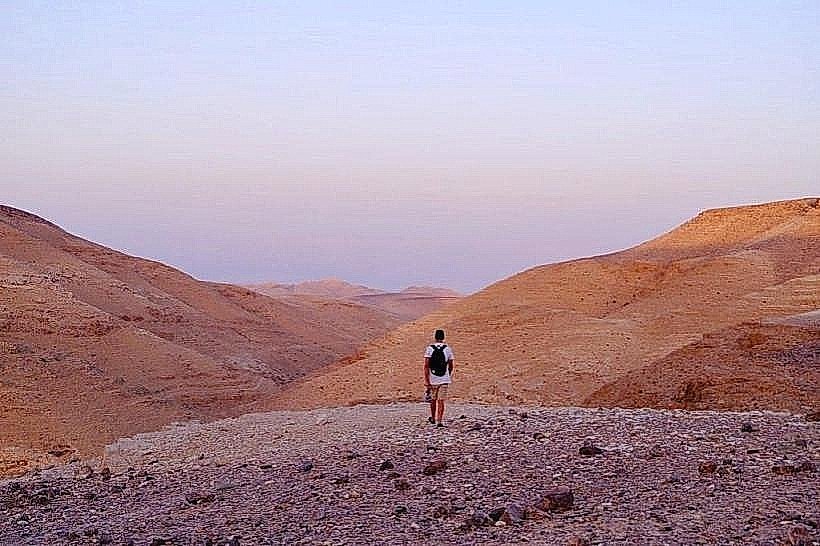
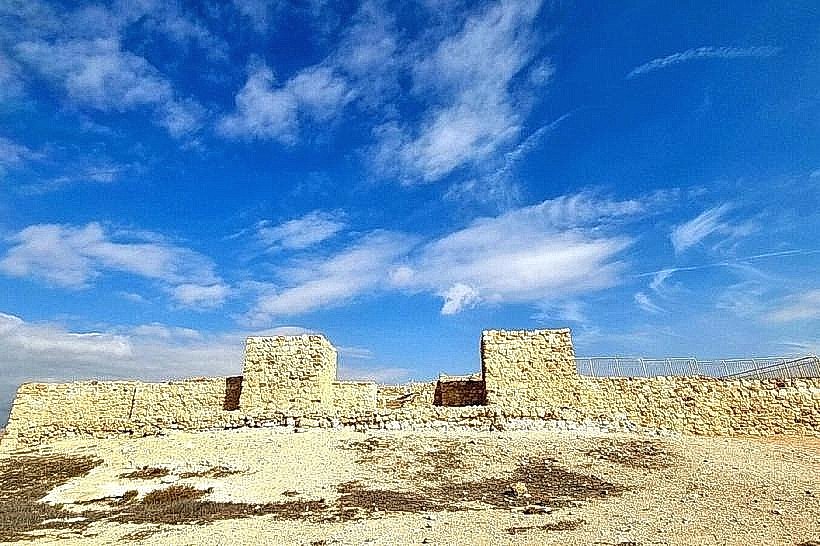
The park is divided into two main topographical sections. The "Lower City" consists of the sprawling ruins of a 5,000-year-old walled Canaanite city, featuring broadroom houses and a network of streets. The "Upper Tel" is dominated by a compact, well-fortified Israelite citadel. The surrounding landscape is characterized by the arid, loess-soil hills of the eastern Negev, which turn green briefly in late winter.
Location & Access Logistics
Tel Arad is located approximately 10km west of the modern city of Arad and 39km east of Be'er Sheva. It is situated off Route 31; visitors turn north at the Tel Arad Junction onto Road 2808 for approximately 2km. Public buses from Be'er Sheva and Arad stop at the main junction, requiring a short hike or taxi to the park gate. Large paved parking lots are available near the visitor center and the upper fortress.
Historical & Ecological Origin
The site’s history spans several millennia:
Canaanite Period (3100–2650 BCE): A major urban center that controlled the copper trade from the Arabah to Egypt. It was protected by a 1,200m stone wall with semi-circular towers.
Israelite Period (11th–6th Century BCE): A series of military citadels served as the southern frontier of the Kingdom of Judah.
Ecological Note: The park is a sanctuary for the rare Judean Iris (Iris atrofusca), which blooms in the loess soil during late February and early March.
Key Highlights & Activities
The Judean Temple: Located in the northwest corner of the fortress, this is a unique "miniature" version of the Temple in Jerusalem, featuring a sacrificial altar and a Holy of Holies with two ritual standing stones (massebot).
The Canaanite Water System: A massive natural depression in the center of the lower city used to collect runoff from the streets, later integrated into a sophisticated Iron Age cistern system.
The "Arad House": Visitors can walk through reconstructed dwellings of the unique "broadroom" style, characterized by floors lower than street level.
Hebrew Ostraca: Over 100 potsherds with ink inscriptions were found here, including orders to the fortress commander and mentions of the "House of YHWH."
Infrastructure & Amenities
The park includes a visitor center with a small museum, a snack bar, and shaded picnic areas. Public restrooms are located at the entrance and near the fortress. For overnight stays, the "Canaanite Village" offers various camping options, including authentic-style tents, cabins, and a caravan park with electricity and water hookups. 5G cellular coverage is generally stable across the open desert terrain.
Best Time to Visit
The park is open year-round, Sunday–Thursday and Saturday from 08:00 to 17:00 (winter until 16:00), and Fridays until 16:00 (winter until 15:00). Mid-winter to early spring (February–March) is the optimal time for temperate weather and to witness the Judean Iris bloom. Summer visits should be limited to the early morning hours to avoid extreme desert heat and intense midday sun.
Facts & Legends
A verified scientific discovery from the site's temple indicated that the residue on the incense altars included cannabis and frankincense, marking the first known evidence of psychoactive substance use in an Israelite cultic context. Biblical tradition identifies the King of Arad as a Canaanite ruler who successfully fought the Israelites during their desert wandering, though archaeologists note the Bronze Age city had been abandoned for over 1,000 years by the time of the Exodus narrative.
Nearby Landmarks
Modern City of Arad: 10km East
Masada National Park: 32km East
Tel Be'er Sheva: 35km West
Yatir Forest: 15km North
The Dead Sea (Ein Bokek): 38km East