Landmark: Tusan Beach
City: Miri
Country: Malaysia
Continent: Asia
Tusan Beach, Miri, Malaysia, Asia
Tusan Beach is a coastal area located in Miri, Sarawak, Malaysia. It is known for its distinctive rock formations and tidal pools.
Visual Characteristics
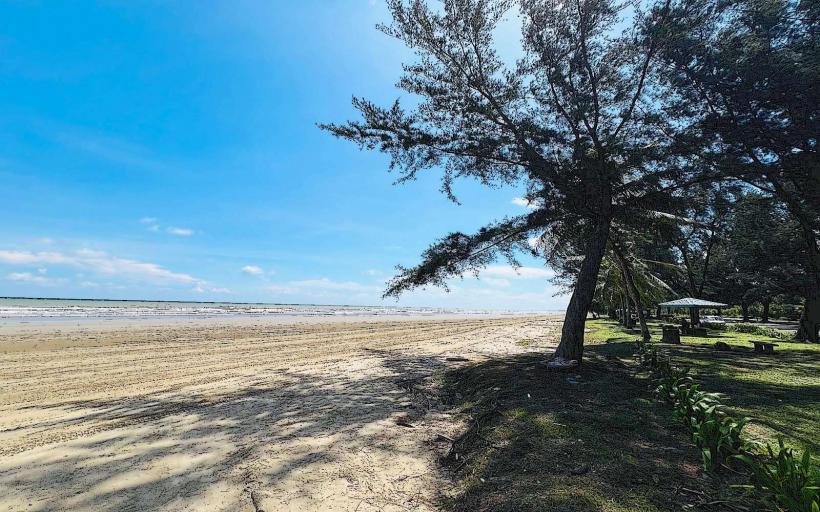
The beach features a coastline composed of sedimentary rock, exhibiting layered strata. Sand composition varies from fine to coarse grains. Prominent rock formations, including arches and sea stacks, are present along the shoreline. During low tide, numerous tidal pools are exposed, containing marine life. Vegetation is sparse, primarily consisting of coastal grasses and hardy shrubs on the higher ground behind the beach.
Location & Access Logistics
Tusan Beach is situated approximately 30 kilometers southwest of Miri city center. Access is via Jalan Miri-Bintulu (Pan Borneo Highway). Turn off onto Jalan Kampung Tusan. The final approach involves a gravel track, approximately 2 kilometers in length, suitable for most passenger vehicles. Parking is available on an unpaved area adjacent to the beach access point. No public transport directly serves the beach; private vehicles or taxis are required.
Historical & Ecological Origin
The rock formations at Tusan Beach are the result of coastal erosion acting upon sedimentary rock layers over geological time. The area is classified as a coastal marine environment, supporting intertidal ecosystems within its tidal pools.
Key Highlights & Activities
Observation of tidal pools and their inhabitants is a primary activity. Photography of the rock formations, particularly during sunrise and sunset, is recommended. Beachcombing for shells and observing coastal birdlife are also possible. Access to the water for swimming is limited due to strong currents and the rocky seabed.
Infrastructure & Amenities
No permanent infrastructure or amenities are present at Tusan Beach. Restrooms, shade structures, and food vendors are not available. Cell phone signal (4G/5G) is intermittent and generally weak.
Best Time to Visit
The best time for observing tidal pools is during low tide. For photography, early morning (sunrise) and late afternoon (sunset) offer optimal lighting conditions. The dry season, from March to October, generally provides more stable weather conditions. Avoid visiting during heavy rainfall due to potential flash flooding on access tracks.
Facts & Legends
Local folklore suggests that the distinctive rock formations are the petrified remains of a mythical sea creature. A specific geological feature, a large, solitary rock pillar near the water's edge, is often referred to as the "Dragon's Tooth."
Nearby Landmarks
- Taman Awam Miri (0.8km Northeast)
- Miri City Fan (2.5km Northeast)
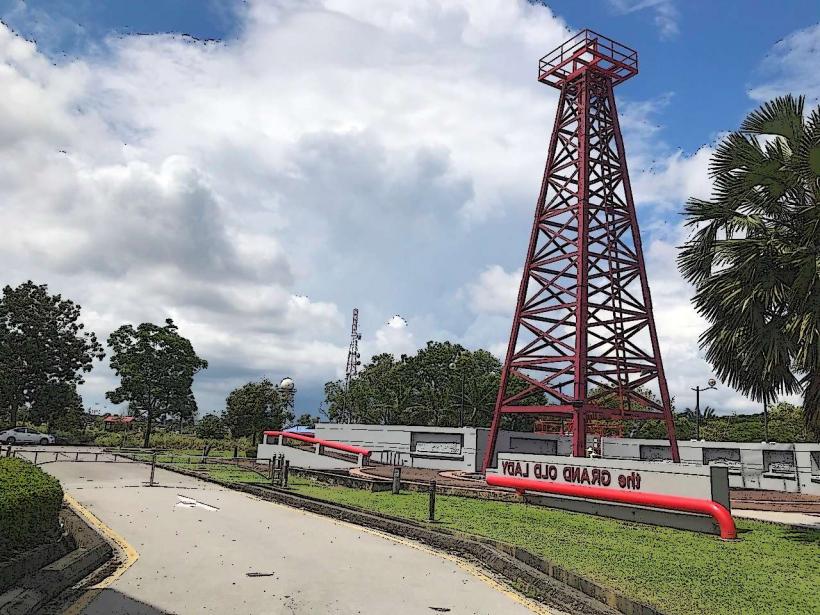
- Grand Old Lady (The first oil well in Miri) (4.2km Northeast)
- Taman Selera Beach (4.8km Northeast)