Information
Landmark: WestertorenCity: Amsterdam
Country: Netherlands
Continent: Europe
Westertoren, Amsterdam, Netherlands, Europe
The Westertoren (Western Tower) is the bell tower of the Westerkerk, located along the Prinsengracht in Amsterdam. At 85 meters, it is the tallest church tower in the city’s historic center and a primary symbol of Amsterdam.
Visual Characteristics
The tower is a masterpiece of the Dutch Renaissance style. It is constructed in four distinct tiers: a brick rectangular base, followed by two receding stone sections, and topped by a wooden, lead-covered spire. It is crowned with the Imperial Crown of Austria (the crown of Maximilian I), which is painted bright red and gold. The tower's color palette is defined by the contrast between dark red brick and light-colored sandstone decorative elements.
Location & Access Logistics
Address: Prinsengracht 281, 1016 GW Amsterdam.
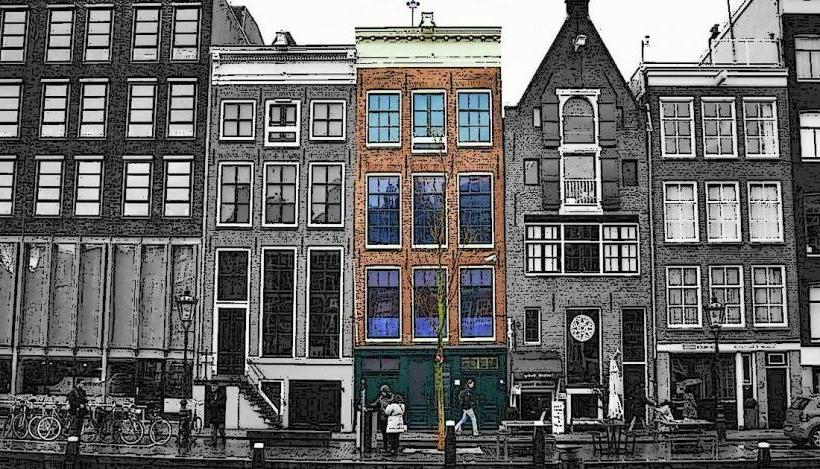
Access: Located in the Jordaan district, directly adjacent to the Anne Frank House.
Tower Climbing: Access to the top is strictly by guided tour only. Tours run approximately every 30 minutes. Due to narrow, steep wooden ladders, tickets usually must be booked in advance online or at the tower entrance.
Transport: Tram lines 13 and 17 stop at Westermarkt, 100 meters from the base.
Historical & Ecological Origin
Designed by architect Hendrick de Keyser, construction began in 1620 and was completed in 1638. The tower was built during the peak of the Dutch Golden Age as part of the "Plan of the Three Canals." Because it was built on unstable, swampy ground, it rests on a massive foundation of approximately 50 wooden piles.
Key Highlights & Activities
The Carillon: The tower contains a world-famous carillon of 51 bells, many of which were cast by the Hemony brothers in 1658. The carillon is played live every Tuesday at 12:00.
Panoramic Views: The balcony at the 40-meter level provides a 360-degree view of the Canal Belt, the Jordaan, and the IJ river.
Literary Connection: The tower’s bells are famously mentioned in the diary of Anne Frank, who lived in the nearby secret annex and found comfort in their sound.
Infrastructure & Amenities
Restrictions: Children under age 6 are typically not allowed to climb for safety reasons. The climb involves approximately 180 steep steps.
Accessibility: The tower is not wheelchair accessible. However, the main body of the Westerkerk church is accessible.
Connectivity: High-speed 5G coverage is excellent at the base and the summit.
Best Time to Visit
For photography, the tower is best captured from the Keizersgracht bridge at sunset, when the sunlight hits the western face of the crown. For climbing, early morning slots are recommended to avoid the peak crowds from the adjacent Anne Frank House.
Facts & Legends
The Crown: Amsterdam was granted the right to use the Imperial Crown in its coat of arms in 1489 by Emperor Maximilian I as a thank-you for the city's financial support.
Rembrandt's Grave: While the tower is the landmark, the adjacent church is where the painter Rembrandt van Rijn was buried in 1669 in a pauper's grave; its exact location remains unknown.
Nearby Landmarks
Anne Frank House – 0.05km North
Westerkerk – 0.0km (Attached)
Homomonument – 0.1km West
Dam Square – 0.6km East