City: Kairouan
Country: Tunisia
Continent: Africa
Kairouan, Tunisia, Africa
Kairouan is the spiritual capital of Tunisia and the fourth holiest city in Islam, following Mecca, Medina, and Jerusalem. Situated in a semi-arid plain at an elevation of 68 meters, it is located approximately 160 kilometers south of Tunis and 60 kilometers inland from Sousse.
Historical Timeline
Kairouan was founded in 670 AD by the Arab general Uqba ibn Nafi as a strategic military base and center for Islamic learning in North Africa. It served as the capital of the Ifriqiya region under the Aghlabid Dynasty (800–909 AD), a period during which it became a premier global hub for science, poetry, and theology. The city was designated a UNESCO World Heritage site in 1988 for its exceptional collection of Islamic architecture and its role as a "holy city."
Demographics & Population
The estimated metropolitan population for 2026 is 195,000. The demographics are predominantly Arab-Berber. The city maintains a more conservative social fabric than the coastal "Sahel" cities. The median age is approximately 30.5 years.
Urban Layout & Key Districts
The city is divided between the historic core and the sprawling modern outskirts.
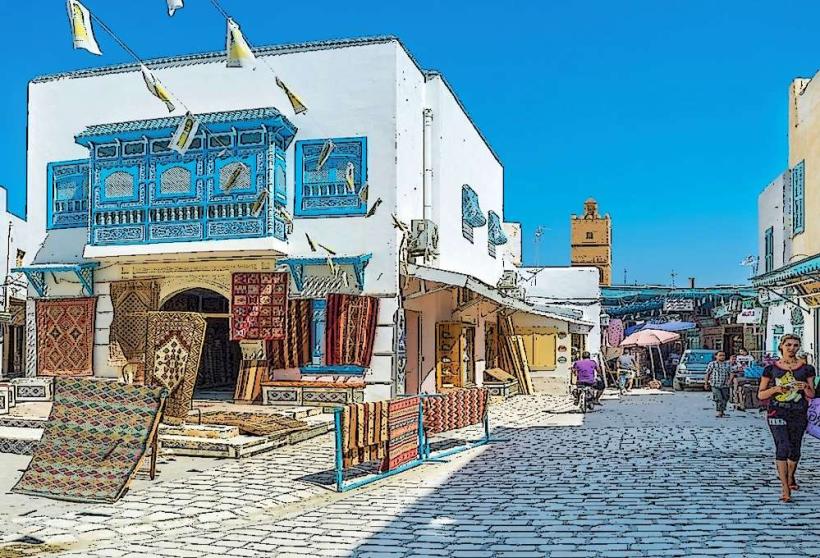
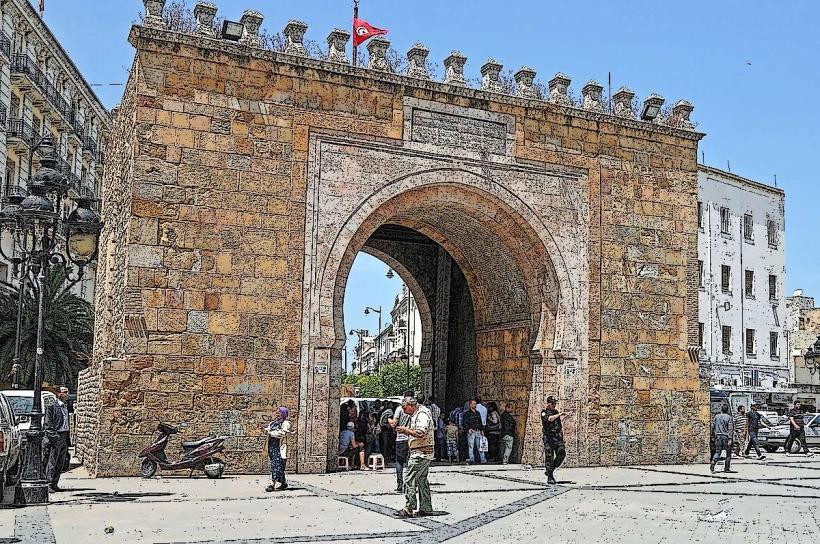
The Medina: A dense, walled historic district containing the major religious monuments and traditional souks.
The Aghlabid District: Located to the north of the Medina, housing the historic water reservoirs.
The Modern City: Characterized by wide boulevards, administrative buildings, and the main commercial centers.
Top City Landmarks
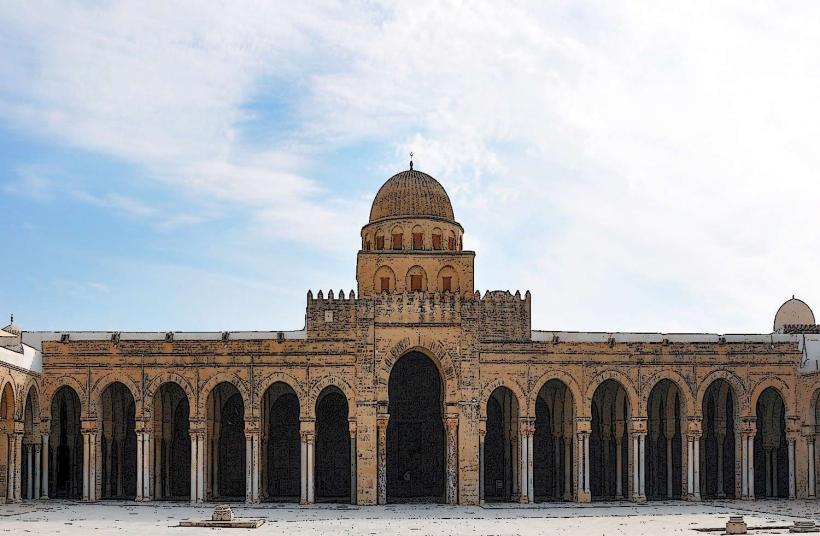
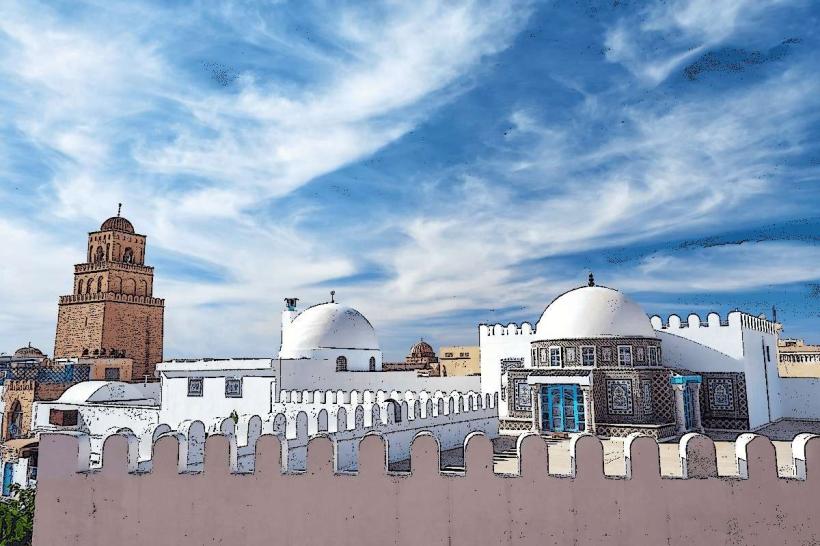
Great Mosque of Kairouan (Sidi Oqba Mosque): The oldest Islamic monument in the Maghreb and a masterpiece of architectural reuse, featuring columns salvaged from Roman Carthage.
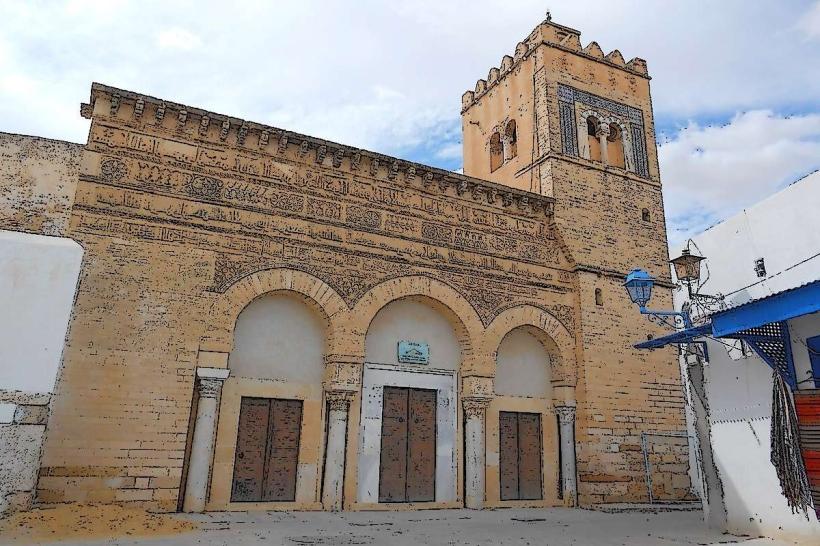
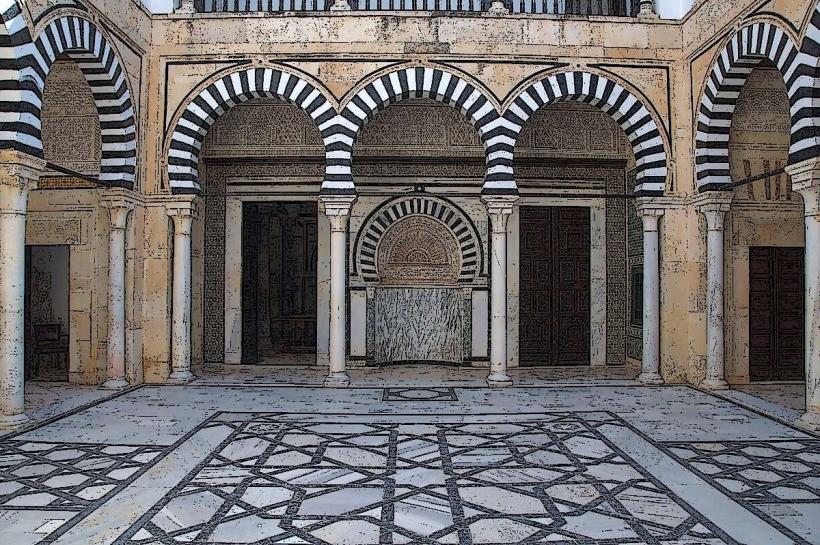
Mosque of the Three Doors: Notable for its intricate 9th-century facade featuring Kufic calligraphy.
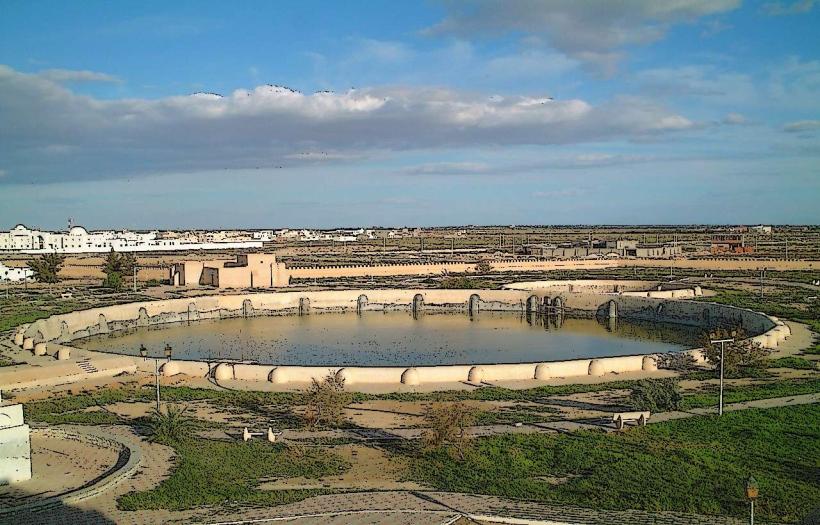
The Aghlabid Basins: Massive 9th-century open-air cisterns that were once considered among the greatest engineering feats of the Islamic world.
Zaouia of Sidi Sahab (The Barber's Mosque): A stunning complex decorated with 17th-century tiles, containing the tomb of a companion of the Prophet Muhammad.
The Bir Barouta: A historic well located in the heart of the Medina where a camel turns a water wheel; legend says its water is linked to the Zamzam well in Mecca.
Transportation Network
Intra-city transit is managed by Yellow Taxis and local buses. Kairouan is a major hub for Louages (shared taxis), which provide the most efficient connections to Sousse, Tunis, and El Jem. There is no active passenger rail service. Most international travelers transit via Monastir Airport (MIR) or Tunis-Carthage (TUN).
Safety & "Red Zones"
The safety level is moderate. As a major pilgrimage site, the city has a steady security presence. Petty theft and persistent street "guides" are common near the Great Mosque and within the Medina souks. There are no "red zones," but visitors should be respectful of local customs, particularly during prayer times and the month of Ramadan.
Digital & Financial Infrastructure
Internet speeds average 20–35 Mbps. Main carriers are Tunisie Telecom, Ooredoo, and Orange. The Tunisian Dinar (TND) is the mandatory currency. ATMs are located near the Medina gates and along the main administrative boulevards. Credit card acceptance is restricted to large hotels and high-end carpet showrooms.
Climate & Air Quality
Temperatures range from 6°C in winter to 38°C in summer. The climate is continental and semi-arid, often significantly hotter than the coastal cities. Air quality is moderate, with high dust levels during the summer months. Significant weather risks include extreme heatwaves in July and August.
Culture & Social Norms
Arabic is the primary language; French is understood by most officials and traders. Kairouan is deeply traditional. Conservative dress is required: shoulders and knees must be covered for all genders, and women may be asked to cover their hair when entering certain sections of religious sites (headscarves are usually provided at the Great Mosque entrance). Tipping is standard at 5–10% in cafes.
Accommodation Zones
Medina Border: Recommended for boutique guesthouses and easy access to monuments.
Modern Suburbs: Recommended for larger, Western-style hotels with amenities like pools.
Local Cost Index
1 Espresso: 2.5 TND ($0.80 USD)
1 Kairouan Pastry (Makroudh): 0.5 TND ($0.16 USD per piece)
1 Standard Lunch (Kousksi/Ojja): 12 TND ($3.90 USD)
Nearby Day Trips
Sousse: 60 km (Coastal beaches and Medina).
El Jem: 70 km (Roman Amphitheater).
Sbeitla (Sufetula): 100 km (Impressive Roman ruins in the interior).
Facts & Legends
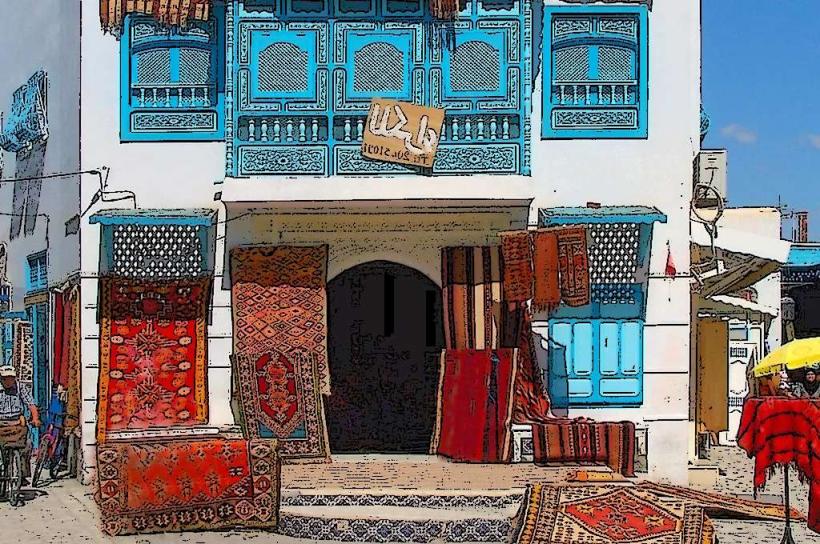
Kairouan is the world center for Makroudh (date-filled semolina cookies) and high-quality hand-knotted carpets. A local legend states that seven pilgrimages to Kairouan are equal to one pilgrimage to Mecca. A verified historical oddity is that the Great Mosque’s sundial is still used by locals to verify prayer times, and the mosque's minaret is the oldest of its kind in the world, having served as a model for all subsequent North African minarets.