Landmark: Great Mosque of Kairouan
City: Kairouan
Country: Tunisia
Continent: Africa
Great Mosque of Kairouan, Kairouan, Tunisia, Africa
The Great Mosque of Kairouan is a historic Islamic religious site located in the city of Kairouan, Tunisia.
It is one of the oldest and most important mosques in the Islamic world, serving as a significant center for religious learning and prayer.
Visual Characteristics
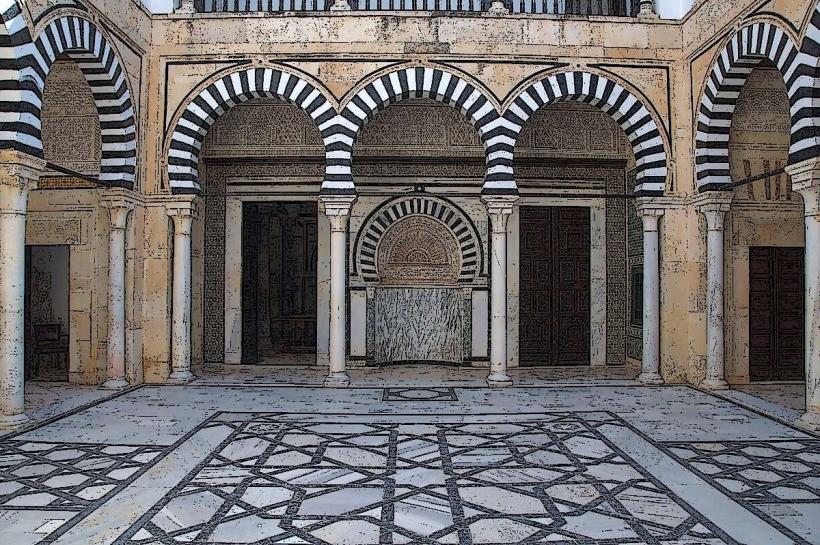
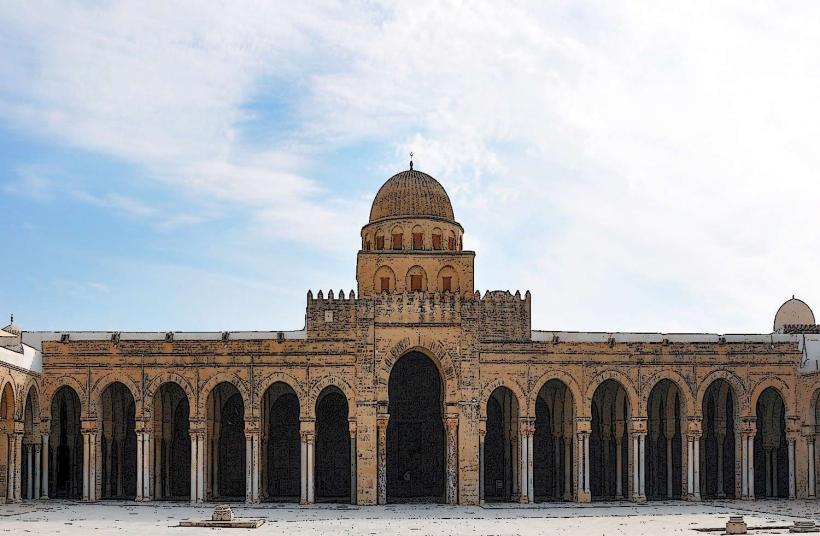
The mosque complex covers an area of approximately 50 by 70 meters. Its construction primarily utilizes sandstone and brick. The exterior features a robust, rectangular plan with a large courtyard. The courtyard is surrounded by arcades supported by numerous columns. The prayer hall is hypostyle, with rows of columns supporting the roof. The minaret is square-based and rises to a significant height, constructed from stone. The dome over the mihrab is octagonal. The overall color palette is earthy, dominated by the natural tones of the stone and brick.
Location & Access Logistics
The Great Mosque of Kairouan is situated in the central part of Kairouan. It is approximately 1.5 kilometers from the city center. Access is via local roads within Kairouan; specific road names include Rue des Aghlabides and Avenue Habib Bourguiba. Parking is available in designated areas around the mosque, though it can be limited during peak hours. Public transport options within Kairouan are primarily local buses and taxis. There are no direct boat transfers as Kairouan is an inland city.
Historical & Ecological Origin
Construction of the Great Mosque of Kairouan began in 670 CE under the command of Uqba ibn Nafi, a general of the Umayyad Caliphate. It was built on the site of an earlier, smaller mosque. The mosque served as a center for the spread of Islam in North Africa and as a major educational institution. Its architectural style reflects early Islamic design principles, influencing subsequent mosque construction across the region.
Key Highlights & Activities
Visitors can explore the prayer hall, the courtyard, and the minaret. Photography is permitted in designated areas. Entry to the prayer hall is restricted to Muslims during prayer times. Non-Muslims can observe the courtyard and the exterior architecture. Guided tours are available, providing historical context and architectural details.
Infrastructure & Amenities
Restrooms are available within the mosque complex. Shaded areas are provided by the arcades in the courtyard. Cell phone signal (4G/5G) is generally available in the vicinity. Food vendors and small cafes are located on the streets surrounding the mosque.
Best Time to Visit
The best time of day for photography, particularly for capturing the interplay of light and shadow in the courtyard, is in the late morning or late afternoon. The most favorable months for visiting Kairouan, considering weather, are from March to May and September to November, when temperatures are moderate. There are no specific tide requirements for visiting this inland site.
Facts & Legends
A notable feature is the "Pillar of the Desert," a large marble column in the prayer hall that is said to have been brought from the ancient Roman city of Carthage. Legend states that the mosque contains a mihrab that was once the personal prayer niche of Fatima al-Zahra, the daughter of the Prophet Muhammad, though this is historically unsubstantiated.
Nearby Landmarks
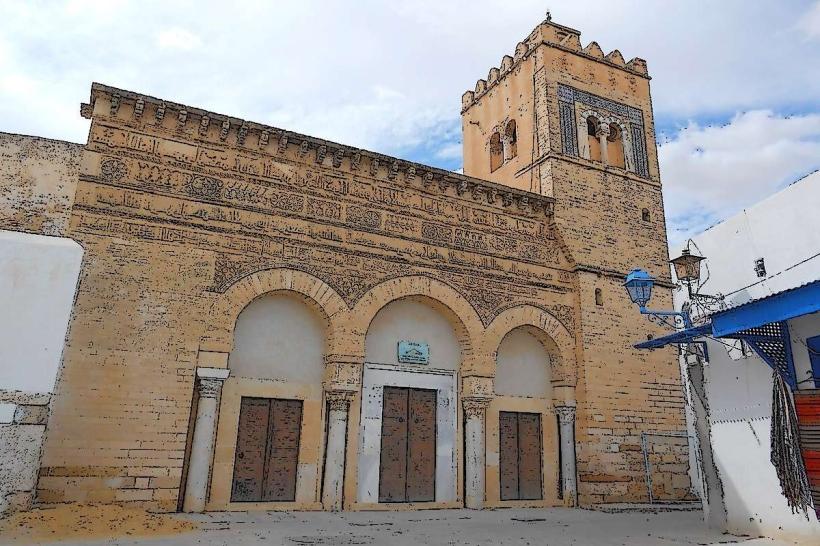
- Mosque of the Three Doors (0.3km North)
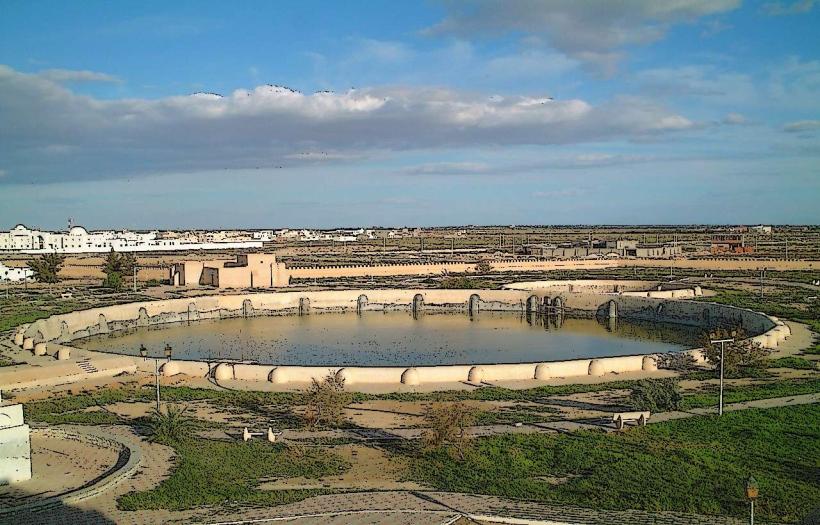
- Aghlabid Basins (0.8km West)
- Sidi Sahab Mausoleum (1.2km Southwest)
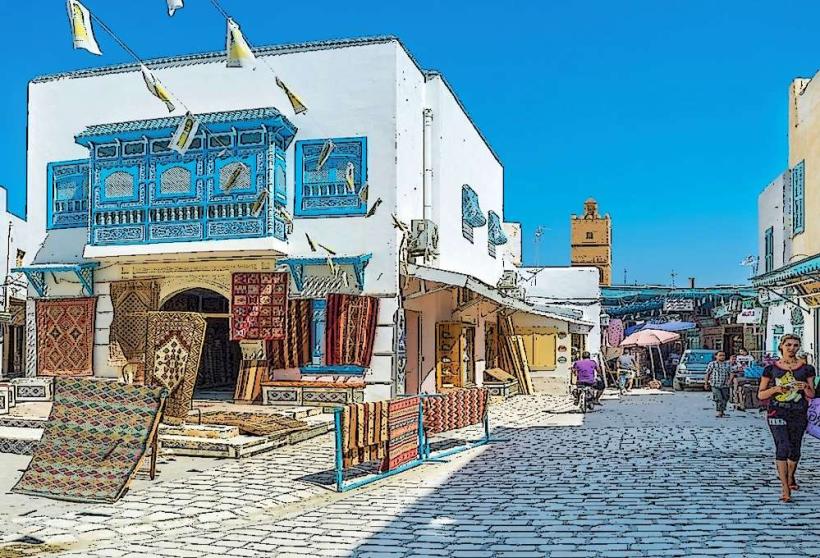
- Kairouan Medina (0.5km East)