Landmark: Basilica of Constantine
City: Trier
Country: Germany
Continent: Europe
Basilica of Constantine, Trier, Germany, Europe
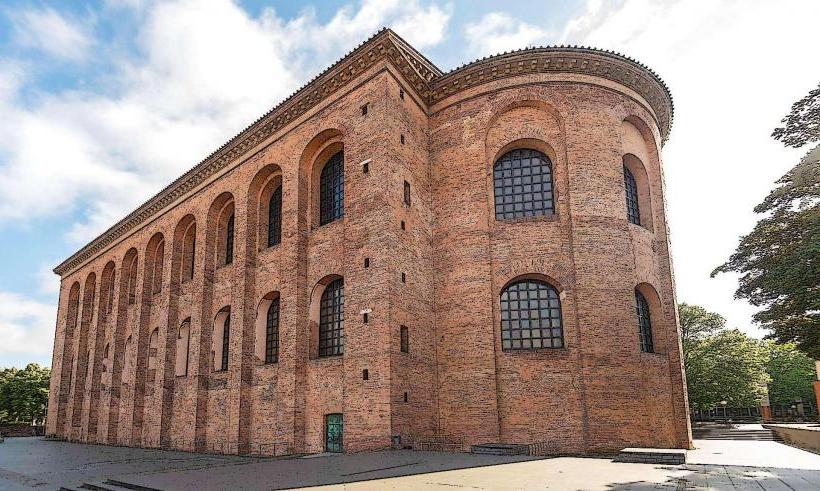
Basilica of Constantine (Konstantin-Basilika), also known as the Aula Palatina, is a Roman palace basilica that served as the throne hall for Emperor Constantine the Great. It is a UNESCO World Heritage site and represents the largest single-room structure preserved from antiquity.
Visual Characteristics
The building is a massive, rectangular hall constructed entirely of Roman red brick. It is characterized by its sheer scale and lack of internal supporting columns. The exterior features tall, arched windows recessed into deep niches. The interior is defined by its vastness-measuring 67 meters long, 27 meters wide, and 33 meters high-ending in a semicircular apse.
Location & Access Logistics
Located at Konstantinplatz 10, 54290 Trier.
Public Transit: 10-minute walk from Trier Hauptbahnhof. It is adjacent to the Electoral Palace.
Access: Entry is generally free; it currently serves as a Protestant Church (Church of the Redeemer).
Hours: Monday–Saturday 10:00 AM – 6:00 PM; Sunday 12:00 PM – 6:00 PM (Summer). Winter hours are shorter; closed during services and rehearsals.
Parking: Use "Parkhaus Basilika" or "Parkhaus Konstantin."
Historical Origin
Built around 310 AD during the reign of Constantine the Great. It was intended to display the absolute power of the Roman Emperor. After the Roman era, the building served as a residence for the Archbishops of Trier. In the 17th century, it was integrated into the newly built Electoral Palace. Following heavy damage in 1944 during WWII, the interior was reconstructed in a minimalist style to emphasize its original Roman dimensions.
Key Highlights & Activities
Architectural Scale: The hall is large enough to contain a modern ten-story building.
Optical Illusion: The windows in the apse and the niches become progressively smaller toward the center, a Roman architectural trick to make the hall appear even longer than it is.
Floor Heating: Remains of the original Roman hypocaust (underfloor heating) system are visible in specialized archaeological viewing areas.
The Organ: A modern, massive pipe organ is mounted on the rear wall, known for its exceptional acoustics due to the hall's volume.
Infrastructure & Amenities
The facility is fully wheelchair accessible. As an active place of worship, silence is required. No public restrooms are located inside the basilica, but facilities are available in the adjacent palace gardens or the "Parkhaus Basilika." 5G signal is robust.
Best Time to Visit
Sunny Afternoons: To observe the light patterns through the high, uncolored windows.
Organ Concerts: Frequently held on Thursday evenings during the summer months.
Facts & Legends
A technical oddity is the self-supporting roof; the original Roman roof was a masterpiece of carpentry that spanned the 27-meter width without any central pillars. Legend states that the hall was so well-heated by its three-layered floor system that the Emperor could walk barefoot even in the depths of a Germanic winter.
Nearby Landmarks
Electoral Palace (Kurfürstliches Palais) – Directly adjacent (South)
Palace Gardens (Palastgarten) – Directly adjacent (South)
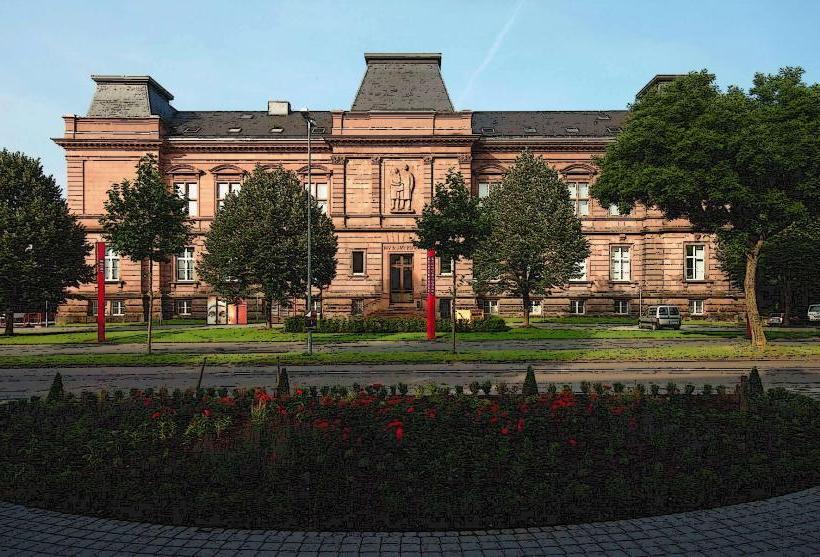
Rheinisches Landesmuseum – 0.3km South
Trier Cathedral – 0.3km North