Landmark: Rheinisches Landesmuseum
City: Trier
Country: Germany
Continent: Europe
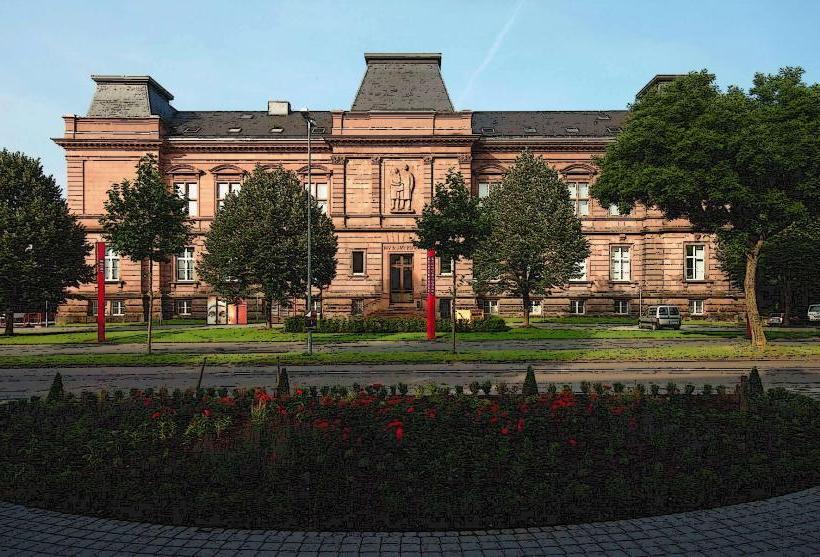
Rheinisches Landesmuseum, Trier, Germany, Europe
Rheinisches Landesmuseum Trier is one of Germany's most significant archaeological museums, documenting 200,000 years of history from the Roman era to the Baroque period.
Visual Characteristics
The museum is a modern facility with wide, sunlit galleries and minimalist industrial design. It is characterized by high ceilings and expansive glass panels that house massive stone monuments, including several multi-story Roman funeral pillars.
Location & Access Logistics
Located at Weimarer Allee 1, 54290 Trier.
Public Transit: 10-minute walk from the city center (Hauptmarkt) or via bus lines to stop "Landesmuseum."
Access: Paid admission.
Hours: Tuesday–Sunday 10:00 AM – 5:00 PM. Closed on Mondays.
Parking: Use "Parkhaus Basilika" or "Parkhaus Konstantin."
Historical Origin
Founded in 1877, the museum was established to preserve the vast quantity of Roman artifacts unearthed during the city's expansion. It was largely rebuilt and modernized after WWII to accommodate its growing collection, which now comprises over 4,500 exhibited items.
Key Highlights & Activities
The Trier Gold Hoard: The world's largest Roman gold coin treasure, consisting of over 2,600 coins (Aurii) weighing 18.5 kg, discovered in 1993.
Neumagen Wine Ship: A famous 2nd-century stone tomb monument depicting a Roman wine galley with rowers and barrels.
Stone Monuments: A world-class collection of Roman funerary and decorative stone carvings, many preserved in their original polychrome paint.
"In the Realm of Shadows": A multimedia light and sound show projected directly onto original Roman stone monuments several times daily.
Infrastructure & Amenities
The museum is fully wheelchair accessible with elevators and ramps. It includes a specialized library, a museum shop, and the Café Mohrenkopf. Audio guides are available in several languages. 5G signal is robust.
Best Time to Visit
Weekdays (Mornings): To view the Gold Hoard and Neumagen Ship without crowds.
Scheduled Showtimes: Coordinate your arrival with the "In the Realm of Shadows" performance times.
Facts & Legends
A technical oddity is the preservation of color on several stone sculptures; specialized lighting in the museum reveals the original pigments used by Romans, which are otherwise invisible to the naked eye. Legend suggests that the massive gold hoard was buried in haste during a Germanic raid and remained hidden for nearly 1,800 years until a construction excavator bucket hit the bronze vessel containing it.
Nearby Landmarks
Imperial Baths (Kaiserthermen) – 0.2km South
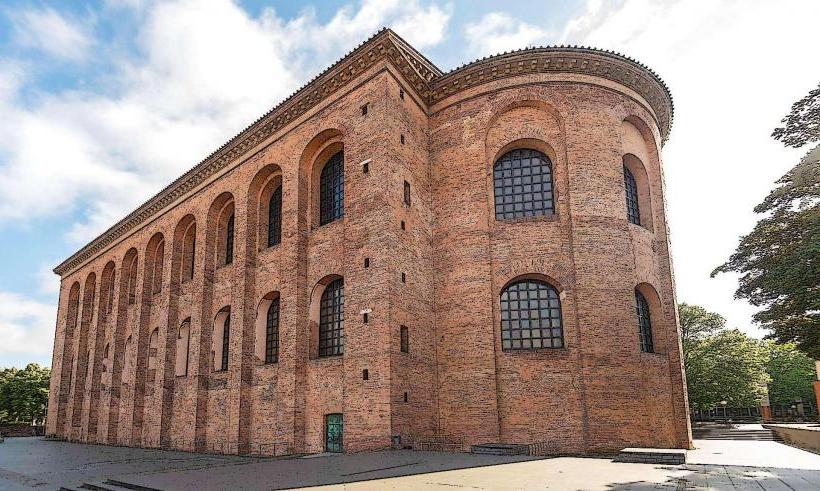
Basilica of Constantine – 0.3km North
Palace Gardens (Palastgarten) – Adjacent (North)
Trier Amphitheater – 0.7km East