Landmark: Bio-Ramon
City: Mitzpe Ramon
Country: Israel
Continent: Asia
Bio-Ramon, Mitzpe Ramon, Israel, Asia
Bio-Ramon is a specialized desert zoo and botanical garden located in Mitzpe Ramon, dedicated to the small wildlife of the Negev that is often difficult to observe in the open wilderness. It serves as a focused ecological exhibit, highlighting the biological diversity and survival strategies of the crater’s smaller inhabitants.
Visual Characteristics
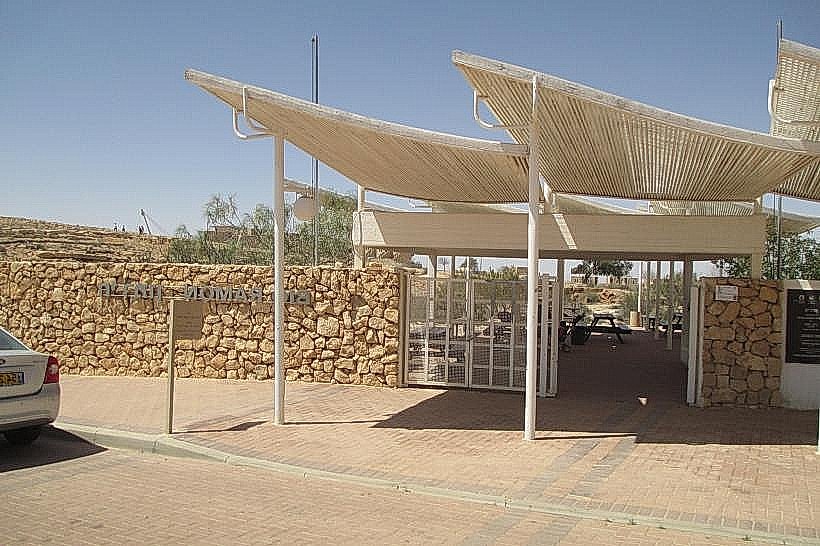
The facility is organized into a series of climate-controlled terrariums and open-air enclosures designed to mimic natural desert micro-habitats. The experience is intimate, providing close-up views of camouflaged reptiles, nocturnal rodents, and desert insects. Outside, a botanical garden showcases native desert flora, including rare succulents and drought-resistant shrubs. The architecture is functional and integrated into the surrounding terrain, utilizing local stone and earth-toned materials.
Location & Access Logistics
The museum is located near the intersection of Nahal Nekarot and Nahal Ha'ela streets in Mitzpe Ramon, approximately 200 meters from the Ramon Visitors Center. It is easily accessible by foot from the town’s desert rim or by private vehicle, with parking available nearby. Its central location makes it a convenient stop for families and students visiting the Ramon Crater.
Historical & Ecological Origin
Bio-Ramon was established to provide a controlled environment for the study and public display of the Negev's unique fauna and flora. Ecologically, it focuses on the "small life" of the Makhtesh Ramon, featuring species that are often nocturnal or highly specialized for extreme heat. The site plays a role in environmental education, illustrating the complex adaptations-such as burrowing or metabolic water production-required for life in a desert ecosystem.
Key Highlights & Activities
Desert Reptiles: A collection of local snakes, lizards, and geckos, including the Sinai agama and various vipers.
Nocturnal Rodents: Specialized darkened enclosures where visitors can observe active desert mice and jerboas.
Botanical Collection: A curated walk featuring plants like the desert broom, saltbush, and various acacia species.
Invertebrate Display: Exhibits on desert scorpions, spiders, and beetles that are essential to the desert food chain.
Infrastructure & Amenities
The museum is a compact, indoor-outdoor facility. It is equipped with public restrooms and is largely ADA-compliant, featuring level paths and accessible viewing windows. While there is no dedicated cafe on-site, it is located within minutes of the town’s main commercial district. The site is frequently visited in conjunction with the main visitor center. Full 5G cellular coverage is available.
Best Time to Visit
The museum is open Sunday through Thursday and Saturday from 08:00 to 16:00, and on Fridays until 15:00. The best time to visit is during the morning or late afternoon to avoid the peak midday heat. It serves as an excellent educational alternative when the weather is too harsh for extensive hiking on the crater floor.
Facts & Legends
A biological fact is that many of the animals at Bio-Ramon are rescues or individuals that cannot be returned to the wild due to injury. A local "legend" among the staff is that the resident desert hedgehogs have become so accustomed to the facility’s schedule that they wait near their enclosure glass for the exact moment of their afternoon feeding, regardless of the seasonal changes in daylight.
Nearby Landmarks
Ramon Visitors Center – 0.2km South
Ramon Crater (Rim) – 0.3km South
Camel Mount Lookout – 1.5km West
Spice Route Quarter – 1.0km North
Albert Promenade – 0.2km South