Landmark: Negev Desert
City: Mitzpe Ramon
Country: Israel
Continent: Asia
Negev Desert, Mitzpe Ramon, Israel, Asia
The Negev is a vast desert and semi-desert region covering approximately 60% of Israel's total landmass. It is shaped like an inverted triangle, with its apex at the Red Sea and its base stretching from the Mediterranean coast to the Dead Sea.
Visual Characteristics
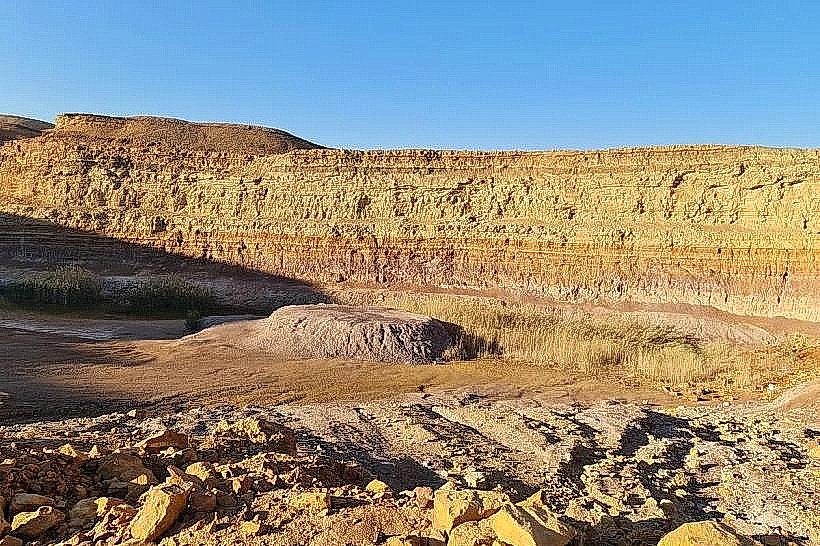
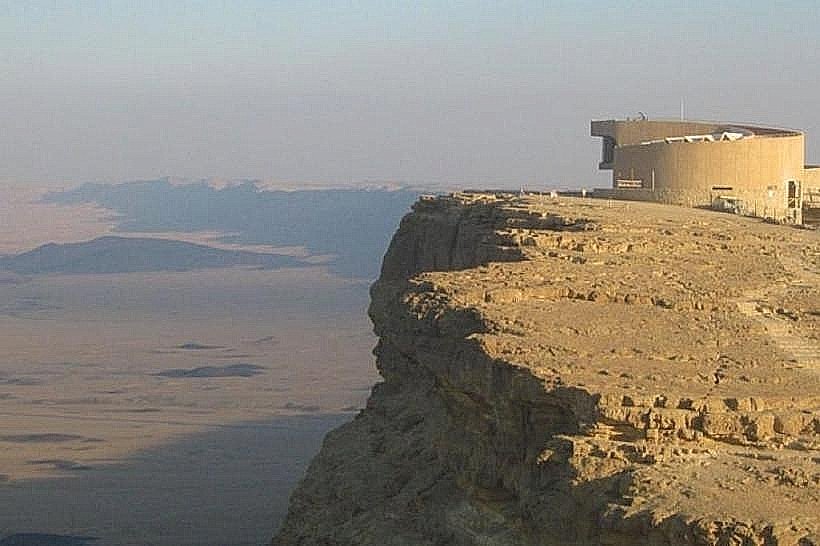
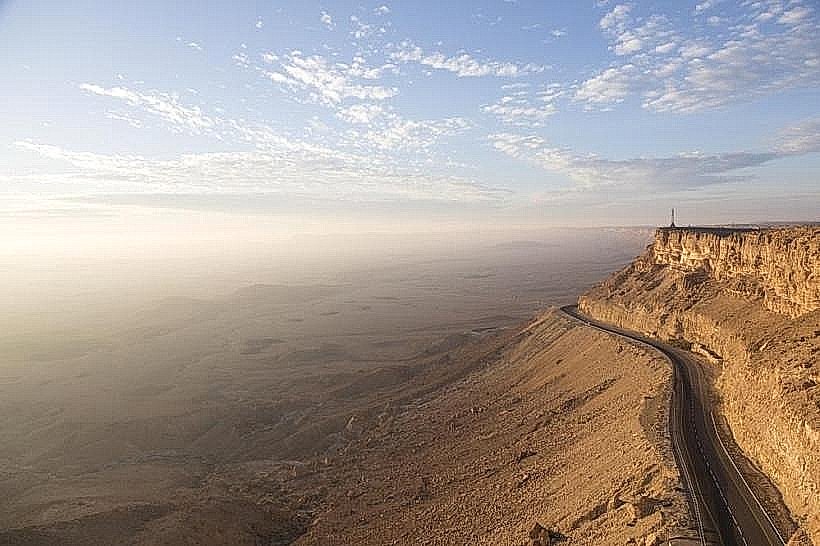
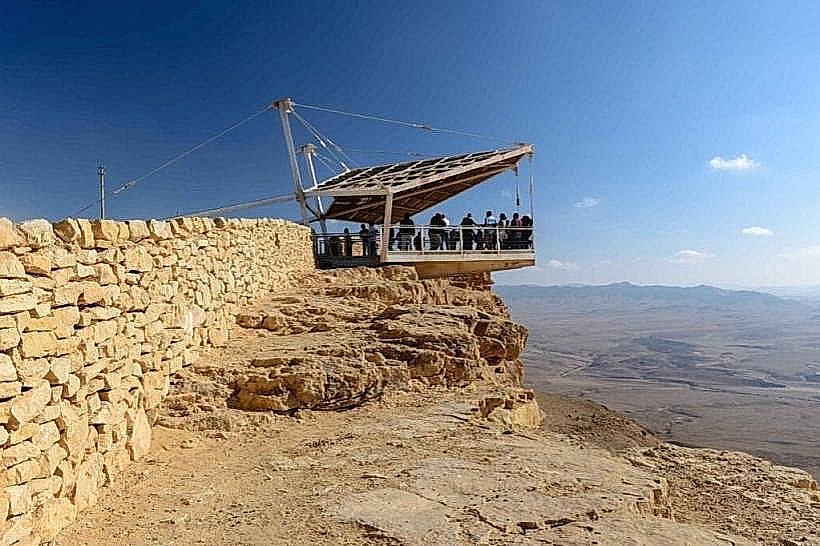
The landscape is highly diverse, ranging from the flat, yellow loess plains of the north to the rugged, red-granite mountains and deep canyons of the south. A defining feature is the presence of three "makhteshim" (erosion cirques), including the world-famous Ramon Crater. The region is characterized by stark color shifts-white chalk cliffs, dark basalt hills, and vibrant multi-colored sandstone-punctuated by green agricultural "islands" made possible by advanced irrigation.
Location & Access Logistics
The Negev begins roughly south of Kiryat Gat and extends to Eilat. Beersheba serves as the "Capital of the Negev" and is the primary transit hub, reachable from Tel Aviv by train in about 60–90 minutes. Two main highways bisect the region: Route 40 (the scenic interior route through Mitzpe Ramon) and Route 90 (the Arava Valley route along the eastern border). While the main cities are well-connected by bus, a private vehicle or guided 4x4 tour is necessary to access deep desert sites and nature reserves.
Historical & Ecological Origin
Geologically, the Negev is a mosaic of ancient marine sediments and volcanic activity. Historically, it was the domain of the nomadic Bedouin and the Nabataean spice traders, whose "Incense Route" is now a UNESCO World Heritage site. In the mid-20th century, the region became the focus of David Ben-Gurion’s vision to "make the desert bloom," leading to pioneering desalination and drip-irrigation projects. Ecologically, it is home to the Nubian ibex, the Dorcas gazelle, and several rare species of desert birds and reptiles.
Key Highlights & Activities
Ramon Crater: Massive erosion cirque offering hiking, rappelling, and world-class stargazing.
Timna Park: Site of the world's oldest copper mines, featuring "Solomon’s Pillars" and the "Mushroom" rock formations.
Sde Boker: The home and burial site of David Ben-Gurion, overlooking the dramatic Zin Valley.
Tel Beer Sheva: UNESCO-listed Iron Age city with a sophisticated ancient water system.
Shivta and Avdat: Well-preserved ruins of ancient Nabataean cities.
Infrastructure & Amenities
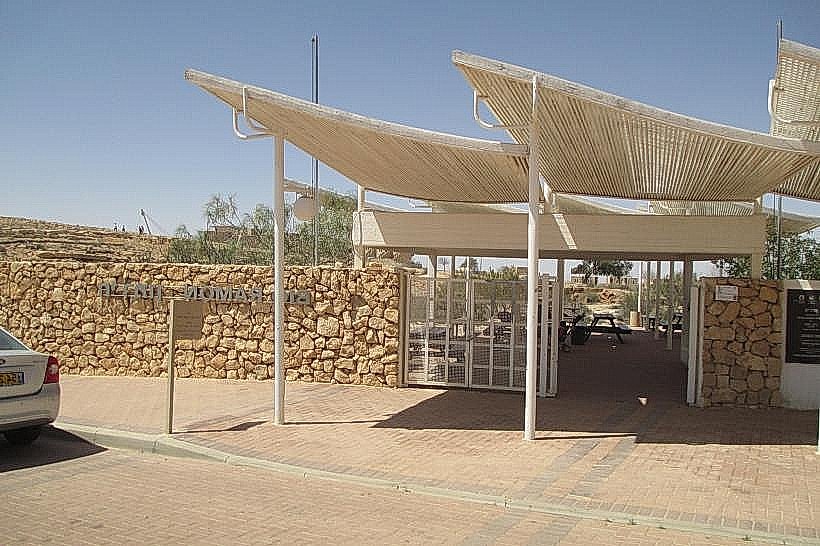
The region is surprisingly well-developed. Major cities like Beersheba, Dimona, and Arad offer full urban amenities. The "Spice Route" area in Mitzpe Ramon and the Arava Valley feature boutique desert lodges, "glamping" sites, and traditional Bedouin hospitality tents. Most national parks are modern and ADA-compliant. 5G cellular coverage is excellent in and around towns but can be non-existent in deep canyons or remote desert stretches.
Best Time to Visit
The optimal window is October through April. Winter (December–February) is pleasant for hiking during the day, though nights can be near freezing. This is also the season for "flash flood hunting," where visitors safely observe rare desert waterfalls (only with expert guidance). Summer (June–August) is extremely hot, with temperatures often exceeding 40°C, making midday outdoor activity dangerous.
Facts & Legends
A historical oddity is the Dead Sea-Red Sea Canal concept, a long-debated project to replenish the Dead Sea using the Negev's geography. Local legend speaks of the "Lost City of the Negev," a mythical golden city buried under the sands, though archaeologists suspect these stories refer to the sophisticated, sand-covered Nabataean outposts discovered in the last century.
Nearby Regions
Dead Sea – Bordering the Northeast
Judean Desert – Bordering the North
Sinai Peninsula (Egypt) – Bordering the West
Arava Valley – Bordering the East
Eilat & Red Sea – Southern Terminus