Landmark: Bottcherstrasse
City: Bremen
Country: Germany
Continent: Europe
Bottcherstrasse, Bremen, Germany, Europe
Böttcherstraße is a 108-meter-long street in Bremen, recognized as a rare example of Expressionist architecture.
Visual Characteristics
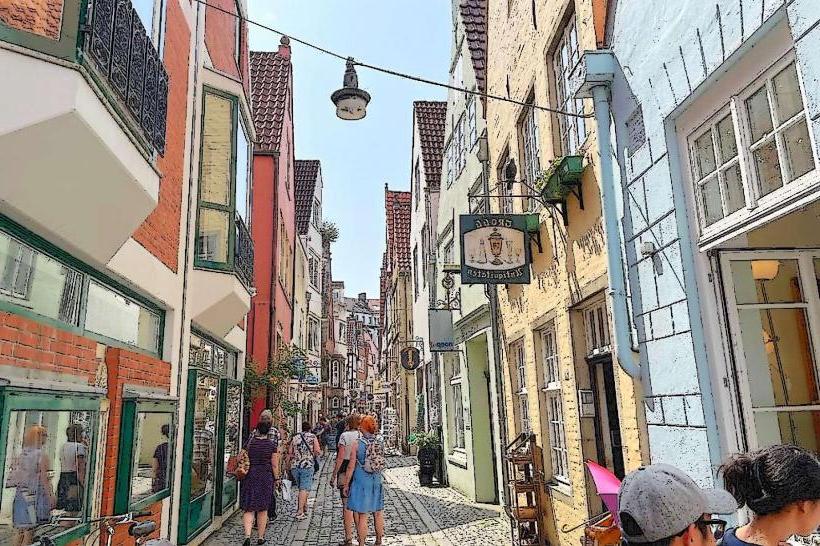
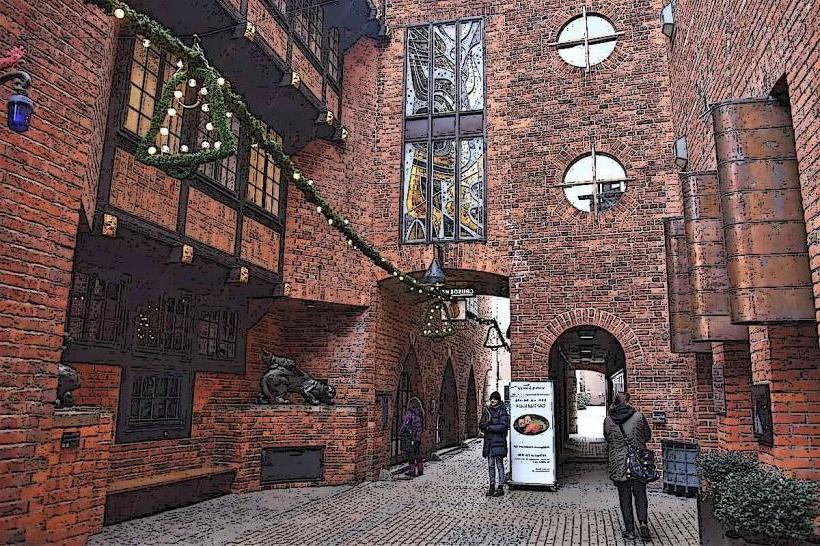
The street is characterized by red-brick architecture featuring unusual geometric shapes, reliefs, and sculptural elements. The entrance is marked by a massive gilded bronze relief titled Lichtbringer (Bringer of Light). The aesthetic blends medieval styles with 1920s Art Deco and Expressionism.
Location & Access Logistics
Located in the Altstadt (Old Town), connecting the Market Square to the Weser River (Postcode: 28195).
Public Transit: Served by Tram lines 2, 3, 4, 6, 8 at the Domsheide or Obernstraße stops.
Access: Public pedestrian street; accessible 24/7.
Hours: Most museums and shops operate 11:00 AM – 6:00 PM.
Parking: Use "Parkhaus Pressehaus" or "Parkhaus Mitte."
Historical Origin
Transformed between 1922 and 1931 by coffee merchant Ludwig Roselius (inventor of decaffeinated coffee) and architects Bernhard Hoetger, Eduard Scotland, and Alfred Runge. Roselius intended to create a cultural center for "Nordic" art. Despite its modernist design, the Nazis declared it "degenerate art" in 1937, but later preserved it as an example of "Nordic-Germanic" construction. It was meticulously restored after being heavily damaged in 1944.
Key Highlights & Activities
Glockenspiel House: Features a carillon of 30 Meissen porcelain bells that play melodies while 10 rotating wooden panels depict famous Atlantic explorers.
Paula Modersohn-Becker Museum: The world's first museum dedicated to a female painter.
Roselius House: A 16th-century merchant house displaying Roselius's collection of medieval art and furniture.
Sieben-Faulen-Brunnen (Seven Lazy Men Fountain): A sculptural fountain based on a local Bremen legend.
Infrastructure & Amenities
The street contains specialized craft shops (including candy-making and glass-blowing), high-end boutiques, and restaurants. The Radisson Blu Hotel is integrated into the complex. The terrain is flat but paved with historic cobblestones. 5G signal is robust.
Best Time to Visit
On the Hour (12:00 PM – 6:00 PM): To hear the porcelain carillon and see the rotating panels (varies seasonally).
Evenings: For a quiet walk under dramatic artificial lighting.
Facts & Legends
A technical oddity is the carillon's bells, which are made of Meissen porcelain-a material that produces a distinct, high-pitched acoustic profile compared to metal bells. Historically, the street was originally home to coopers (barrel makers, or Böttcher), from which it derives its name.
Nearby Landmarks
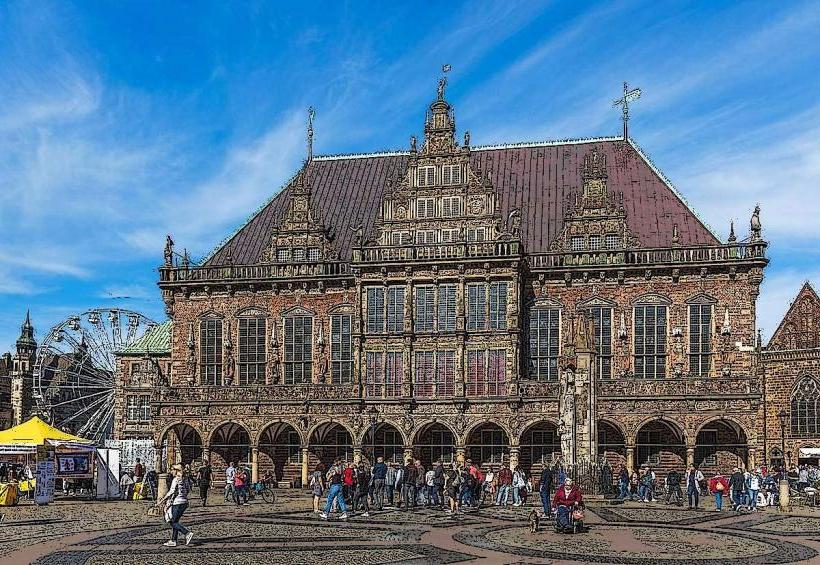
Bremen Town Hall – 0.1km North
Bremen Roland – 0.1km North
St. Petri Dom – 0.2km Northeast
The Weser River (Schlachte) – 0.1km South