Landmark: Bugarama Hot Springs
City: Rusizi
Country: Rwanda
Continent: Africa
Bugarama Hot Springs, Rusizi, Rwanda, Africa
The Bugarama Hot Springs (Amashuyu) are natural thermal springs located in the Bugarama Valley of Rusizi District, at the southernmost tip of Rwanda near the borders of Burundi and the DRC.
Visual Characteristics
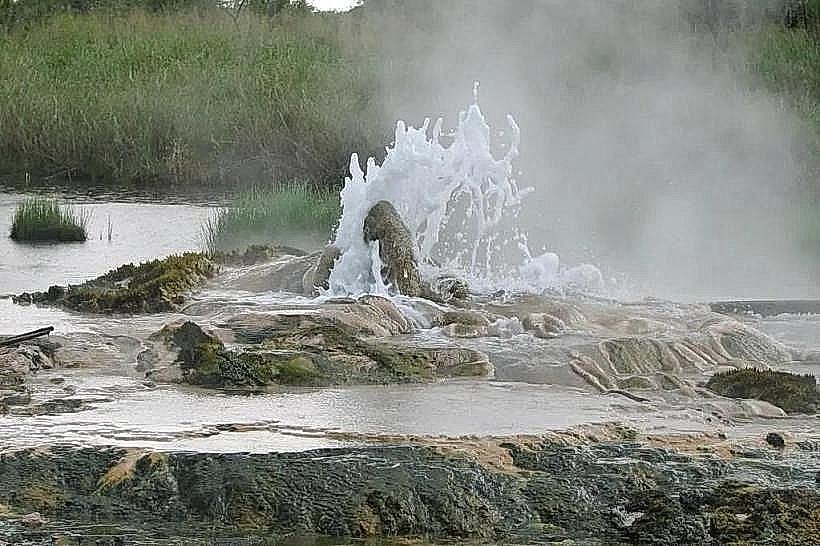
The springs emerge as bubbling pools of mineral-rich water at the base of a limestone ridge. The main pool is surrounded by lush tropical vegetation and green algae, with steam often visible during cooler morning hours. The water is naturally clear but can appear turquoise due to mineral deposits. The surrounding terrain is a flat, fertile alluvial plain characterized by rice paddies and sugarcane plantations.
Location & Access Logistics
Access is via the RN11 highway from Cyangugu, heading south for approximately 60km.
Road Conditions: The route to Bugarama town is paved; however, the final track to the springs consists of unpaved laterite roads that can be muddy during the rainy season.
Vehicle Requirement: High-clearance vehicles are recommended, though 2WD cars can reach the site in dry weather.
Public Transport: Regular minibuses run from Kamembe/Cyangugu to Bugarama town. From the town center, the springs are reachable via a 15-minute motorcycle taxi ride.
Historical & Ecological Origin
Geologically, the springs are a result of geothermal activity within the Albertine Rift. Rainwater penetrates deep into the earth's crust, is heated by magma-warmed rocks, and rises to the surface through faults in the limestone. Historically, the springs have been a site of traditional healing and communal gathering for centuries. The surrounding Bugarama Valley is the lowest point in Rwanda (approximately 900m above sea level), creating a distinct tropical microclimate.
Key Highlights & Activities
Therapeutic Bathing: The water temperature remains constant at approximately 48°C to 50°C. Local residents and visitors use the pools for relaxation and relief from rheumatic pain.
Mineral Observation: The site features unique limestone formations and "travertine" deposits created by the precipitating minerals.
Landscape Photography: The contrast between the steaming pools and the surrounding rice fields provides high-fidelity visual opportunities.
Cultural Interaction: The site offers a look at local Rwandan life, as it remains a functional public space for the surrounding community.
Infrastructure & Amenities
Infrastructure at the springs is basic and non-commercial.
Facilities: There are simple changing areas and stone-lined pools to contain the thermal water. No luxury spa facilities or high-end restaurants exist on-site.
Connectivity: 4G cellular signal is generally stable in the valley.
Supplies: Visitors should bring their own towels and drinking water. Basic supplies are available in Bugarama town, 5km away.
Best Time to Visit
The dry seasons (June to August and December to February) provide the most reliable road access. Early morning (06:00–08:00) is the optimal time to visit to avoid the intense heat of the Bugarama Valley and to witness the steam rising from the water.
Facts & Legends
Local legend attributes the healing properties of the water to ancestral spirits, and it is common to see traditional offerings near the source. A verified scientific fact is that the water is rich in sulfur, calcium, and magnesium, which contributes to the distinct "boiled egg" odor typical of geothermal springs.
Nearby Landmarks
CIMERWA Cement Factory (3km East)
Rubyiro River (2km West)
Rusizi River Border (5km West)
Kamembe/Cyangugu (60km North)