Landmark: Catedral de Córdoba
City: Cordoba City
Country: Argentina
Continent: South America
Catedral de Córdoba, Cordoba City, Argentina, South America
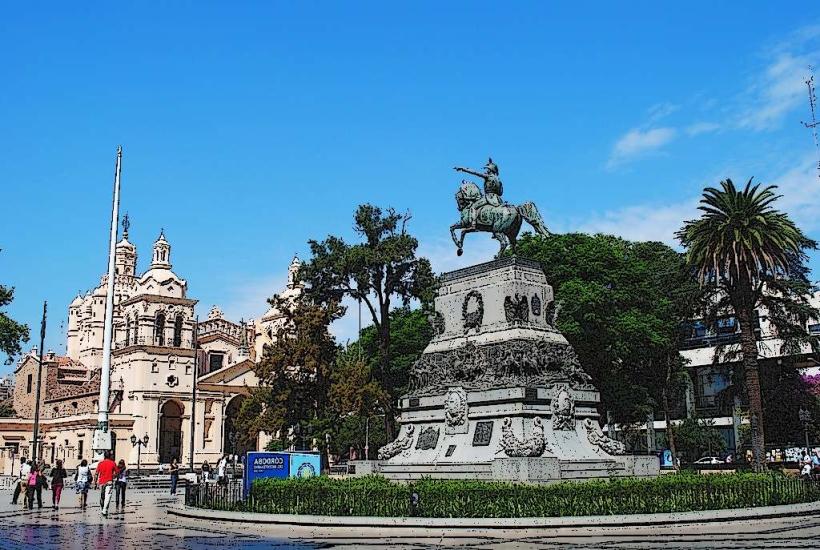
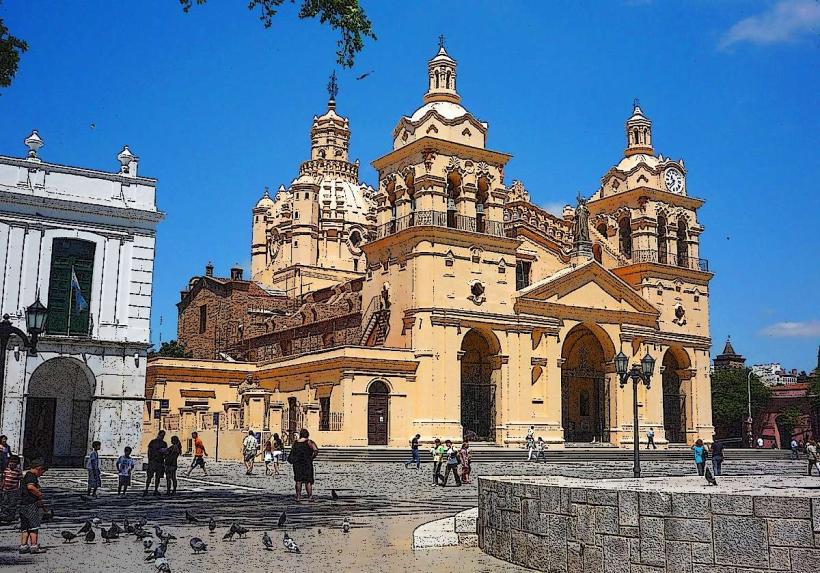
The Catedral de Córdoba is a Roman Catholic cathedral located in the central Plaza San Martín of Córdoba City, Argentina.
It serves as the seat of the Archbishop of Córdoba and is a significant historical and architectural site within the city.
Visual Characteristics
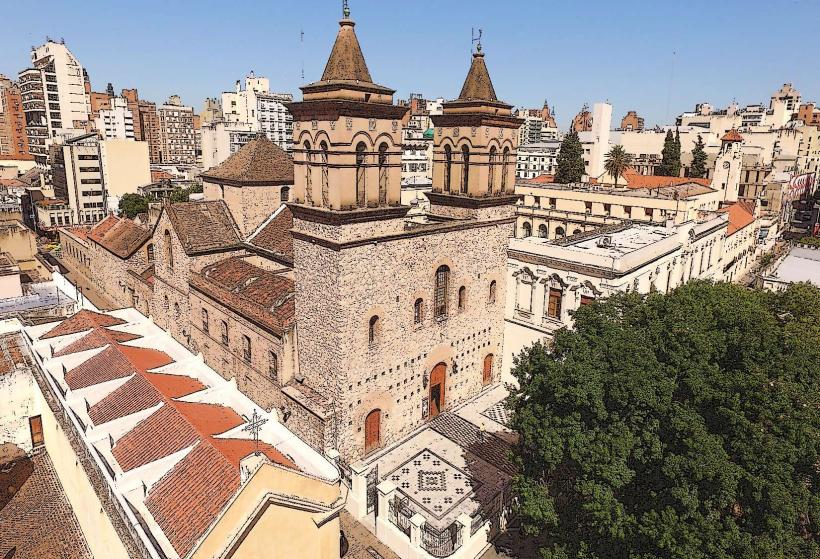
The cathedral features a Baroque architectural style with Neoclassical elements. Its facade is constructed from local Sierras Chicas stone, primarily granite, with a pale ochre hue. The main dome is octagonal and covered in copper. The interior is characterized by white marble floors, gilded altars, and extensive use of stucco and frescoes. The nave measures approximately 68 meters in length and 20 meters in width, with a height of 25 meters to the vault.
Location & Access Logistics
The cathedral is situated in Plaza San Martín, the main square of Córdoba City. It is accessible via Avenida General Paz and Calle Obispo Trejo. The city center is easily walkable from most accommodations. Public parking is available in underground garages around Plaza San Martín, such as the Estacionamiento San Martín, located approximately 50 meters from the cathedral's west entrance. Several bus lines, including routes 10, 11, 12, and 14, stop at the Plaza San Martín terminal, which is adjacent to the cathedral.
Historical & Ecological Origin
Construction of the current cathedral began in 1580, with significant expansions and modifications occurring throughout the 17th and 18th centuries. The initial design is attributed to Jesuit architects, with later contributions from figures like architect Andrés Blanqui. Its original purpose was to serve as the primary religious center for the Jesuit missions in the region and the seat of the Diocese of Córdoba. The site itself is part of the geological formation of the Sierras Chicas, characterized by sedimentary and metamorphic rocks.
Key Highlights & Activities
Visitors can explore the main nave, the side chapels, and the crypt. The sacristy contains a collection of colonial-era religious art. Guided tours are available, typically departing from the main entrance at scheduled times. Photography is permitted within the cathedral, though flash may be restricted in certain areas. Observing the intricate ceiling frescoes and the main altar is a primary activity.
Infrastructure & Amenities
Restrooms are available within the cathedral complex, accessible from the cloister area. Limited shaded areas are present within the plaza surrounding the cathedral. Cell phone signal (4G/5G) is generally strong in this central urban location. Food vendors and cafes are abundant in the immediate vicinity of Plaza San Martín.
Best Time to Visit
For optimal interior lighting and fewer crowds, visiting between 10:00 AM and 12:00 PM on weekdays is recommended. The best months for weather in Córdoba City are typically March to May and September to November, offering mild temperatures. No specific tide requirements apply to this inland landmark.
Facts & Legends
A notable historical oddity is the presence of a "Mausoleum of the Saints" within the crypt, containing the remains of several early bishops and martyrs. Local lore suggests that the original bell tower, which collapsed in the 17th century, was struck by lightning due to a curse placed upon it by indigenous peoples protesting the construction. A specific tip for visitors is to look for the small, carved gargoyles on the exterior upper levels, which are often overlooked.
Nearby Landmarks
- Cabildo de Córdoba (0.1km West)
- Plaza de la Intendencia (0.3km South)
- Museo de Arte Religioso "Obispo Ferreyra" (0.2km East)
- Universidad Nacional de Córdoba (0.4km North)
- Paseo del Buen Pastor (0.6km Southwest)