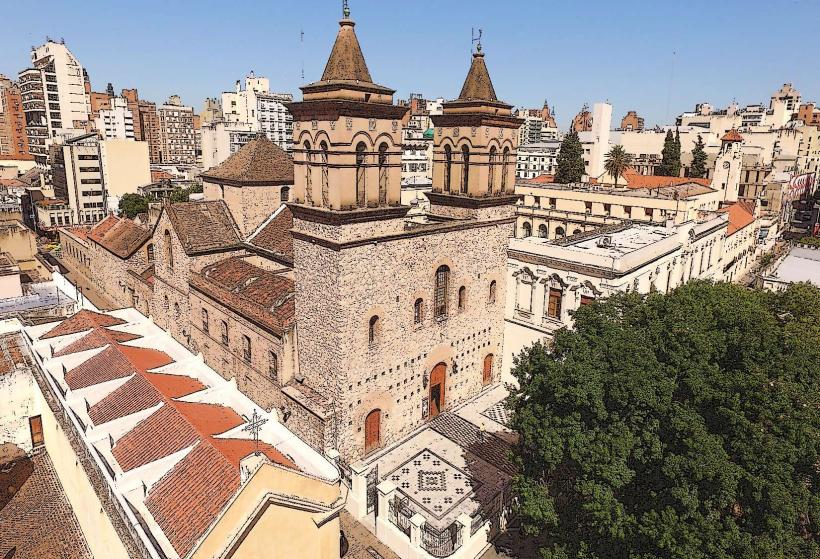
Landmark: Manzana Jesuitica
City: Cordoba City
Country: Argentina
Continent: South America
Manzana Jesuitica, Cordoba City, Argentina, South America
The Manzana Jesuítica is a historic urban block in Córdoba City, Argentina, comprising several colonial-era buildings constructed by the Society of Jesus.
It is located in the central district of Córdoba City.
Visual Characteristics
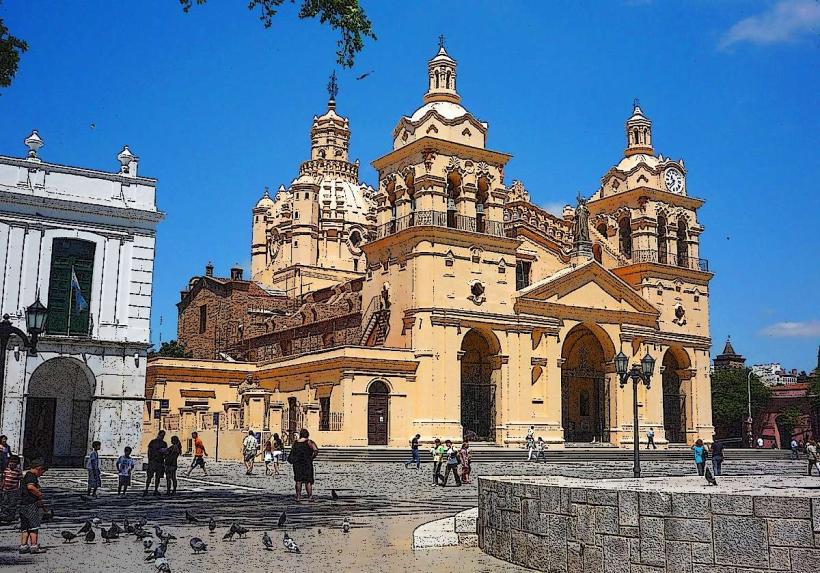
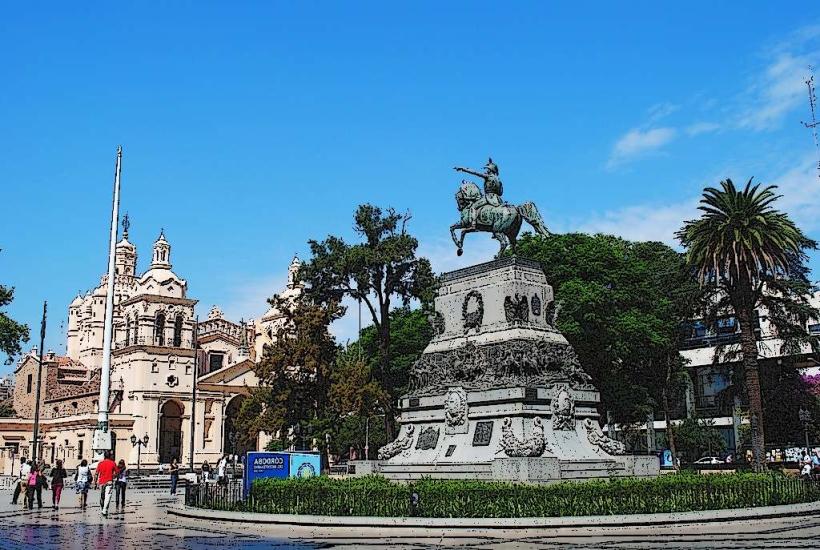
The complex features buildings constructed primarily from local Sierras Chicas stone, a sandstone material. The main structures exhibit colonial architectural styles, characterized by thick walls, arched windows, and red-tiled roofs. The central church, the Compañía de Jesús, displays a Baroque facade with intricate carvings. The former college and residence halls are simpler in design, with courtyards and cloistered walkways.
Location & Access Logistics
The Manzana Jesuítica is situated at the intersection of Obispo Trejo and Caseros avenues in Córdoba City. It is approximately 1 kilometer south of the city's central plaza (Plaza San Martín). Access is via public bus routes that stop along Obispo Trejo Avenue, with multiple lines serving the area. Limited street parking is available in surrounding blocks, though it is often metered and subject to availability. The site is walkable from most downtown hotels.
Historical & Ecological Origin
Construction of the Manzana Jesuítica began in 1610 with the establishment of the first Jesuit college. The church was completed in 1671, and the remaining structures, including the residence and cloister, were finished by the mid-18th century. The original purpose was to serve as a center for religious education, missionary work, and administration for the Jesuit order in the region. The site's construction utilized locally quarried sandstone, a common building material in the Sierras Chicas region.
Key Highlights & Activities
Visitors can tour the Church of the Society of Jesus, the former College of Monserrat (now a national secondary school), the former Jesuit residence, and the historic cloister. Guided tours are available, providing detailed historical context. Photography is permitted within designated areas. The site is a UNESCO World Heritage site, recognized for its architectural and historical significance.
Infrastructure & Amenities
Restrooms are available within the visitor center and museum areas. Shaded areas are present in the courtyards and within the church. Cell phone signal (4G/5G) is generally consistent throughout the complex. Food vendors and cafes are located on the surrounding streets, particularly along Obispo Trejo Avenue.
Best Time to Visit
For optimal lighting for photography, the late morning (10:00 AM - 12:00 PM) and mid-afternoon (2:00 PM - 4:00 PM) offer direct sunlight on the facades. The best months for visiting are typically from March to May and September to November, offering mild temperatures. The site is open year-round, with no specific tide requirements.
Facts & Legends
A notable historical oddity is that the Manzana Jesuítica was declared a National Historic Monument in 1941. The site's original layout and many of its structures remain remarkably intact, offering a direct glimpse into 17th and 18th-century colonial urban planning and architecture. A specific tip for visitors is to look for the original Jesuit coat of arms carved above some of the doorways, indicating areas of particular significance.
Nearby Landmarks
- Plaza San Martín (0.5km North)
- Cabildo Histórico de Córdoba (0.6km North)
- Metropolitan Cathedral of Córdoba (0.7km North)
- Museo de Arte Religioso "Obispo Fray Mamerto Esquiú" (0.3km North)
- Paseo del Buen Pastor (1.2km West)