Landmark: Plaza San Martín
City: Cordoba City
Country: Argentina
Continent: South America
Plaza San Martín, Cordoba City, Argentina, South America
Plaza San Martín is a central public square located in the historic downtown area of Cordoba City, Argentina.
It serves as a primary civic space and a point of reference within the city's urban layout.
Visual Characteristics
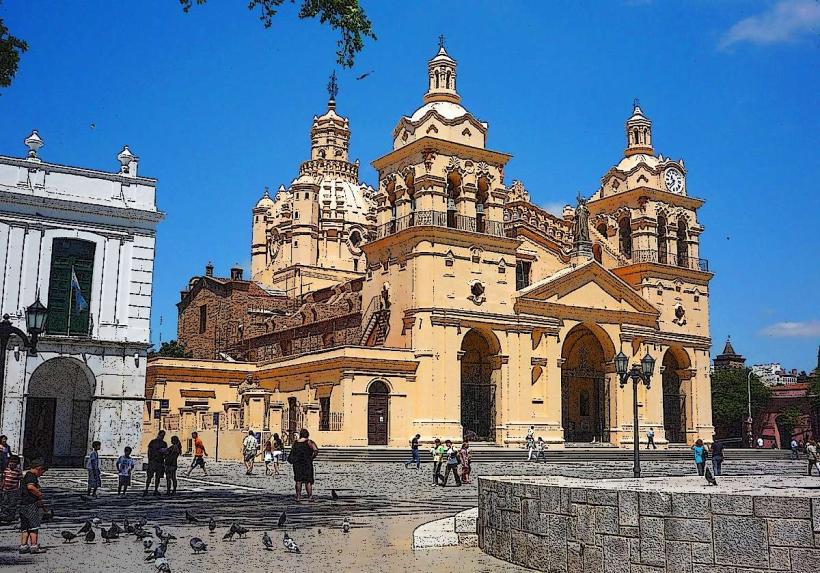
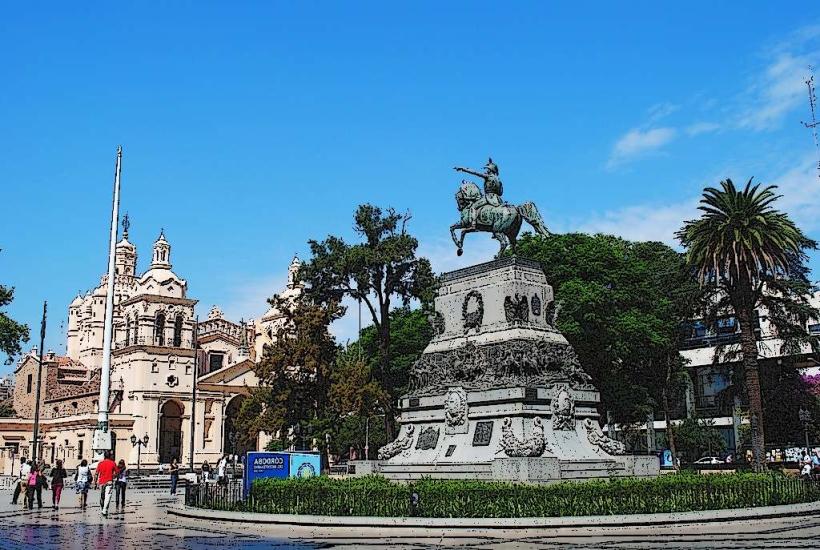
The plaza is characterized by its rectangular layout, measuring approximately 150 meters by 100 meters. It features paved walkways with a light grey stone aggregate. The central area is dominated by a large, raised monument constructed from dark grey granite, topped with bronze sculptural elements. Surrounding the monument are mature trees, primarily jacaranda and ombú species, providing significant canopy cover. The perimeter is defined by low, dark green hedges and decorative iron fencing. The surrounding buildings are predominantly colonial-era architecture, with facades of ochre and white stucco, featuring red tile roofs.
Location & Access Logistics
Plaza San Martín is situated at the intersection of Avenida General Paz and Calle Obispo Trejo, approximately 0.5 kilometers west of the Suquía River. It is easily accessible by car, with paid parking available in underground garages located at the corner of Avenida General Paz and Calle 27 de Abril, approximately 100 meters from the plaza's western edge. Public transport is well-served, with numerous bus lines stopping along Avenida General Paz, including lines 10, 11, 14, and 18. The main bus terminal is located 1.5 kilometers south, accessible via a 20-minute walk or short bus ride.
Historical & Ecological Origin
The site of Plaza San Martín was established in 1577 by Luis de Montalvo y Doncel, the first governor of the Province of Córdoba. It was originally conceived as the main plaza for the nascent city, serving administrative and religious functions. The central monument, dedicated to General José de San Martín, was erected in the early 20th century. The ombú trees are native to the Pampas region, while the jacaranda trees were introduced and are common in urban landscaping throughout Argentina.
Key Highlights & Activities
Visitors can observe the central monument and its bronze reliefs. Walking tours of the historic city center often commence or conclude at this plaza. The surrounding benches offer seating. The plaza is a common gathering point for local events and demonstrations. Photography of the colonial architecture surrounding the plaza is possible.
Infrastructure & Amenities
Public restrooms are located on the north side of the plaza, accessible from Calle Rivadavia. Shade is provided by the mature trees. Cell phone signal (4G/5G) is generally strong throughout the plaza. Food vendors are not permanently stationed within the plaza, but numerous cafes and restaurants are located on the surrounding streets, particularly along Calle Obispo Trejo.
Best Time to Visit
For photography, the best time of day is between 9:00 AM and 11:00 AM, or between 3:00 PM and 5:00 PM, to capture the colonial facades with favorable lighting. The months of April, May, September, and October offer mild weather conditions with average temperatures between 15°C and 25°C. There are no tidal considerations for this inland plaza.
Facts & Legends
A local legend suggests that the ombú trees in the plaza are sentient and have witnessed centuries of Cordoban history. A verified historical oddity is that the plaza was the site of public executions during the colonial period.
Nearby Landmarks
- 0.1km East: Cordoba Cathedral
- 0.2km Northeast: Cabildo of Cordoba
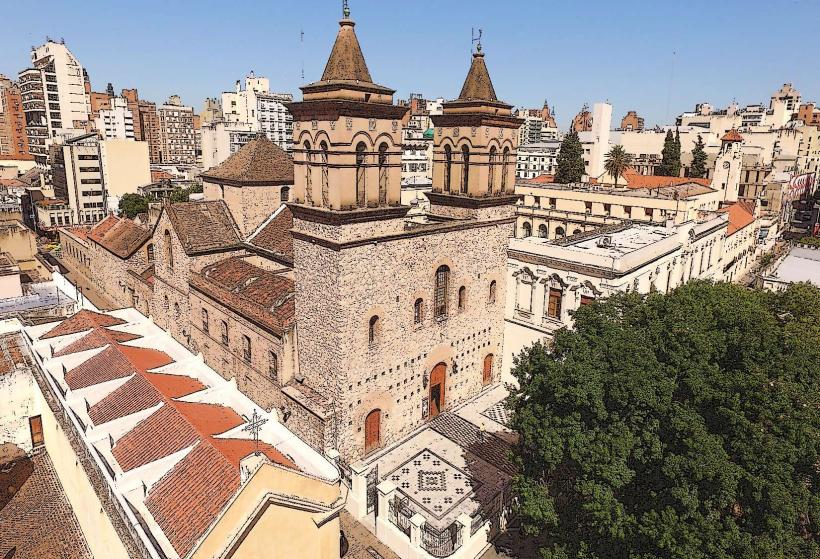
- 0.3km South: Iglesia de la Compañía de Jesús
- 0.4km West: Paseo del Buen Pastor
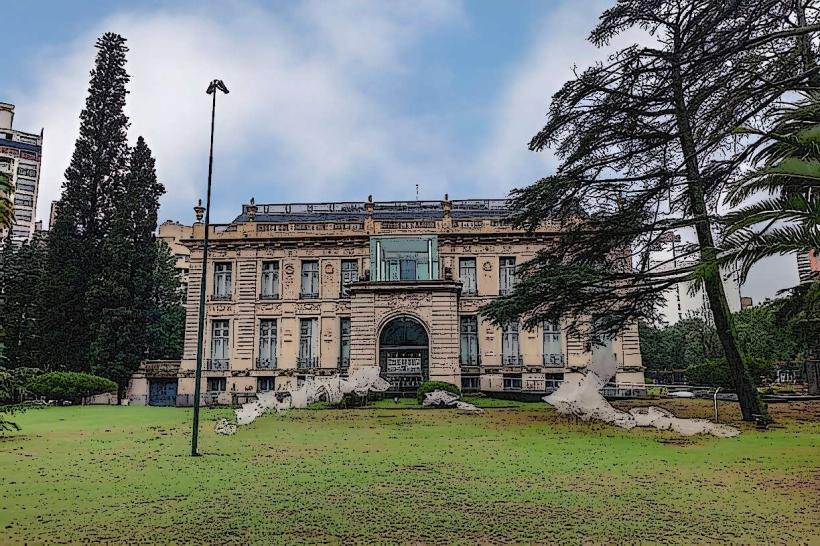
- 0.5km Northwest: Palacio Ferreyra