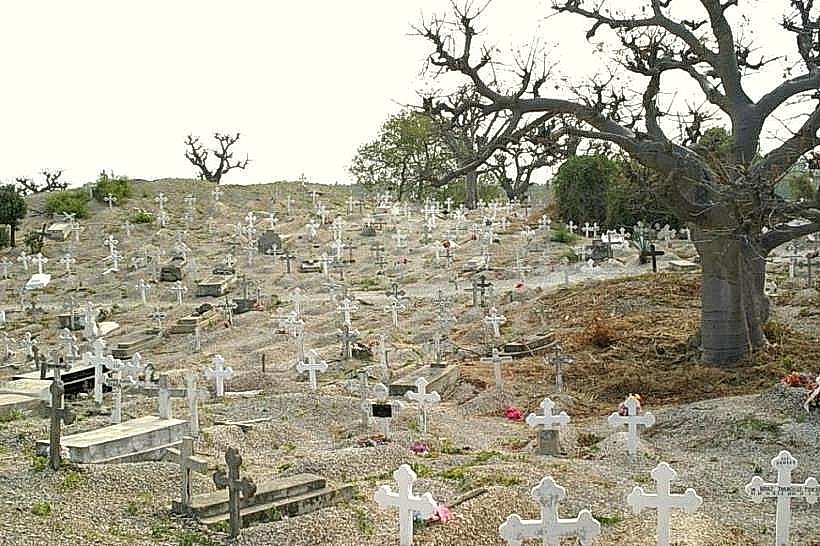
Landmark: Fadiouth Cemetery
City: Joal Fadiouth
Country: Senegal
Continent: Africa
Fadiouth Cemetery, Joal Fadiouth, Senegal, Africa
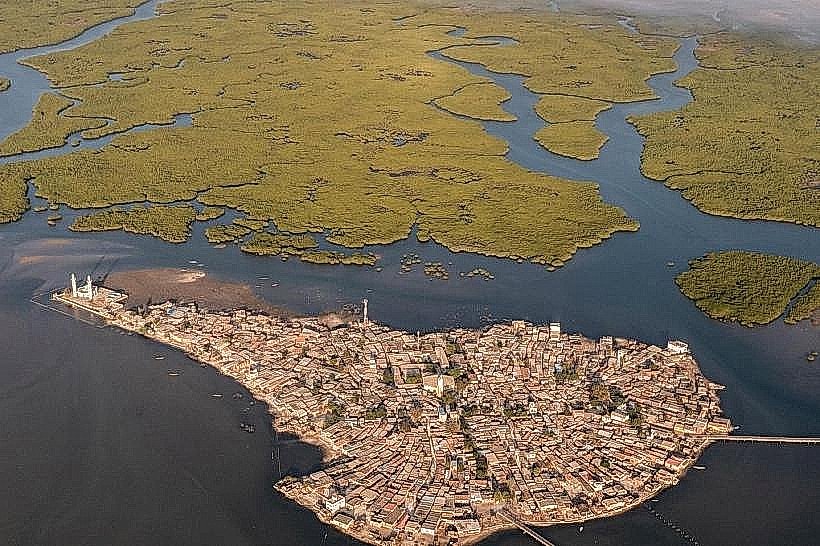
Fadiouth Cemetery is a unique burial ground located on a man-made island adjacent to the village of Fadiouth in the Thiès Region. It is globally recognized for its composition of sea shells and for being a rare site where Muslims and Christians are buried side-by-side in shared ground.
Visual Characteristics
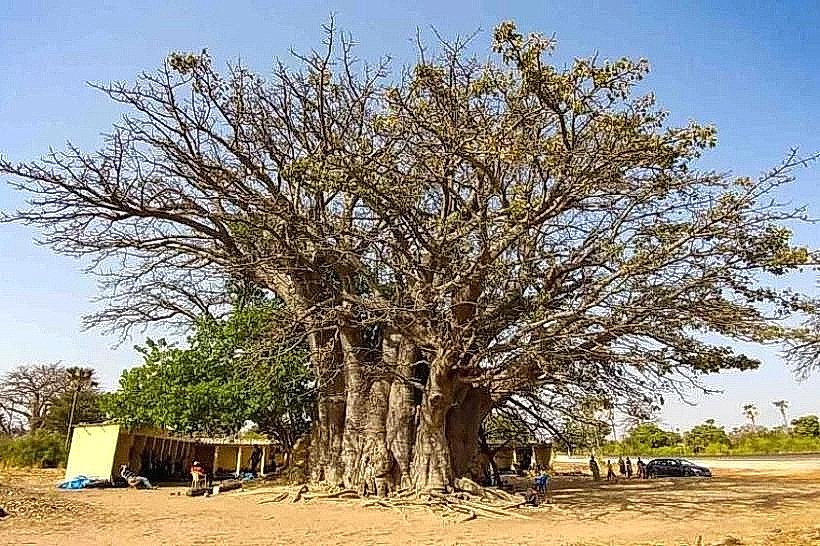
The cemetery is a white, rounded hill formed entirely of cockle and mollusk shells. The landscape is dotted with simple white wooden crosses and occasional crescent-topped markers, all rising from the crunching shell surface. Large, ancient baobab trees provide the only shade on the island. The site is surrounded by saltwater lagoons and mangroves, offering a 360-degree view of the Sine-Saloum estuary.
Location & Access Logistics
The cemetery is located approximately 115km southeast of Dakar. It is connected to the residential island of Fadiouth by a second, shorter wooden pedestrian bridge (the first bridge connects mainland Joal to Fadiouth). Access is strictly pedestrian; no motorized vehicles are permitted. Visitors must first travel to Joal, cross the main bridge to Fadiouth, and then walk to the southern end of the village to reach the cemetery bridge.
Historical & Ecological Origin
Like the main island of Fadiouth, the cemetery island was created over centuries by the intentional accumulation of discarded mollusk shells. It represents a geological anomaly of anthropogenic origin. Historically, the site reflects the Serer people’s deep-rooted tradition of inter-religious harmony, as the community is predominantly Catholic but maintains close familial ties with the Muslim minority.
Key Highlights & Activities
Walking tours are the primary activity, focusing on the cultural significance of the shared burial practices. The "Baobab of the Ancestors" is a central point of interest, where traditional Serer ceremonies were once held. The panoramic viewpoint from the highest point of the shell mound allows for observation of the "granaries on stilts" located in the surrounding lagoon.
Infrastructure & Amenities
Infrastructure is minimal to maintain the sanctity of the site. There are narrow, hand-cleared paths made of shells. There are no restrooms, vendors, or modern buildings on the cemetery island. Basic amenities, including local guides and small shops, are located back in the main village of Fadiouth or on the mainland in Joal. 4G cellular signal is strong and consistent.
Best Time to Visit
The dry season (November to May) is the most comfortable for walking. For photography, the early morning (08:00–09:30) provides a soft light that prevents the white shells from overexposing in images. Late afternoon (17:00–18:30) is also ideal for capturing the sunset over the mangroves from the elevated sections of the mound.
Facts & Legends
Fadiouth Cemetery is one of the few places in Senegal where the Christian and Muslim sections are not separated by a fence or wall, symbolizing communal unity. Local legend suggests that the shells were used not just for stability, but because their white color represents the purity of the souls being returned to the sea.
Nearby Landmarks
Fadiouth Shell Island (Residential) – 0.3km North
Wooden Bridge of Joal-Fadiouth – 0.5km Northeast
Mangrove Granaries – 0.4km East
Joal Fish Market – 1.8km North