Landmark: Sacred Baobab of Joal
City: Joal Fadiouth
Country: Senegal
Continent: Africa
Sacred Baobab of Joal, Joal Fadiouth, Senegal, Africa
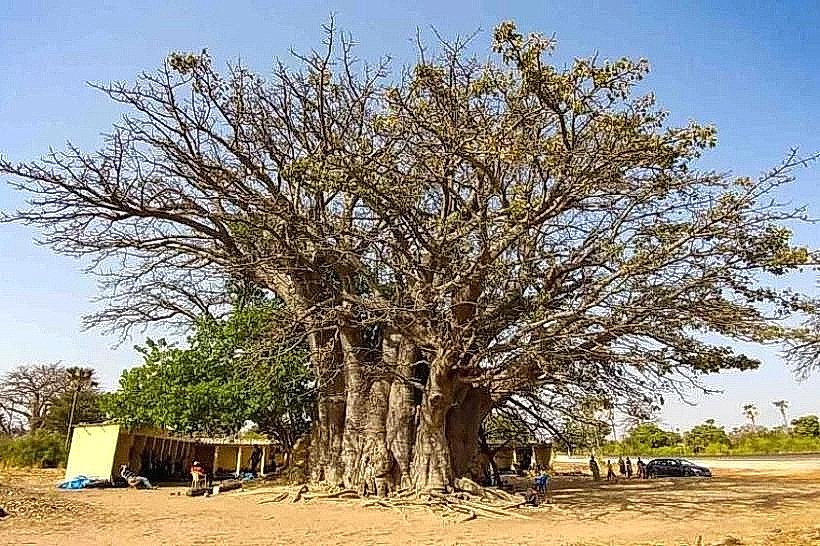
The Sacred Baobab of Joal is a massive, ancient specimen of Adansonia digitata located in the town of Joal in the Thiès Region. It is a central spiritual landmark for the Serer community, representing the intersection of indigenous animist traditions and the cultural history of the Petite Côte.
Visual Characteristics
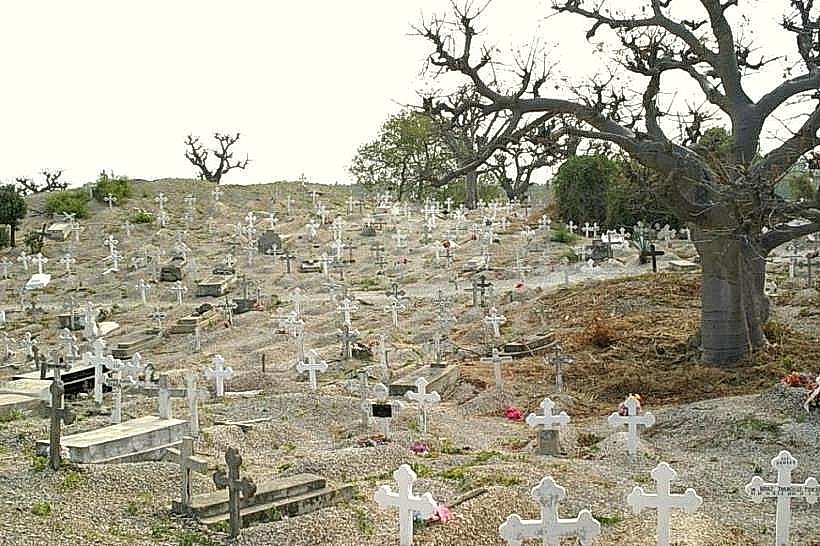
The tree is defined by its immense girth, with a trunk diameter exceeding 10 meters. Its bark is smooth, grey, and deeply scarred by centuries of growth and ritual use. The canopy is vast, providing a significant area of permanent shade. In the dry season, its gnarled, leafless branches resemble a root system reaching toward the sky, while the base often features small offerings or ritual markings left by local practitioners.
Location & Access Logistics
The tree is situated in an open area within the Joal township, approximately 115km southeast of Dakar. It is easily accessible via the main paved road through Joal, located a short distance from the primary commercial district. Visitors can reach the site on foot from the center of town or via a local horse-drawn carriage (calèche). There are no gates or admission fees, as it remains a public and communal space.
Historical & Ecological Origin
This baobab is estimated to be several hundred years old. Historically, such trees served as the "Palaver tree" (arbre à palabres), where village elders met to settle disputes and make community decisions. Ecologically, it belongs to the dry savanna flora of western Senegal. Its hollowed trunk and water-storing capabilities have made it a resilient survivor in the sandy, saline-rich soil of the coastal region.
Key Highlights & Activities
The primary activity is the observation of traditional Serer spiritual practices. The tree is a site for "libations" and prayers addressed to the Pangool (ancestral spirits). It serves as a communal gathering point and a subject for photography. Visitors can observe the unique ecosystem supported by the tree, including various bird species and insects that inhabit its hollows and canopy.
Infrastructure & Amenities
Infrastructure at the site is non-existent to preserve the tree's natural and sacred state. There are no restrooms, paved walkways, or benches. Natural shade is the primary amenity. The surrounding neighborhood of Joal provides access to 4G cellular signal, small boutiques for bottled water, and local eateries within a 5-minute walk.
Best Time to Visit
The dry season (November to May) offers the best conditions for access and photography. Early morning (07:30–09:00) is the optimal time to witness local communal life around the tree before the heat intensifies. Late afternoon provides a dramatic silhouette for photography against the coastal horizon.
Facts & Legends
According to Serer legend, the tree is the dwelling place of a protector spirit of the town. Historically, large baobabs in this region were sometimes used as "griots' tombs," where traditional storytellers and musicians were buried inside the hollow trunks, though this practice was banned in the 1960s. The Sacred Baobab of Joal remains a living link to these pre-colonial funerary and judicial customs.
Nearby Landmarks
Birthplace of Léopold Sédar Senghor – 0.8km West
Joal-Fadiouth Wooden Bridge – 1.5km West
Joal Fish Market – 1.0km South
Fadiouth Shell Island – 1.8km West