Landmark: Fort Frederick
City: Trincomalee
Country: Sri Lanka
Continent: Asia
Fort Frederick, Trincomalee, Sri Lanka, Asia
Fort Frederick is a historic fortification located in Trincomalee, Sri Lanka. It is situated on a prominent peninsula overlooking the Trincomalee Harbour.
Visual Characteristics
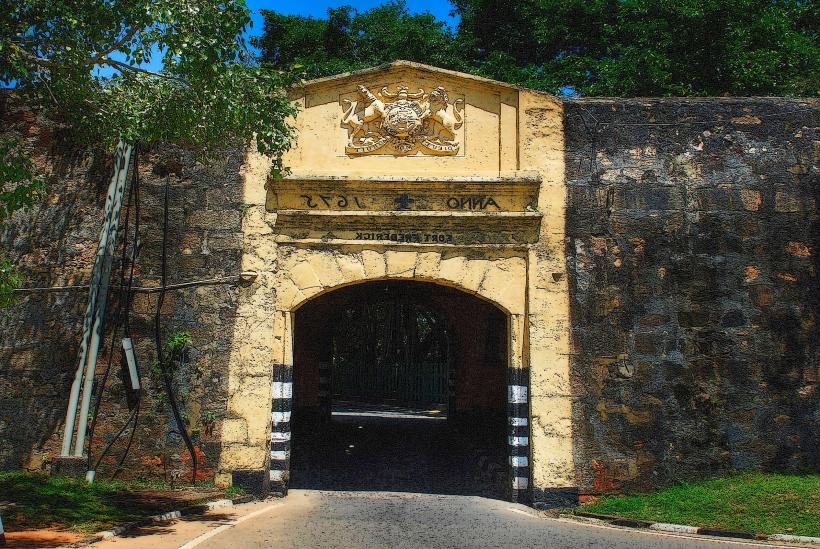
The fort is constructed primarily from granite blocks. Its walls vary in height, with some sections reaching approximately 6 meters. The architectural style reflects Dutch colonial influences, characterized by bastions and ramparts. The exterior exhibits weathering consistent with its age and exposure to the coastal environment.
Location & Access Logistics
Fort Frederick is located at the southern entrance to Trincomalee town. It is approximately 2 kilometers from the city center. Access is via Kandy Road (A6) turning onto Fort Frederick Road. Parking is available within designated areas inside the fort complex. Public bus routes serving Trincomalee town typically pass near the fort's perimeter, with a short walk required to enter.
Historical & Ecological Origin
The original construction of Fort Frederick began in 1620 by the Portuguese, who named it Fort Trincomalee. It was subsequently captured and rebuilt by the Dutch in 1675, who renamed it Fort Frederick. The fort's strategic location was chosen for its defensive capabilities overlooking the natural harbor.
Key Highlights & Activities
Visitors can walk along the ramparts for views of the harbor. Exploration of the fort's interior structures, including former barracks and administrative buildings, is permitted. The fort grounds are also a habitat for resident deer populations. Photography of the fort's architecture and surrounding seascape is a common activity.
Infrastructure & Amenities
Restroom facilities are available near the main entrance. Limited shaded areas exist within the fort's older structures. Cell phone signal (4G) is generally reliable within the fort complex. No on-site food vendors are present; however, eateries are located in the nearby town.
Best Time to Visit
For photography, early morning (07:00-09:00) and late afternoon (16:00-18:00) offer optimal lighting conditions. The months of December to March generally provide drier weather. Tidal conditions do not impact access to the fort.
Facts & Legends
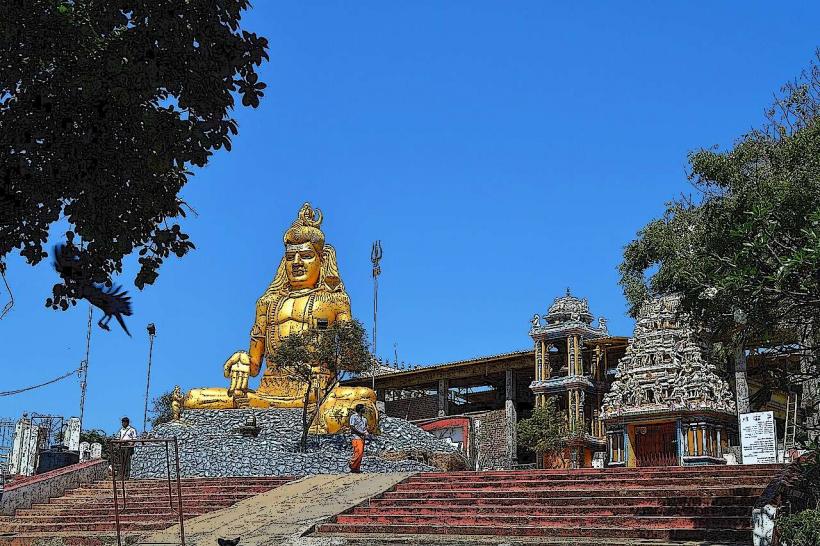
A local legend suggests that the fort's foundations were laid over an ancient Hindu temple, the Koneswaram Temple, which was destroyed by the Portuguese. While the temple was indeed desecrated, the fort was built on the same promontory, not directly over its ruins.
Nearby Landmarks
- Koneswaram Temple (0.8km North)
- Trincomalee War Cemetery (1.2km West)
- Dutch Bay (1.5km Northwest)
- Kanniya Hot Springs (8km Northwest)