Landmark: Hampi Bazaar
City: Hampi
Country: India
Continent: Asia
Hampi Bazaar, Hampi, India, Asia
Hampi Bazaar is a historic market street located in the city of Hampi, Karnataka, India.
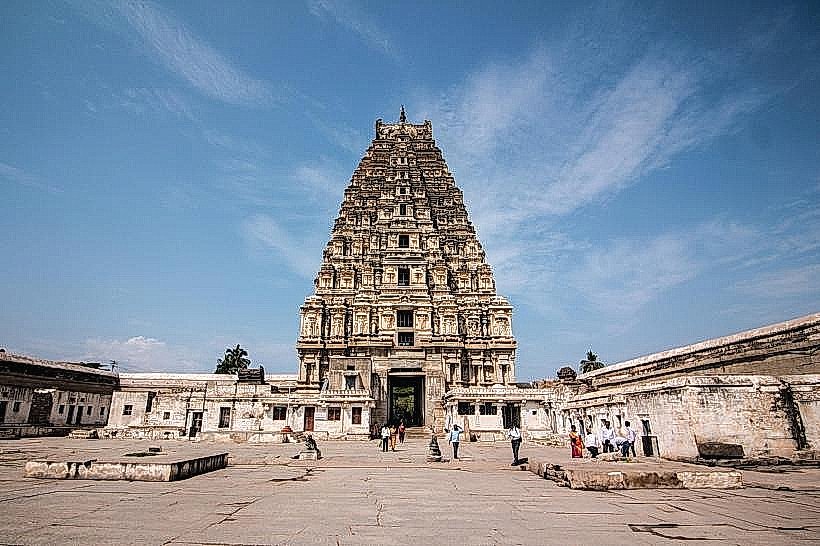
It is situated at the base of the Matanga Hill, adjacent to the Virupaksha Temple.
Visual Characteristics
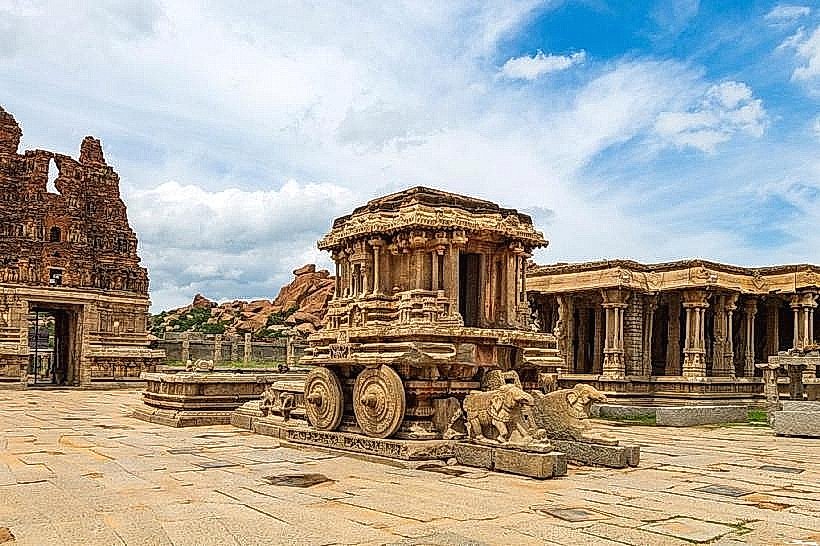
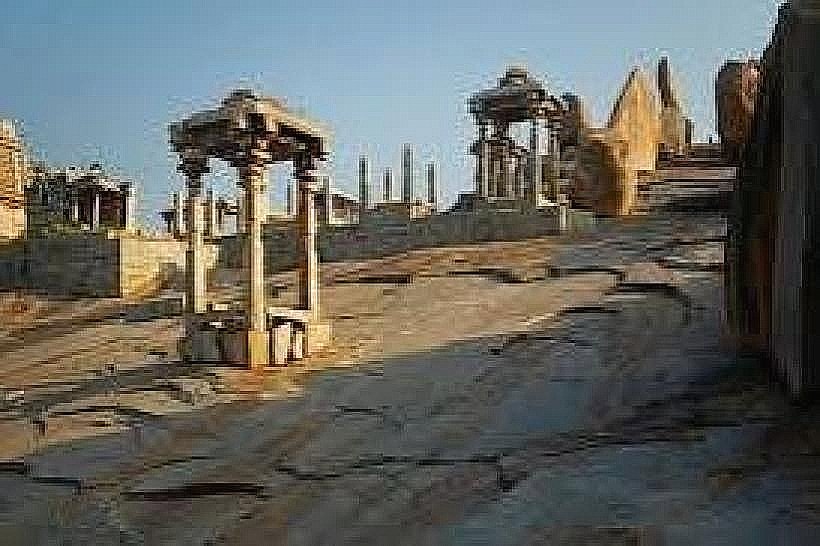
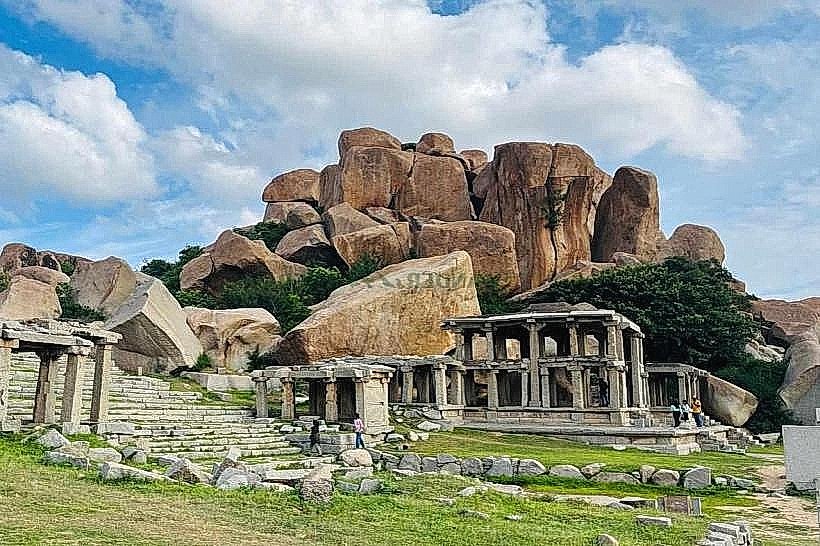
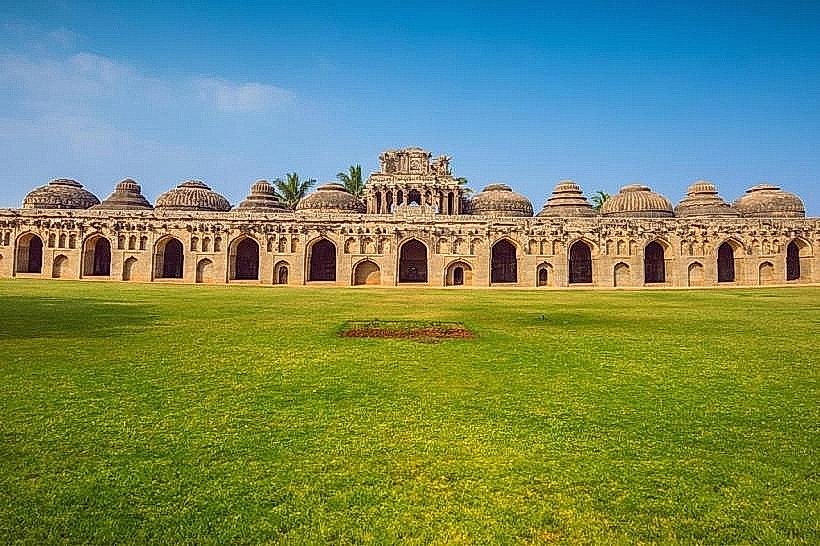
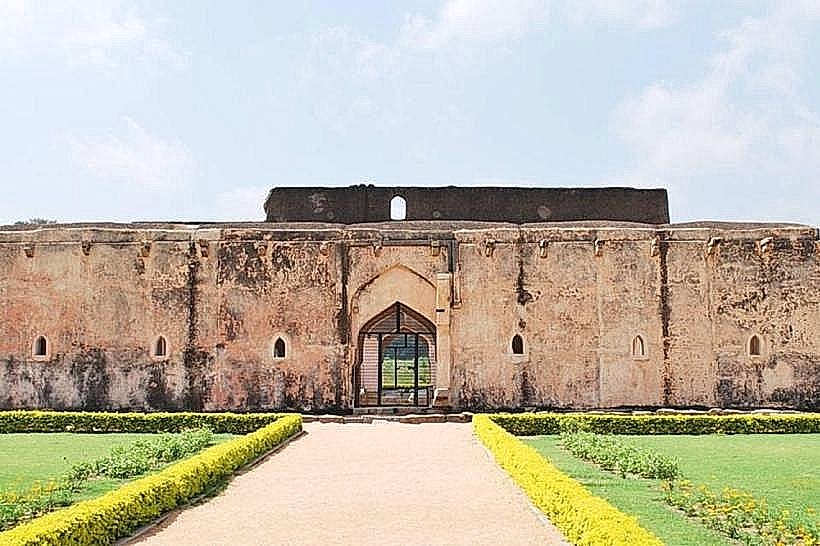
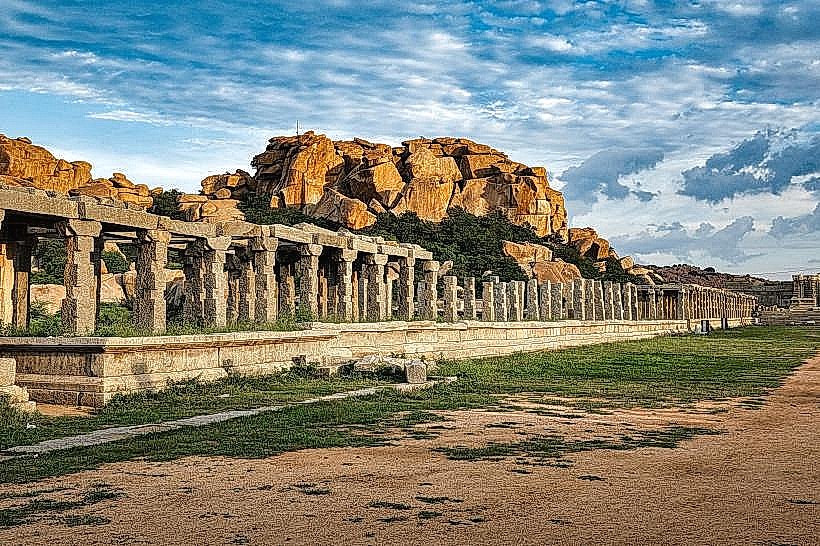
The bazaar consists of a long, straight street lined with the ruins of former shops and residences. These structures are primarily built from granite, exhibiting a weathered, greyish-brown appearance. The buildings are typically single-story, with arched doorways and remnants of verandahs. The street itself is paved with stone, showing signs of age and erosion.
Location & Access Logistics
Hampi Bazaar is located approximately 350 kilometers north of Bangalore. Access is typically via National Highway 48 to Chitradurga, then State Highway 19 to Hospet, and finally State Highway 13 to Hampi. The nearest major railway station is Hospet Junction (HPT), located 13 kilometers east of Hampi. From Hospet, auto-rickshaws and local buses are available. Limited parking is available near the Virupaksha Temple, with further parking options in the main Hampi town area. Bus route number 101 from Hospet frequently stops near the bazaar.
Historical & Ecological Origin
Hampi Bazaar was a central commercial hub during the Vijayanagara Empire, which flourished from the 14th to the 16th centuries. It served as a marketplace for goods, textiles, and precious stones. The structures are constructed from locally quarried granite, a common building material in the region. The surrounding landscape is characterized by a rocky terrain with the Tungabhadra River flowing nearby.
Key Highlights & Activities
Visitors can walk the length of the bazaar, observing the architectural remnants of the market stalls. Photography of the ruins and the adjacent Virupaksha Temple is permitted. The area is a starting point for exploring other ruins within the Hampi UNESCO World Heritage Site.
Infrastructure & Amenities
Restrooms are available near the Virupaksha Temple complex. Limited shade is provided by the remaining structures. Cell phone signal (4G) is generally available. Food vendors and small shops are located at the eastern end of the bazaar, closer to the temple.
Best Time to Visit
The best time of day for photography is during the early morning or late afternoon when the sunlight casts long shadows on the granite structures. The optimal months for visiting are from October to March, avoiding the monsoon season (June-September) and the extreme heat of April and May. No tide-specific considerations apply.
Facts & Legends
It is said that the bazaar was once a thriving center for diamond trading, with merchants from across the world conducting business here. A specific tip for visitors is to look for the carved details on the bases of some of the ruined stalls, which offer insights into the craftsmanship of the era.
Nearby Landmarks
- Virupaksha Temple (0.1km North)
- Matanga Hill (0.3km West)
- Hemakuta Hill (0.5km Southwest)
- Krishna Temple Complex (1.2km West)
- Vittala Temple Complex (1.8km Northwest)