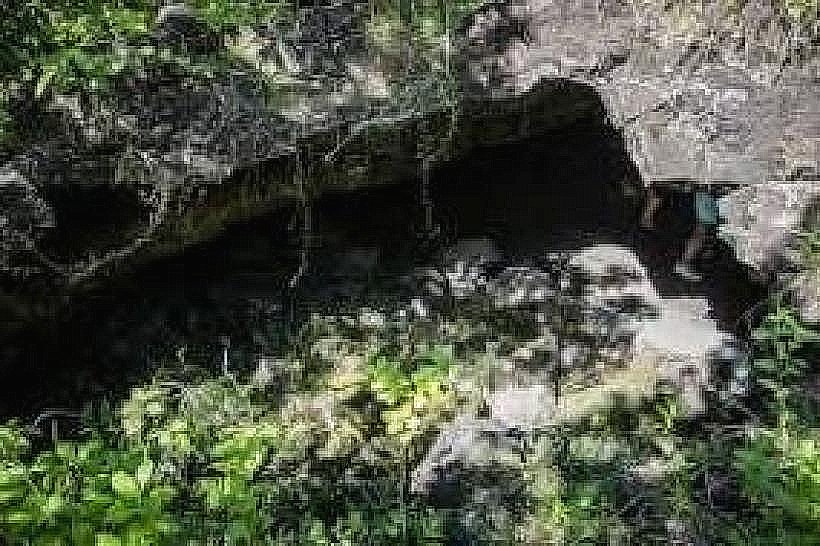
Landmark: House of Rock
City: Falealupo
Country: Samoa
Continent: Australia
House of Rock, Falealupo, Samoa, Australia
The House of Rock, known locally as Fale o le Fe’e (House of the Octopus), is an archaeological site located in the inland rainforest of the Falealili district on Upolu, Samoa. It consists of a prehistoric stone structure made of massive basaltic columns.
Visual Characteristics
The site features a series of vertical basalt pillars, some reaching up to 2 or 3 meters in height, arranged in a circular or oval formation. These columns are naturally formed hexagonal and pentagonal prisms of volcanic rock, which were transported and positioned to create a structural frame. The interior floor is covered with smaller river stones and basalt paving. The ruins are heavily weathered and often draped in vines and moss, set within a dense, humid jungle environment.
Location & Access Logistics
The site is situated approximately 15km south of Apia. Access is via a rugged inland track starting near the village of Magiagi or through the Vaisigano River valley. Reaching the site requires a strenuous 2-to-3-hour hike through steep, often muddy terrain and several river crossings. A local guide is mandatory for navigation as the trail is not clearly marked and the terrain is hazardous. There is no public transport to the trailhead; private 4WD transport to the start of the hike is necessary.
Historical & Ecological Origin
The structure is estimated to be over 1,000 years old. Geologically, the basalt pillars were sourced from nearby volcanic formations where cooling lava contracted into columns. Historically, it is considered a temple or a house of a high-ranking chief or deity. Archeologically, it represents one of the most sophisticated examples of megalithic stone architecture in the Samoan archipelago.
Key Highlights & Activities
The primary activity is the demanding trek through primary rainforest to reach the ruins. Once at the site, visitors can examine the dry-stone construction techniques and the sheer scale of the basalt pillars. The location is significant for those interested in Polynesian archaeology and the ancient socio-political structures of Samoa.
Infrastructure & Amenities
Infrastructure is non-existent. There are no maintained paths, signage, restrooms, or shelter at the site. Cell phone signal is unavailable in the deep valley and rainforest where the ruins are located. Visitors must be completely self-sufficient, carrying adequate water, food, and emergency supplies.
Best Time to Visit
The dry season (May to October) is the only viable time for a visit, as the river crossings become impassable and the mountain trails dangerously slippery during the wet season. Starting the hike at daybreak (6:00 AM) is necessary to complete the return trip before nightfall and to avoid the peak humidity of the midday jungle.
Facts & Legends
According to Samoan mythology, the house was built by the war deity Fe’e, who took the form of a giant octopus. Legend states that the basalt pillars represent the tentacles of the deity, petrified into stone to support his dwelling. A practical tip is to wear high-grip hiking boots and bring waterproof bags for electronics during river crossings.
Nearby Landmarks
Vaisigano River – 0.1km West (Adjacent)
Mount Vaea – 8.5km Northwest
Apia Township – 15.0km North
Sopo'aga Falls – 12.0km Southeast