Information
Landmark: Joshua Tree National ParkCity: Palm Springs
Country: USA California
Continent: North America
Joshua Tree National Park, Palm Springs, USA California, North America
Joshua Tree National Park is a protected desert landscape located in Southern California, USA. It is situated at the convergence of the Mojave and Colorado Deserts.
Visual Characteristics
The park is characterized by its arid terrain, dominated by rock formations of varying sizes and shapes, including large granite monzogranite boulders. Vegetation is sparse, with the namesake Joshua trees (Yucca brevifolia) being a prominent feature, alongside creosote bush, cholla cactus, and ocotillo. The ground is primarily composed of sand and gravel. Elevations range from approximately 1,000 feet (300 m) to over 5,000 feet (1,500 m).
Location & Access Logistics
The park is accessible via multiple entrances. The West Entrance is located off State Route 62 (Twentynine Palms Highway) near Joshua Tree Village, approximately 30 miles (48 km) northeast of Palm Springs. The North Entrance is also off State Route 62, near Twentynine Palms. The South Entrance is off Interstate 10 near Indio. Driving is the primary mode of access. Parking is available at designated pull-offs and visitor centers. No public transportation directly serves the park's interior.
Historical & Ecological Origin
Joshua Tree National Park was established as a national monument in 1936 and redesignated as a national park in 1994. Its geological origins are primarily rooted in the formation of the Peninsular Ranges batholith, with monzogranite intrusions occurring approximately 100 million years ago. The park's ecological classification is a desert ecosystem, specifically the transition zone between the higher Mojave Desert and the lower Colorado Desert.
Key Highlights & Activities
Activities include hiking on designated trails such as the Hidden Valley Nature Trail (1 mile loop) and the Barker Dam Nature Trail (1.1 mile loop). Rock climbing and bouldering are permitted on designated formations. Stargazing is a popular activity due to low light pollution. Wildlife viewing opportunities exist for desert tortoise, bighorn sheep, and various bird species. Photography of the unique flora and rock formations is common.
Infrastructure & Amenities
Restrooms are available at visitor centers and some picnic areas. Shade structures are limited to picnic areas and visitor centers. Cell phone signal is intermittent and generally unavailable in most of the park. Food vendors are not present within the park; visitors must bring their own supplies. Water is available at Cottonwood Spring and Joshua Tree Visitor Center.
Best Time to Visit
The best months for visiting are October through May, when temperatures are moderate. Summer months (June-September) experience extreme heat, with daytime temperatures frequently exceeding 100°F (38°C). For photography, early morning and late afternoon offer optimal lighting conditions for the rock formations and Joshua trees. High tide is not a relevant factor for this desert park.
Facts & Legends
The Joshua tree is not a true tree but a species of yucca. Local legend suggests that Mormon pioneers named the plant "Joshua tree" because its branches reminded them of the biblical figure Joshua raising his arms to the sky. A specific tip for visitors is to carry at least one gallon of water per person per day, especially during warmer months.
Nearby Landmarks
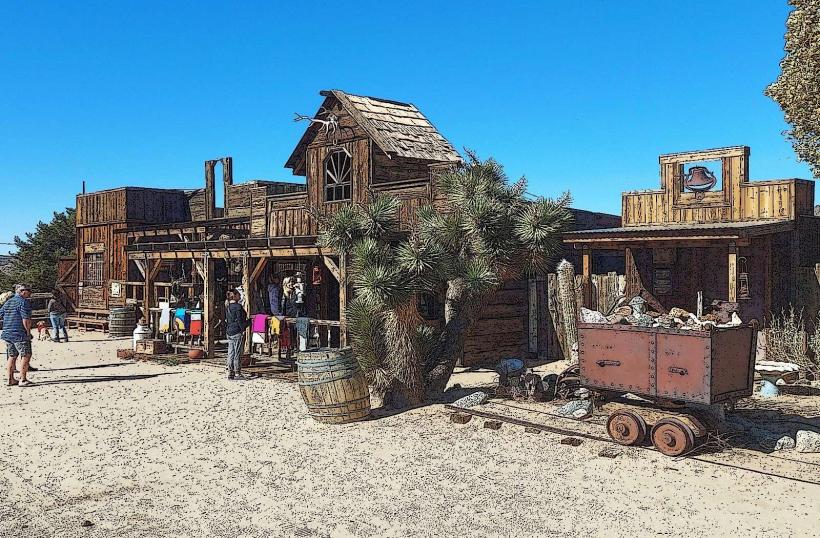
- Pioneertown (5km Northwest)
- Joshua Tree Village (3km West)
- Indian Cove Campground (10km Northeast)
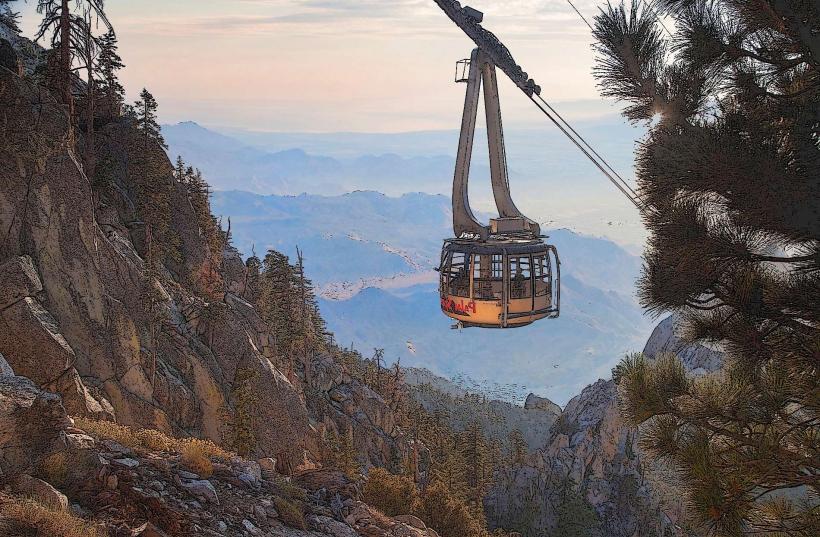
- Palm Springs Aerial Tramway (40km Southwest)
- Salvation Mountain (70km Southeast)