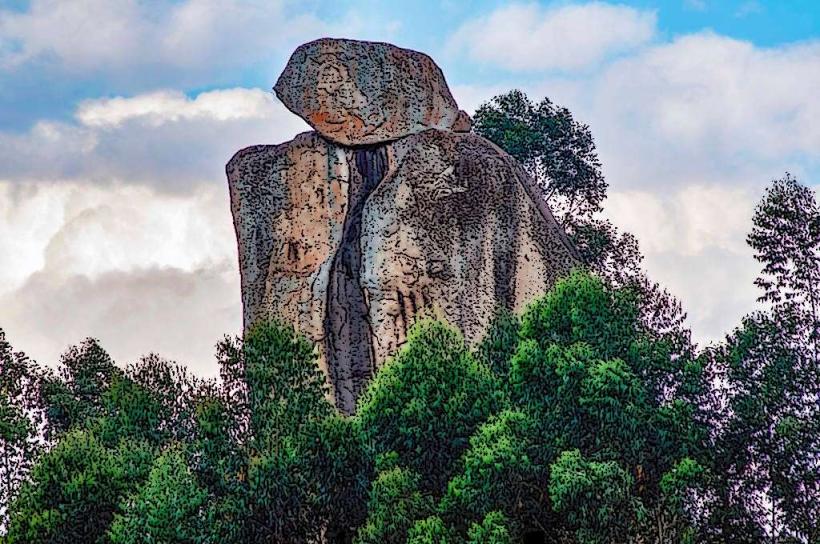
Landmark: Kakamega Forest National Reserve
City: Kakamega
Country: Kenya
Continent: Africa
Kakamega Forest National Reserve, Kakamega, Kenya, Africa
Kakamega Forest National Reserve is a protected area located in the western region of Kenya, near the town of Kakamega.
Visual Characteristics
The reserve is characterized by dense, multi-layered tropical rainforest. Dominant tree species include Prunus africana, Olea welwitschii, and Macaranga kilimandscharica. The forest floor exhibits a thick undergrowth of ferns and herbaceous plants. Birdlife is abundant, with species such as the Great Blue Turaco and the African Emerald Cuckoo frequently observed. Mammals present include bushbucks, duikers, and various primate species like the Blue Monkey and Red-tailed Monkey.
Location & Access Logistics
The reserve is situated approximately 30 kilometers northwest of Kakamega town. Access is primarily via the B1 Kakamega-Webuye road. Turn off at the signposted junction for the forest. The main entrance is approximately 5 kilometers from the main road. Parking is available at the forest station. Public transport options include matatus (minibuses) from Kakamega to Shinyalu, from where local taxis or boda-bodas (motorcycle taxis) can be hired for the final stretch.
Historical & Ecological Origin
Kakamega Forest is one of the last remaining examples of the Guineo-Congolian rainforest ecosystem in Kenya. It is a remnant of a much larger forest that once stretched across the African continent. Ecologically, it is classified as a lowland tropical rainforest, supporting a high level of biodiversity. The reserve was gazetted in 1985 to protect its unique flora and fauna.
Key Highlights & Activities
Activities include guided nature walks along designated trails such as the Yala River Trail and the Lirhanda Hill Trail. Birdwatching is a primary activity, with over 300 bird species recorded. Primate viewing is also popular. Visitors can explore the forest canopy via a suspension bridge. Camping facilities are available at the forest station.
Infrastructure & Amenities
Restrooms are available at the forest station. Limited shade is provided by the forest canopy. Cell phone signal (4G) is intermittent within the forest but generally available at the forest station. No food vendors are located within the reserve; visitors should carry their own provisions.
Best Time to Visit
The best time for birdwatching is during the drier months of June to September. For general forest exploration, the months of January to March offer pleasant weather. The forest is accessible year-round, though rainfall is higher between April and May, and October and November.
Facts & Legends
The forest is home to the endangered De Brazza's monkey. Local folklore suggests the forest is inhabited by spirits, and certain areas are considered sacred by the local Luhya community.
Nearby Landmarks
- Ilesi Market (2.5km Southeast)
- Kakamega Town (30km Southwest)
- Luhinda Falls (4km West)
- Bwake Forest (6km Northeast)