Landmark: Laguna Blanca National Park
City: Neuquen
Country: Argentina
Continent: South America
Laguna Blanca National Park, Neuquen, Argentina, South America
Laguna Blanca National Park is a protected area located in the province of Neuquén, Argentina. It is characterized by its high-altitude wetland ecosystem.
Visual Characteristics
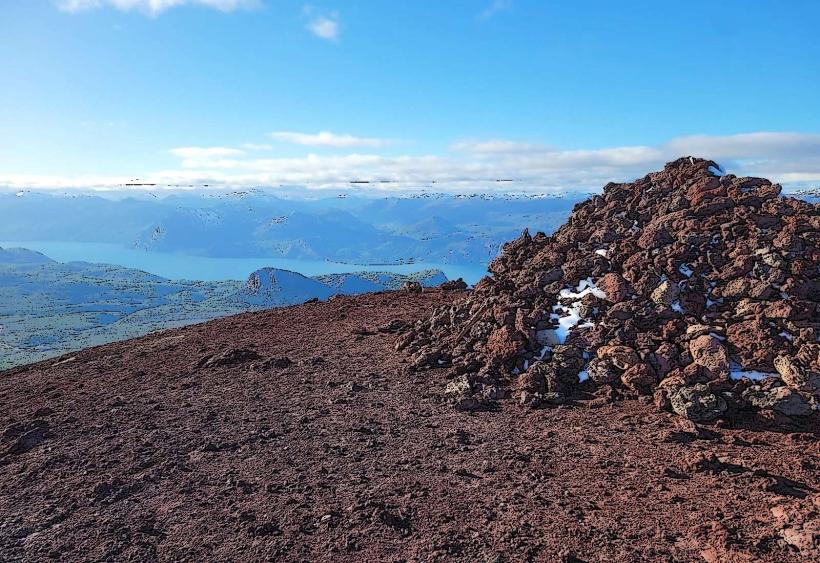
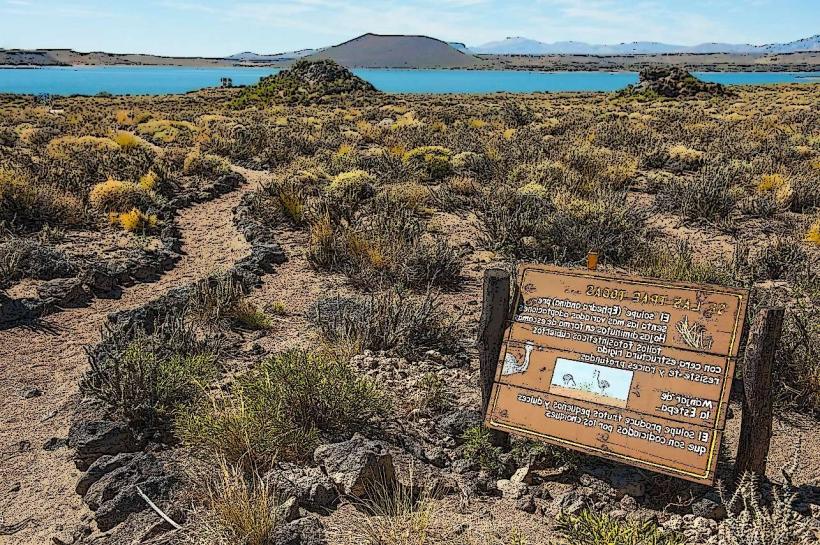
The park's primary feature is Laguna Blanca, a shallow, saline lake with an average depth of 0.5 meters. The water color varies from pale blue to greenish-grey depending on mineral content and light conditions. The surrounding terrain consists of arid steppe, with low-lying shrubs such as coirón (Stipa speciosa) and various species of Senecio. Rock formations are predominantly sedimentary, with some volcanic intrusions visible in the distance. The area is generally flat with some gentle undulations.
Location & Access Logistics
Laguna Blanca National Park is situated approximately 30 kilometers west of the town of Zapala. Access is via National Route 40 (RN 40) for 25 kilometers, then turning south onto Provincial Route 13 (RP 13) for an additional 5 kilometers. The final section of RP 13 leading to the park entrance is unpaved and can be rough. Parking is available at designated areas near the park entrance and visitor center. Public transport options directly to the park are not available; visitors typically require private vehicles.
Historical & Ecological Origin
Laguna Blanca was established as a National Park in 1971 to protect its unique wetland environment and significant bird populations. Ecologically, it is classified as a high-altitude steppe wetland, formed by endorheic processes (water collects and evaporates without an outlet). The lake's salinity is a result of mineral accumulation from surrounding geological formations and limited freshwater inflow.
Key Highlights & Activities
Birdwatching is the primary activity, with opportunities to observe waterfowl, flamingos, and other migratory species. Hiking is permitted on marked trails around the lake perimeter. Photography of the landscape and wildlife is encouraged. Visitors can access observation points for better viewing of the lake and its inhabitants.
Infrastructure & Amenities
Basic infrastructure includes a visitor center with information displays and a small parking area. Restrooms are available at the visitor center. There are no food vendors within the park; visitors should bring their own provisions. Shade is limited to the visitor center area. Cell phone signal (4G/5G) is generally absent within the park boundaries.
Best Time to Visit
The best time for birdwatching is during the spring and summer months (September to March), when migratory birds are most abundant. The best time of day for photography is early morning or late afternoon, when the light is softer and casts longer shadows. The park is accessible year-round, but winter (June to August) can bring snow and ice, potentially making access difficult.
Facts & Legends
Laguna Blanca is a crucial breeding ground for the Andean Flamingo (Phoenicopterus chilensis). A specific local legend speaks of the lake's waters having healing properties, though this is not scientifically verified. Visitors are advised to stay on marked trails to minimize disturbance to the fragile ecosystem.
Nearby Landmarks
- Zapala City Center (25km Southeast)
- Laguna Laipasi (15km Southwest)
- Cerro Bandera (20km Northeast)
- Parque Provincial Quinan (40km West)